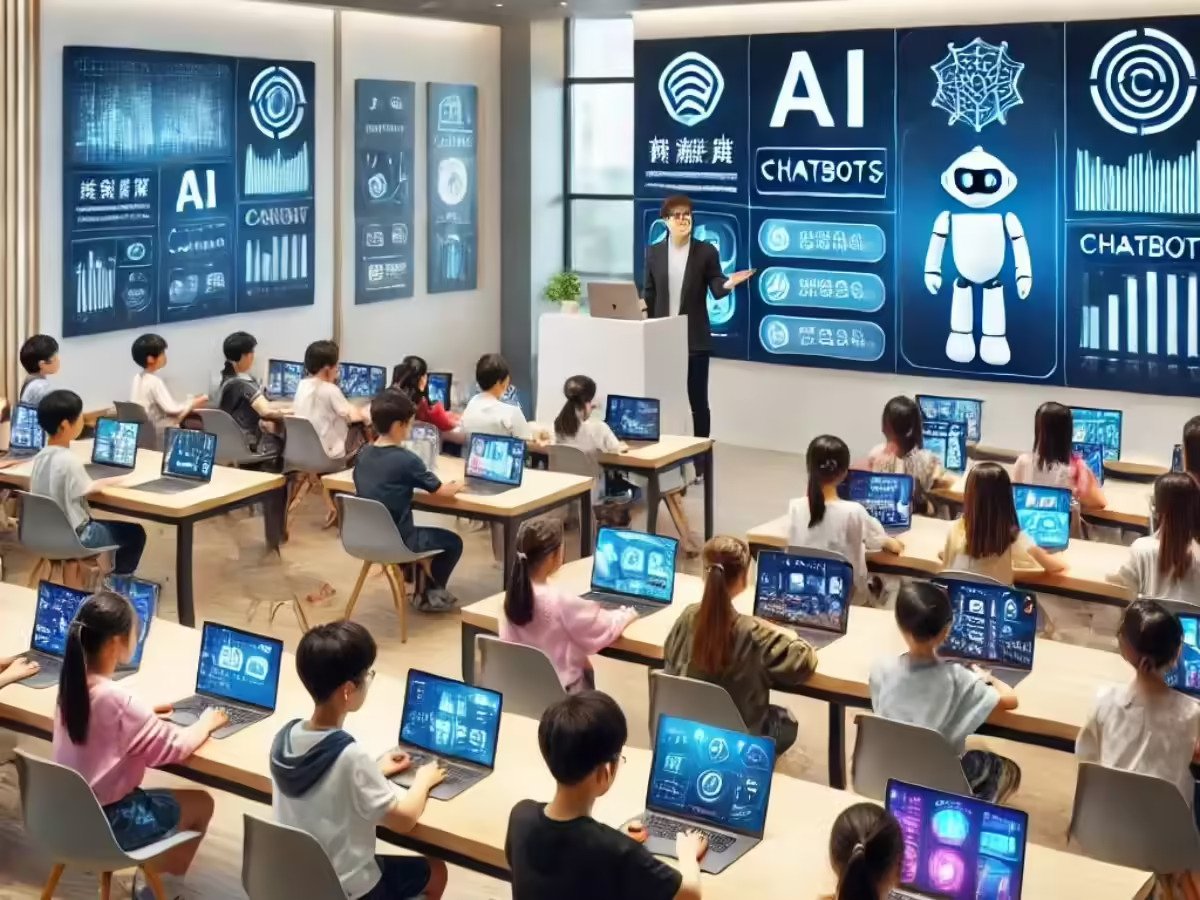
China has introduced a sweeping national strategy to integrate artificial intelligence into its education system, marking a major shift in how countries approach learning and workforce development. Under this policy, AI education will begin from primary school, covering children as young as six, and extend through higher education and lifelong learning.
The initiative forms part of a broader national plan to build a future-ready workforce and strengthen global competitiveness in advanced technologies. The policy mandates curriculum changes, teacher training, and AI-driven classroom tools across all levels of education.
AI Becomes Core Subject in China, Reshaping Global Education Priorities
China’s new AI education manifesto signals a structural transformation in how education systems are designed and delivered. The policy introduces artificial intelligence as a foundational subject, similar to mathematics and science, across all stages of learning.
The China AI education policy integrates AI into primary, secondary, and higher education through curriculum redesign, intelligent learning systems, and teacher support tools. The objective is to create a workforce equipped with digital and analytical skills required in future industries.
This development carries global implications, especially for countries such as India that are expanding digital education initiatives. The manifesto highlights a shift from optional digital literacy to mandatory AI education, supported by national-level planning and institutional coordination.

AI Education Made Mandatory from Primary Level
A key feature of the policy is the introduction of AI education at an early stage.
Core Policy Measures
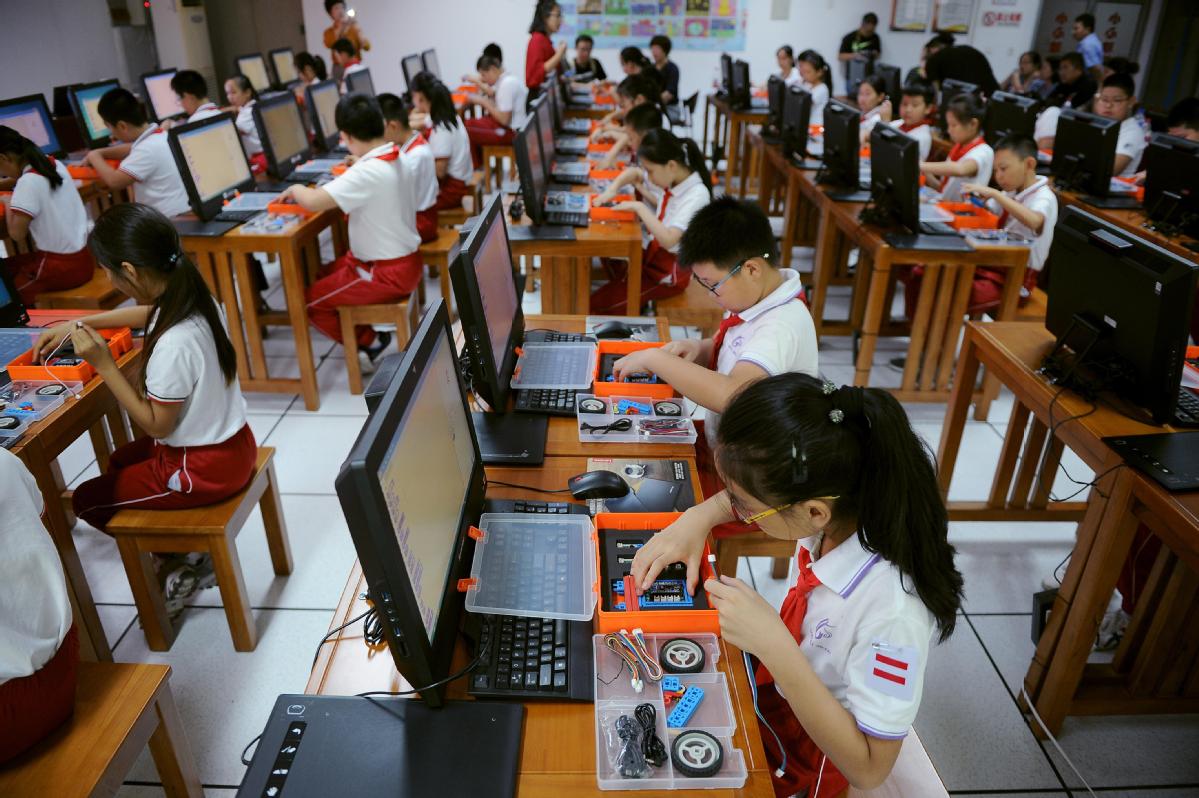
- AI curriculum introduced from primary school level
- Students as young as six years old included in AI learning
- AI integrated into regular subjects and standalone modules
The structure ensures that AI learning becomes part of foundational education rather than an advanced or optional subject.
System-Wide Integration
- AI education extended to secondary schools and universities
- Lifelong learning programs include AI skill development
- Curriculum frameworks define learning outcomes and instructional hours
This approach creates a continuous learning pipeline aligned with technological development.
Integration of AI Across Teaching and Learning Systems
The manifesto goes beyond curriculum changes and focuses on transforming classroom delivery.
Technology Integration
- Use of intelligent teaching systems before, during, and after classes
- AI-based tools for assignment evaluation and feedback
- Classroom data analysis to improve teaching quality
These systems aim to reduce teacher workload and enhance efficiency in instructional delivery.
Higher Education Reforms
- AI introduced as a foundational course in universities
- New academic programmes aligned with emerging technologies
- Interdisciplinary teaching combining AI with other subjects
This ensures that AI knowledge becomes a standard skill across disciplines.
Global Implications of China’s AI Education Strategy
China’s education policy reflects a strategic response to global competition in artificial intelligence.
Key Objectives
- Build AI literacy at a national scale
- Strengthen workforce readiness for future industries
- Position China as a global leader in AI innovation
The policy aligns with long-term national goals to integrate technology into economic development and industrial transformation.
Impact on Global Education Systems
- Encourages other countries to adopt AI education frameworks
- Shifts education focus from theoretical learning to applied technology
- Accelerates global competition in digital skills development
The scale and speed of implementation distinguish China’s approach from other countries.
What it Means for India’s Education System
China’s AI education push creates both pressure and opportunity for India.
Current Status in India
- Around 60% of higher education institutions allow or encourage AI use
- National initiatives aim to train millions in AI skills by 2030
Key Implications
- Need for early-stage AI education in schools
- Expansion of AI curriculum beyond higher education
- Focus on teacher training and infrastructure development
Strategic Opportunities
- Development of multilingual AI learning systems
- Integration of AI in public education platforms
- Expansion of AI education in tier 2 and tier 3 regions
India’s large student population provides scale, but implementation requires coordinated policy action.
Policy Framework and Long-Term Vision
China’s AI education manifesto forms part of a broader national strategy.
Long-Term Targets
- Establish a comprehensive AI education system by 2030
- Align education with industrial and technological needs
- Develop talent pipelines for emerging sectors
The policy integrates education, technology, and economic planning into a unified framework.
Frequently Asked Questions
- What is China’s AI education manifesto?
China’s AI education manifesto is a national policy framework that integrates artificial intelligence into all levels of education. It mandates AI learning from primary school to higher education and includes curriculum redesign, teacher training, and use of AI-based teaching tools. The policy aims to develop AI literacy across the population and align education with future workforce requirements.
- At what age will students start learning AI in China?
Under the new policy, students will begin learning artificial intelligence from primary school, starting at approximately six years of age. The curriculum includes foundational AI concepts, ethical understanding, and practical applications. The policy ensures that AI education is introduced early and continues through higher education.
- How does China’s AI policy impact global education?
China’s policy sets a benchmark for integrating AI into education systems at a national level. It encourages other countries to adopt similar frameworks to remain competitive in technology-driven economies. The policy also shifts focus toward applied learning, digital skills, and interdisciplinary education.
- What are the implications for India?
India faces the need to expand AI education beyond higher education and introduce it at school levels. Existing initiatives focus on AI training and digital infrastructure, but the scale of implementation remains limited compared to China. The policy highlights the importance of curriculum reform, teacher training, and inclusive access to AI education.
Conclusion
China’s AI education manifesto represents a structural shift in global education policy, placing artificial intelligence at the core of learning systems. By introducing AI education from primary school and integrating it across all levels, the policy establishes a comprehensive framework for future workforce development. For India and other countries, the development highlights the need for scalable and inclusive AI education strategies. The China AI education manifesto underscores the growing importance of aligning education systems with technological advancement and economic priorities.