Introduction: When a Dream Career Meets Uncertainty
For many students across India, psychology is not just a subject—it is a calling. It represents empathy, understanding human behaviour, and building meaningful careers in counselling, therapy, research, and teaching.
And for years, IGNOU seemed like a gateway to that dream.
Affordable. Flexible. Accessible.
Perfect for working professionals, homemakers, and students from remote areas.
But in 2026, that dream hit a sudden pause.
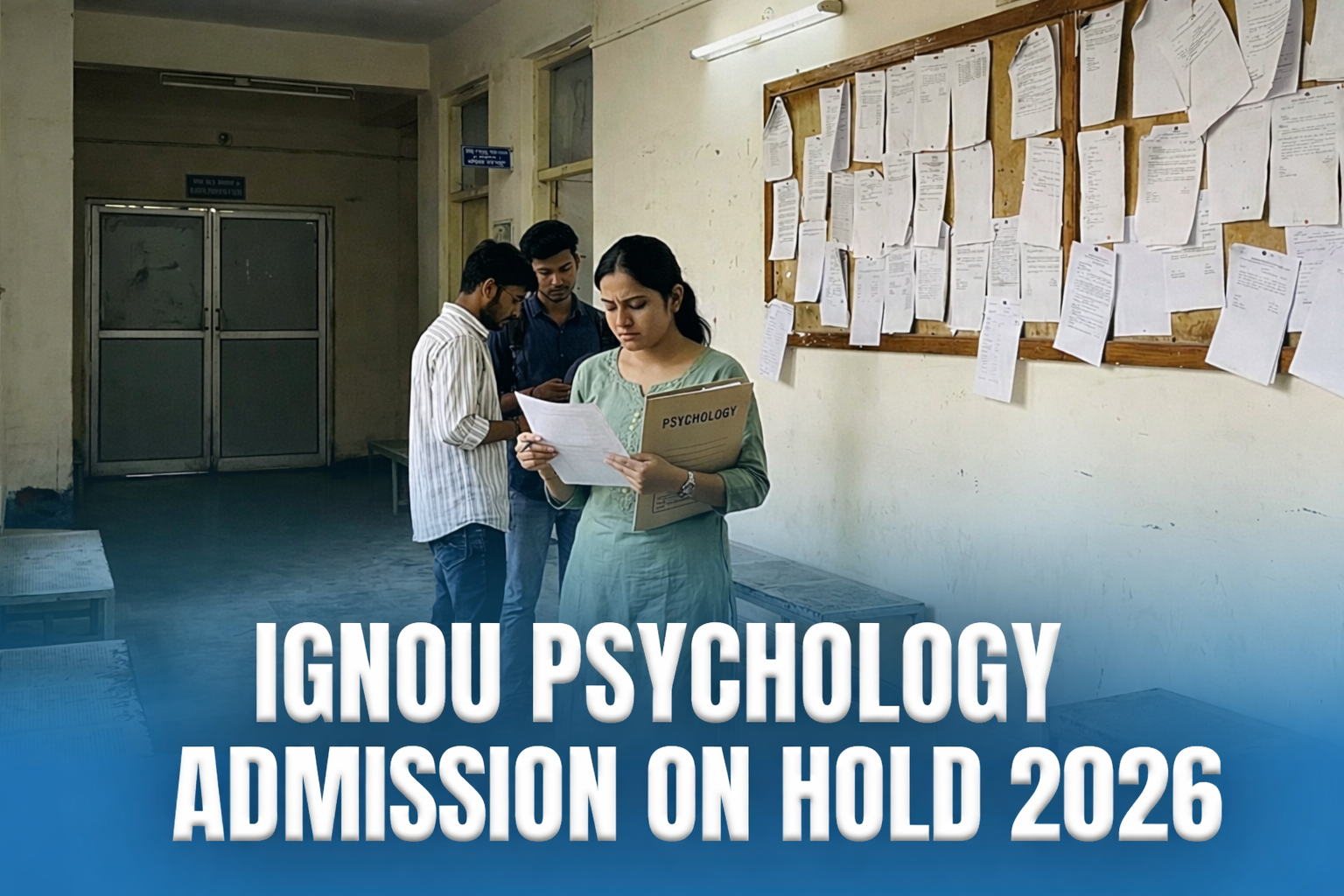
A warning from the University Grants Commission (UGC) has brought IGNOU’s psychology programmes—especially MA Psychology—under intense scrutiny. What was once seen as an opportunity is now being questioned for its validity, structure, and long-term value.
Students are confused. Parents are worried. Aspirants are stuck between ambition and doubt.
This is not just a news story.
It’s a turning point.
Understanding IGNOU and its Role in Indian Education
To understand the controversy, we must first understand IGNOU itself.
Indira Gandhi National Open University (IGNOU) has been a pillar of distance education in India. Established with a vision to democratise learning, it has:
- Enabled millions to pursue higher education
- Reached rural and underserved populations
- Offered flexibility to those balancing work and study
For decades, IGNOU has been trusted.
Its degrees have been accepted for:
- Government jobs
- Competitive exams
- Higher education pathways
So when questions arise about one of its programmes, the impact is massive.
Because this isn’t just about a course.
It’s about trust.

The Core Issue — What Triggered the UGC Warning
At the heart of the controversy lies a simple but powerful question:
Can a practical subject like psychology be taught effectively through distance learning alone?
The UGC believes the answer is no—at least not entirely.
UGC’s Position
The regulatory body has made it clear that:
- Courses involving clinical or hands-on training cannot be delivered purely in distance mode
- Proper infrastructure, supervision, and real-world exposure are essential
Psychology, especially at the postgraduate level, falls into this category.
Because it involves:
- Case studies
- Patient interaction
- Clinical observation
- Psychological assessment tools
These are not things one can master through textbooks alone.
Why MA Psychology Became the Epicentre
While IGNOU offers many programmes, MA Psychology has drawn the most attention.
Why?
Because it directly connects to professional practice.
Students pursuing MA Psychology often aim for:
- Clinical psychology
- Counselling careers
- Teaching roles
- Research positions
And each of these requires practical competence.
Without it, a degree becomes incomplete.
That’s the concern regulators are raising.
The Gap Between Theory and Practice
Let’s step into a real-world scenario.
Imagine a student who has completed MA Psychology through distance learning.
They understand theories:
- Freud’s psychoanalysis
- Behavioural conditioning
- Cognitive development
But when placed in a real counselling situation:
- How do they respond to trauma?
- How do they interpret body language?
- How do they handle emotional breakdowns?
These are skills built through experience, not just reading.
And that’s where the gap lies.
The Silent Risk — Degree Validity
Now comes the most sensitive issue.
Validity.
Students are not just worried about learning—they are worried about whether their degree will “count.”
Where Problems May Arise
- Government Jobs
Some positions require recognised and professionally valid degree - UGC NET / JRF Eligibility
If the degree is questioned, eligibility may be affected - Licensing and Clinical Practice
Without proper training, professional licences may not be granted - International Recognition
Global institutions often require strict practical training standards
This turns the issue from academic to deeply personal.
Years of effort. Fees paid. Time invested.
All at stake.
IGNOU’s Response — A Grey Area
IGNOU has not completely withdrawn its psychology programmes.
Instead, it has:
- Included disclaimers
- Advised students to make informed choices
But here’s the challenge:
A disclaimer does not solve the core issue.
It shifts responsibility to the student.
And in a country where many learners rely on institutional guidance, that creates confusion.
Why Students Still Choose IGNOU
Despite the controversy, many students continue to enrol.
Why?
-
Affordability
Regular psychology programmes can be expensive.
IGNOU offers a much cheaper alternative.
-
Flexibility
Students can:
- Study at their own pace
- Continue working while learning
-
Accessibility
For students in rural areas, IGNOU is often the only option.
This makes the situation more complex.
Because for many, it’s not just a choice—it’s the only available path.
The Emotional Impact on Students
Beyond rules and regulations lies a human story.
Students are experiencing:
- Anxiety about their future
- Confusion over next steps
- Fear of wasted years
Some are midway through their course.
Others have just enrolled.
Many are asking:
“Should I continue or quit?”
There is no simple answer.
The Larger Debate — Distance vs Regular Education
This controversy opens a bigger conversation.
Can all subjects be taught online?
For theoretical fields like:
- History
- Literature
- Commerce
Distance learning works well.
But for practical fields:
- Psychology
- Medicine
- Nursing
It becomes complicated.
Because learning is not just intellectual—it is experiential.
The Future of Psychology Education in India
This moment may lead to major changes.
Possible outcomes include:
- Stricter regulations for practical courses
- Hybrid models combining online and offline training
- Mandatory internships for distance learners
In many ways, this controversy could reshape how psychology is taught in India.
What Should Current Students Do?
If already enrolled, panic is not the solution.
Instead:
- Seek Clarity
Check:
- Official UGC notifications
- IGNOU updates
- Add Practical Exposure
Try to:
- Join internships
- Work with NGOs
- Gain field experience
- Plan Backup Options
Consider:
- Additional certifications
- Transition to regular programmes
Guidance for Future Aspirants
If planning to enrol, pause and reflect.
Ask yourself:
- What career do I want?
- Does this course support that goal?
- Will it be recognised in the future?
If the answer is uncertain, explore alternatives.
Opportunities Hidden in the Crisis
Every disruption carries opportunity.
This situation may lead to:
- Better quality education
- Stronger regulatory frameworks
- More awareness among students
And for individuals:
- A chance to make smarter choices
Lessons Every Student Must Learn
This controversy teaches powerful lessons:
- Always verify course recognition
- Don’t rely only on affordability
- Think long-term, not short-term
- Understand your career path before choosing a course
Education is not just about degrees.
It’s about direction.
The Road Ahead — Uncertainty and Hope
The situation is still evolving.
Clarity may come through:
- Official guidelines
- Policy updates
- Institutional changes
Until then, students must navigate carefully.
With awareness.
With patience.
With strategy.
Conclusion: A Moment that Demands Awareness
The IGNOU Psychology course controversy is not just about one university or one subject.
It reflects a deeper shift in education.
A shift where:
- Flexibility must meet quality
- Accessibility must meet accountability
For students, the message is clear:
Don’t just chase degrees. Understand them.
Because the right decision today shapes the next decade of your life.
FAQs
- Why is IGNOU Psychology course under scrutiny?
Due to UGC concerns about lack of practical training in distance mode.
- Is IGNOU MA Psychology valid in 2026?
Its validity is being questioned, especially for professional and clinical roles.
- Can students appear for UGC NET after this course?
Only if the degree meets UGC recognition standards.
- What is the safest option for psychology students?
Regular programmes with proper clinical training.
- Should current students quit the course?
Not necessarily. They should seek clarity and add practical experience.