The Growing Trend of Studying Abroad
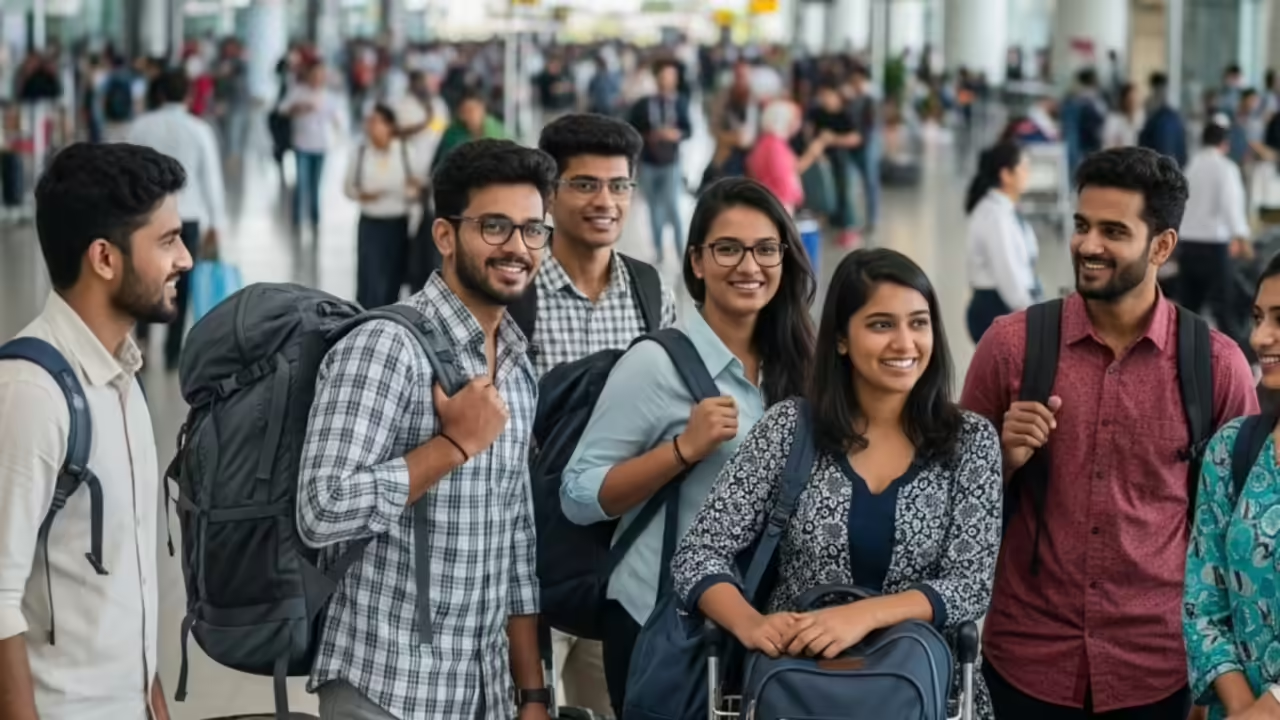
Over the past 10–15 years, there has been a remarkable increase in the number of Indian students opting to study abroad. Today, families across India aspire to send their children to top universities in the US, UK, Canada, Australia, and Europe.
This trend is not random—it is driven by multiple factors that make international education attractive for students seeking academic excellence, career growth, and global exposure.
Why Students Are Choosing Foreign Universities
Several key reasons contribute to this growing trend:
- Financial capacity and availability of funding – With easy access to education loans and scholarships, more students can now afford overseas education.
- Better career opportunities abroad – Graduates from foreign universities often have access to high-paying jobs, multinational companies, and global networks.
- Exposure to international culture and education – Living and studying abroad provides students with a broader perspective, cultural understanding, and global skills.

States with the Highest Number of Students Going Abroad
Certain Indian states lead in the number of students pursuing education overseas. Punjab, Maharashtra, and Gujarat are at the forefront, with students from these regions consistently applying to universities abroad.
Why These States Lead
- Economic Affluence – Families in these states have the financial capability to support higher education abroad.
- Focus on Education – A strong culture of valuing education encourages students to aim for prestigious foreign universities.
- Long-term Career Vision – Parents and students see overseas education as a strategic investment in the child’s future.
Cost of Studying Abroad vs. Studying in India
One of the most important considerations for studying abroad is cost. Understanding the financial implications helps students plan effectively.
Average Expenses Abroad
- Monthly Cost: ₹46,000 – ₹50,000
- Annual Cost: ₹40–50 lakh
Cost of Studying in India
- Annual Cost: ₹3–6 lakh at a reputable Indian university
Clearly, the initial investment for studying abroad is higher, but the potential career benefits and international exposure often outweigh the cost.
India vs Abroad: A Comparative Overview
| Factor | India | Abroad |
| Annual Cost | ₹3–6 lakh | ₹40–50 lakh |
| Career Opportunities | Moderate | High |
| Exposure | Limited | Global |
| Networking | Local | International |
Students and parents increasingly view foreign education as a high-return investment, offering both career advancement and global networking opportunities.
Top 3 Reasons Students Choose to Study Abroad
- Quality of Education and Global Recognition
Many students prefer foreign universities because of their high-quality curriculum, modern teaching methods, and research opportunities.
How It Enhances Skills
Studying under international faculty provides exposure to:
- Advanced academic knowledge
- Innovative research techniques
- Practical and hands-on experience
This combination gives students a competitive advantage in their professional careers.
- Career and Financial Opportunities
Graduates from top foreign universities often enjoy higher starting salaries and better career trajectories.
Examples of Success
Many Indian alumni of US and UK universities now lead Fortune 500 companies. This demonstrates that international education accelerates career growth and increases earning potential.
- Socio-Political and Cultural Exposure
Studying abroad is not just about academics—it also offers life-changing experiences.
Benefits of Cultural Exposure
- Interaction with peers from diverse backgrounds
- Learning new languages and adapting to multicultural environments
- Gaining soft skills and leadership abilities that are highly valued globally
Challenges Faced by Students Abroad
While studying overseas has many advantages, students also face certain challenges. Awareness and preparation can help overcome them.
Key Challenges
- High tuition fees and living expenses – Students must manage finances efficiently to avoid stress.
- Adapting to a new cultural and academic environment – Adjusting to different teaching styles, social norms, and lifestyles can be challenging.
- Navigating scams and fraudulent offers – Some students fall victim to misleading agents or unauthorized programs.
How to Overcome Challenges
- Research universities thoroughly before applying
- Verify information with official university websites
- Seek guidance from trusted education consultants or alumni
The Aspiration Factor
For many students, studying abroad is a prestige factor. It is seen as a once-in-a-lifetime opportunity that combines education, travel, and professional networking.
Why Aspirations Matter
- Parents and students often aspire to send children to universities with global recognition.
- Studying abroad fulfills the desire to gain international exposure and career advantage.
- It inspires students to push boundaries and set high goals for their personal and professional lives.
The Role of Parents and Financial Support
Unlike earlier generations, today’s families are financially equipped and aware of education financing options.
How Parents Support Education Abroad
- Planning ahead – Families save and invest early for their children’s education.
- Loans and scholarships – Access to education loans and international scholarships makes studying abroad feasible.
- Guidance and encouragement – Parents actively support career choices and mentor children through the application process.
Conclusion: Is Studying Abroad Worth It?
The trend of Indian students studying abroad is growing rapidly due to:
- Better education and research opportunities
- Higher career and financial prospects
- International exposure and cultural experience
While the cost of studying abroad is high, the benefits often outweigh the investment. Students must:
- Plan carefully and research their preferred universities
- Understand financial and academic requirements
- Prepare for challenges and adapt to new environments
Studying abroad is not just a path to a degree—it is a transformative experience that shapes a global mindset, enhances skills, and opens doors to world-class opportunities.
For Indian students aspiring to study abroad, the key is to start early, stay informed, and make strategic choices. With the right preparation, international education can accelerate career growth, broaden horizons, and create a lifetime of opportunities.