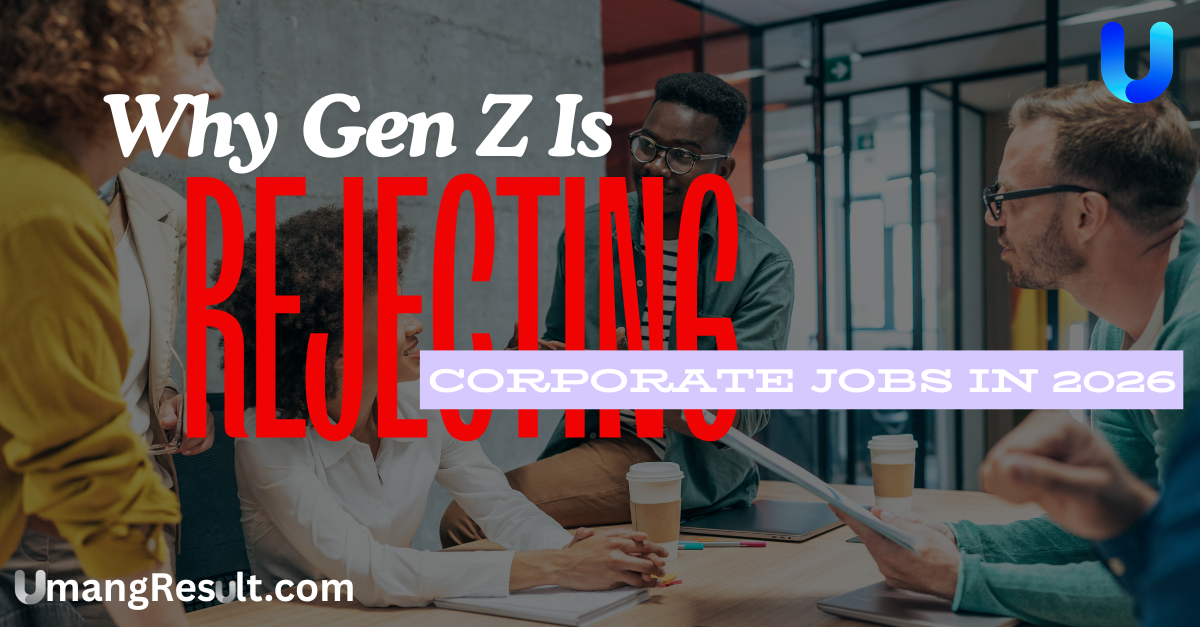
There is a big change happening in the world’s workforce in 2026. Gen Z is leaving typical corporate professions more and more in the US and many other nations. For decades, the usual notion of success involved getting a solid job in an office, moving up the corporate ladder, getting promotions, and retiring with enough money to live comfortably for the rest of your life. But for people born between 1997 and 2012, that paradigm doesn’t seem as appealing or dependable as it used to.
Gen Z does not reject work. Instead, they are challenging old systems, inflexible structures, and career trajectories that don’t fit with what they want to achieve. They are changing the definition of success to include things like mental health, financial freedom, and having a purpose. This change is not by chance. It is influenced by economic instability, technological upheaval, cultural transformations, and a fundamentally altered interaction with the digital realm.
A Different Definition of Success
For people in the past, success frequently meant having a stable job and a good reputation. A corporate job that pays handsomely is a sign of success. People thought that working long hours showed devotion, and getting promoted meant that things were going well. Gen Z, on the other hand, sees success in a different way. Success isn’t simply about pay or job titles for them. It involves having personal independence, doing work that matters, taking care of their mental health, and being able to manage their time.

This generation saw a lot of change happen quickly as they grew up. They observed how the 2008 financial crisis hurt families. During the COVID-19 epidemic, they saw a lot of people lose their jobs. They are currently living through the emergence of robots and AI. Because of this, stability doesn’t seem as certain. They don’t rely on just one job for long-term stability; instead, they work on developing flexible talents and many ways to get money.
Work-Life Balance Is a Priority, Not a Luxury
The focus on work-life balance is one of the main reasons why Gen Z is leaving corporate positions. For a long time, corporate culture has rewarded those who work too much. People typically thought that sending emails late at night, meeting on weekends, and always being available showed ambition. Gen Z goes against such way of thinking.
They talk about stress at work, exhaustion, and nervousness in public. Mental health is not a private matter for them; it is a primary priority. They prioritise time for personal growth, travel, exercise, relationships, and hobbies. Many people are prepared to leave a job even if the pay is good if it requires too many hours and doesn’t provide for much flexibility.
Gen Z isn’t lazy just because they act that way. Instead, they think that being productive shouldn’t mean sacrificing your health. A balanced existence is not seen as a barrier to long-term success, but rather as a basis for it.
The Remote Work Revolution
The epidemic transformed what people expect from employment for good. Remote and hybrid models showed that workers can still be productive even if they don’t have to go to the workplace five days a week. Gen Z started working during or after this change, thus flexibility doesn’t seem like a big deal.
Many young workers wonder why they have to go back to the office when companies have tight standards about it. In the digital era, it seems old-fashioned to have to commute great distances, pay for travel, and stick to strict timetables. You can work from practically anyplace with a laptop, cloud software, and communication tools.
Working from home also helps with other important things. It lets people live in cheaper places, travel, or work on side ventures. Gen Z doesn’t just want flexibility; they demand it.
Distrust in Corporate Loyalty
In the past, workers usually stayed with the same employer for much of their careers. Loyalty paid off with employment stability and retirement perks. But Gen Z has seen layoffs, restructuring, and automation happen over and over again. They’ve seen businesses put profits ahead of people when the economy is bad.
Because of this, a lot of young professionals don’t think that loyalty will keep them safe anymore. They are less likely to stay with the same company for decades. Instead, they put more value on abilities that may be used in other jobs, personal branding, and being financially independent.
Because of this change in thinking, Gen Z generally sees work as short-term chances to progress instead of long-term obligations. People walk on fast if a firm doesn’t help them grow or fit in with their personal ideals.
Entrepreneurship and the Creator Economy
The fact that entrepreneurship is easier to get into is another big reason for this change. In the past, starting a business took a lot of money, physical space, and relationships. Digital platforms have made things a lot easier today.
Gen Z may start online shopfronts, work as freelancers throughout the world, produce subscription-based newsletters, make content for social media, or make digital products with very little money. The creative economy has made it possible to see and get independent sources of revenue.
Young business owners are making a lot of money in unusual ways on social media sites. Not every tale is true, but reading them might help you think about new employment possibilities. There are now more ways to get money than working for a big company.
Corporate Culture Feels Outdated
Many old-fashioned organisational settings still use hierarchies, formal ways of talking to each other, and sluggish ways of making decisions. Gen Z, who grew up in a digital world that moved quickly, typically thinks these systems don’t work well.
They like working with others when ideas are more important than titles. They really value being open, honest, and having conversations. People are less likely to get involved if they feel that leaders are far away or hard to reach.
Also, corporate politics and strict rules make it hard for people to be creative. Gen Z does well in places that promote trying new things, coming up with new ideas, and quickly adapting. Small businesses and startups are generally better at giving these kinds of experiences than big companies.
The Importance of Purpose
People often say that Generation Z is a generation that cares about values. They really care about social justice, climate change, diversity, and doing business in a moral way. Many people don’t want to work for firms that don’t agree with their own ideals.
Purpose is a big part in making professional choices. A large pay may not make up for employment that feels pointless or doesn’t fit with your ideals. Young professionals are more and more looking for jobs that make a difference in the world.
Companies that put sustainability, diversity, and ethical disclosure first are more appealing. Companies that only care about making money may have trouble hiring Gen Z workers.
The Impact of Artificial Intelligence
Artificial intelligence is changing industries faster than ever before. In industries like banking, marketing, customer service, and data analysis, automation is taking over jobs that are done over and over again. Gen Z knows a lot about this change.
Gen Z doesn’t want to commit to jobs that may be automated. Instead, they want to learn abilities that can be used in many different situations, including creativity, critical thinking, and digital literacy. They are better at learning new tools and changing jobs when they need to.
AI has also made it possible for people to work for themselves. People may employ AI technologies to get more done, make digital goods, or run their enterprises more smoothly. This makes it less necessary to rely on traditional company structures.
Financial Pressures and Changing Economics
Gen Z has a lot of money problems, even if they don’t like corporate culture. Inflation, increased housing expenses, and student debt make it hard to find permanent work. But many starting wages in businesses haven’t kept up with the cost of living in big cities.
When corporate remuneration doesn’t meet fundamental demands, it loses its attraction. Some young professionals think that freelancing, remote consulting, or running an internet business may make them just as much or even more money.
In an economy that changes quickly, the old saying “work hard now for long-term reward” doesn’t seem as assured. Immediate flexibility and skill growth can seem more useful.
Mental Health Awareness
Gen Z talks about mental health in a way that other generations didn’t. They want their jobs to recognise stress, be flexible, and help employees stay healthy. Gen Z doesn’t put up with bad workplaces as much.
If companies don’t pay attention to employee burnout, they might lose good workers soon. Gen Z wants leaders that are helpful and who set realistic goals for their work. Psychological safety is just as important as pay.

What This Means for Companies
There are still employment in corporations. A lot of businesses still need formal structures and full-time teams. But businesses need to change to get and keep Gen Z workers.
In 2026, successful companies will have flexible work hours, open leadership, important missions, and opportunities for employees to keep learning new skills. Mental health programs, hybrid models, and welcoming environments are becoming common expectations instead of just nice things to have.
Companies that don’t want to change may have a hard time getting young professionals, who have more job possibilities than ever before.
The Future of Work
Gen Z’s refusal to follow standard corporate pathways shows that society’s concept of labour is changing. Careers are becoming more flexible, project-based, and centred on skills. People can transfer sectors several times or work both as a freelancer and full-time.
The workforce of the future will probably be more digital, adaptable, and spread out. Offices might not be places where people work every day, but they might be places where people work together. Work may be more about getting things done than how many hours you spend at your desk.
Gen Z is the one that is making this transition happen, but other generations are starting to like the same things. People of all ages are wanting more balance, freedom, and purpose in their lives.
Conclusion
Gen Z is not turning down employment in 2026; they are changing what it means to work. They’re asking questions about systems that put profit over purpose and hierarchy over adaptability. They are realistic and flexible about their jobs because of unstable economies, technological changes, and internet connections.
They want balance, freedom, a significant effect, and to keep growing. Corporate employment are still important, but only if they change to fulfil these needs. The old idea of the corporate dream is no longer true for everyone. Instead, success is becoming more personal, adaptable, and goal-oriented.
As more and more people from this age become leaders, the way work is done will keep changing. Companies that listen to, adapt to, and connect with the goals of a generation that wants to make its own professional choices will probably have a bright future. groups