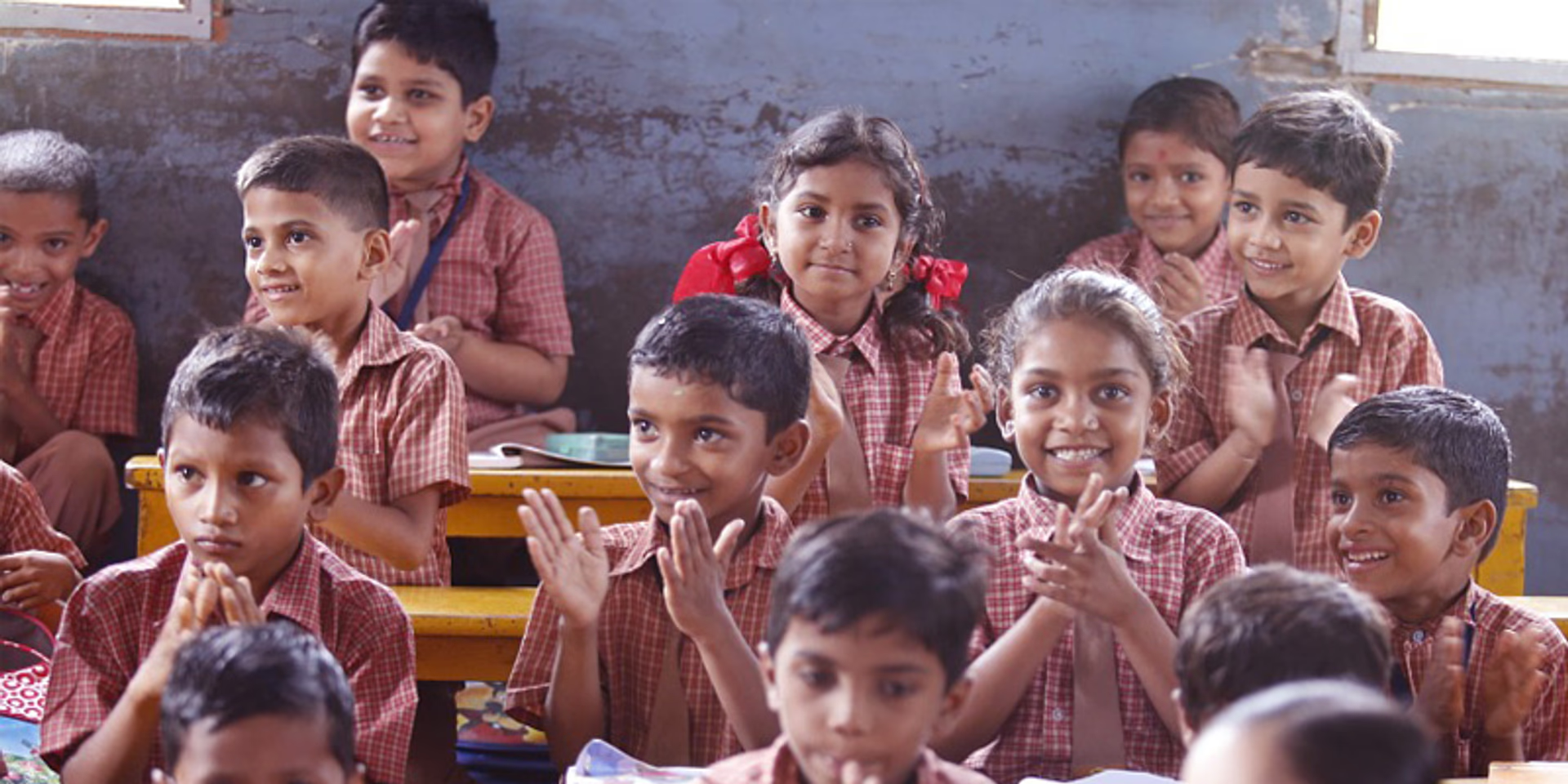
In India, education is often spoken of with pride. Good marks are celebrated, difficult exams are glorified, and certificates are treated like tickets to a secure future. But beneath this familiar picture lies an uncomfortable reality. Across cities and villages, in homes and classrooms, a quiet question is being asked: Is our education system really helping children grow, or is it only teaching them how to survive an endless competition?
For many students today, learning has become stressful long before it becomes meaningful. The pressure begins early. Children are told, sometimes directly, sometimes subtly that marks will decide their worth and their future. In this atmosphere, curiosity does not get much space. Fear does.
When Learning Loses its Meaning
India’s educational roots tell a different story. In the gurukul system, education was not limited to books and examinations. Students learned discipline, values, responsibility, and practical life skills along with academic knowledge. Learning was closely connected to real life.
Modern education, however, is largely confined to classrooms, syllabuses, deadlines, and rankings. The focus is often on completing the course on time, not on understanding it well. As a result, students learn how to memorise, reproduce answers, and move on. Once the exam is over, much of the learning disappears with it.
This raises an important concern. If education does not stay with a student beyond the exam hall, what purpose is it really serving?
The Heavy Weight of Pressure
One of the most visible problems in today’s education system is stress. Children are burdened with expectations at an age when they should still be discovering their interests. Anxiety, fear of failure, and emotional exhaustion are becoming common, yet they are rarely addressed seriously.
Many students score well but struggle to explain basic concepts in simple words. This is not a failure of the child; it is a failure of the system. Education should develop understanding, not just performance.
A Race With No Finish Line
Education in India increasingly resembles a race—fast, competitive, and exhausting. Parents, often with good intentions, push children towards socially approved careers like engineering, medicine, or government service. But in doing so, they sometimes ignore the child’s natural abilities and interests.
Every child learns differently. Some think creatively, some work best with numbers, and others learn through hands-on experience. When one rigid path is forced on everyone, frustration grows and confidence breaks. Not every student is meant to run the same race.
Degrees that Don’t Deliver
Perhaps the most worrying gap is between education and real life. India produces millions of graduates every year, yet many struggle to find meaningful employment. Degrees are earned, but skills are missing.
Education should prepare students to communicate clearly, solve everyday problems, work with others, and earn a living with dignity. Without these basic abilities, certificates lose their power. A system that produces educated but unemployable youth needs serious rethinking.
The Forgotten Struggles of Rural Students
For students in rural areas, the challenges are even greater. Talent and hard work are not in short supply, but access is. Many village schools face shortages of trained teachers, learning materials, and proper guidance. Exposure to opportunities remains limited.
Education should level the field, not deepen existing gaps. A child’s future should not depend on their pin code. With the right support, rural students consistently prove that ability has nothing to do with location.
Teachers Still Hold the Key
Despite all structural problems, teachers remain the strongest force within the education system. A sensitive, committed teacher can change a student’s life. Unfortunately, teaching is often reduced to finishing chapters and preparing students for exams.
True teaching requires patience, empathy, and attention to individual strengths. When students feel heard and respected, learning becomes natural. No reform can succeed without empowering teachers to teach, not just instruct.
Education Without Values Is Incomplete
Another silent loss in modern education is the decline of values. Success is measured in salaries and status, while qualities like honesty, kindness, responsibility, and respect receive little attention.
A society may produce skilled professionals, but without strong values, it risks becoming hollow. Education must aim to create good human beings, not just efficient workers. Respect for elders, care for society, love for the country, and concern for nature are lessons that matter deeply, even if they do not appear in exams.
Rethinking the Way Forward
The future of Indian education cannot be built on marks alone. Skill-based learning, practical exposure, and real-world understanding must become central, not optional. Students should be encouraged to explore their interests and choose paths that suit their abilities.
Early education in the mother tongue can also play a powerful role, especially for young learners. When children understand what they are being taught, learning becomes joyful rather than forced.

Final Thought
Education should not be a source of fear. It should offer clarity. It should not exhaust young minds but strengthen them. If India wants confident, capable, and responsible citizens, its education system must move beyond pressure and blind competition.
When learning focuses on understanding, skills, and values, students are prepared not just for exams, but for life. And that, ultimately, is what education should be about.