Introduction
Education has always been about continuity. But in 2026, that continuity is no longer tied to classrooms, buildings, or even countries. Across the UAE, universities have reopened after the spring break—but not in the way students expected.
Instead of returning fully to campuses, most universities have resumed online classes, while some have adopted hybrid models and temporary relocation options. This shift reflects a deeper transformation in education—one where flexibility, technology, and student wellbeing are at the centre.
This article explores the complete picture, not just as news, but as a story of how education is evolving in real time.
A New Academic Start—But from Screens, Not Classrooms
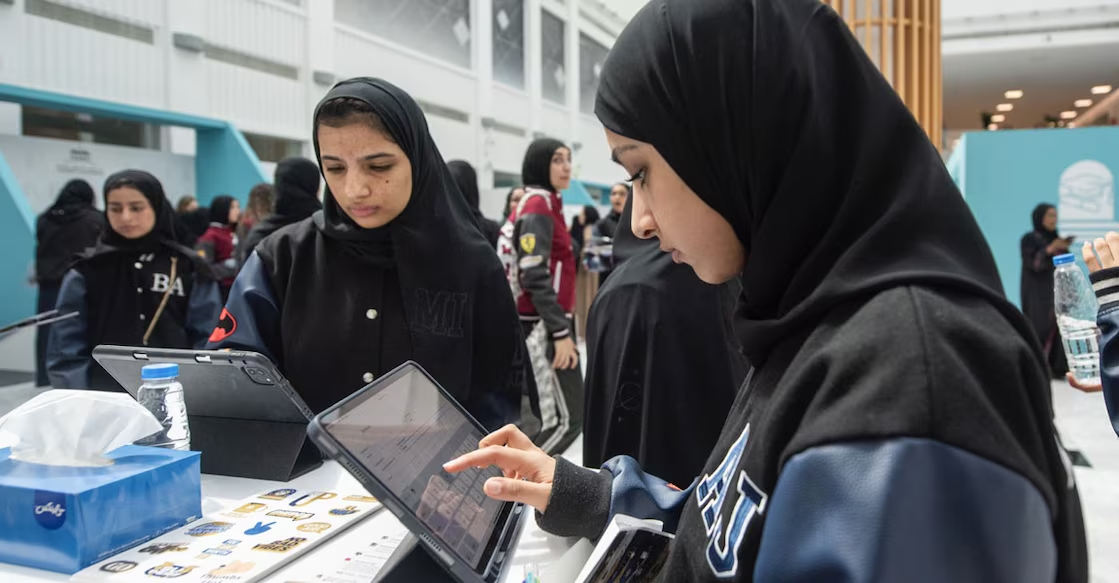
As universities reopened after the spring break on March 23, 2026, most institutions across the UAE chose to continue with online learning. This decision followed the government’s extension of distance learning for an additional two weeks after the break.
This meant that students who were expecting to return to lecture halls instead found themselves logging in from homes, hostels, or even different countries.
Yet, this transition was not chaotic. Universities had already prepared structured systems to ensure that lectures, assignments, and academic progress continued smoothly.

Why Universities Chose Online Learning Again
The shift to online learning was not random. It was a carefully considered response to regional uncertainties and safety concerns. Earlier in March, educational institutions across the UAE had already moved to distance learning as a precautionary measure.
Even after the spring break, authorities chose to extend this model to maintain stability and avoid disruption. The idea was simple—protect students while keeping education uninterrupted.
This reflects a larger trend: education systems today are designed not just to function in normal times, but to adapt quickly during uncertainty.
Hybrid Learning: A Flexible Middle Path
While many universities opted for full online classes, some introduced hybrid learning models. This approach blends online and in-person teaching, offering flexibility to both students and faculty.
Institutions with residential campuses allowed students staying in hostels to attend classes physically, while others joined virtually.
Hybrid learning is no longer a temporary fix. It is gradually becoming a standard model of education, combining the best of both worlds—flexibility and interaction.
Temporary Relocation: Education Without Borders
One of the most remarkable aspects of this transition is the introduction of temporary relocation options.
Universities allowed students and faculty to:
- Continue learning from abroad
- Delay their return to the UAE
- Attend classes without physical presence
For example, institutions ensured that coursework, assessments, and student services were fully available online, creating a seamless academic experience regardless of location.
This marks a powerful shift—education is no longer confined by geography. It travels with the student.
International Students at the Centre of Decisions
The UAE is home to a large number of international students, and their needs played a central role in shaping these decisions.
Universities ensured that students who had travelled during the spring break were not forced to return immediately. Return deadlines were extended, and academic participation from abroad was fully supported.
This approach highlights a strong commitment to student wellbeing. Instead of creating pressure, institutions chose flexibility.
Student Experience: Beyond Academics
One might assume that online learning reduces engagement. However, universities have taken significant steps to ensure students remain connected.
Many institutions introduced:
- Virtual fitness sessions
- Regular check-ins with students
- Online engagement activities
- Mental health and wellbeing support
Students staying in hostels were also supported through community activities and communication initiatives.
This shows that education is not just about lectures—it is about connection, support, and community.
Digital Infrastructure: The Silent Strength
The smooth functioning of online learning is backed by strong digital systems. Over the years, UAE universities have invested in:
- Advanced learning platforms
- Live and recorded lectures
- Online assessments
- Student support systems
Because of this, the transition from classroom to screen has been seamless. Institutions today are far more equipped to handle such changes than ever before.

Freedom with Responsibility
Students have been given the flexibility to attend classes from anywhere, but this comes with responsibility.
They are expected to:
- Stay updated with university communications
- Attend online sessions regularly
- Inform institutions about their location
This balance ensures that while students enjoy flexibility, academic discipline remains intact.
A Glimpse into the Future of Education
What is happening in the UAE today may soon become the global norm. Distance learning is no longer seen as a temporary arrangement. It is now recognised as a complementary mode of education, especially when integrated with hybrid systems.
The future of education may not be about choosing between online and offline—it may be about blending both intelligently.
Challenges That Still Exist
Despite the smooth transition, certain challenges remain.
Students may face:
- Time zone differences
- Internet connectivity issues
- Reduced face-to-face interaction
However, universities are actively working to minimise these issues through flexible schedules and digital support.
What Students Should Do Now
In this evolving situation, adaptability is key. Students must stay proactive, disciplined, and open to new ways of learning.
Attending classes regularly, staying connected with peers and faculty, and maintaining a structured routine can make this transition smoother.
This phase is not a disruption—it is an opportunity to develop skills that will be valuable in the future.
The Major Takeaway
The reopening of UAE universities in an online and hybrid format tells a powerful story about resilience and innovation. It shows how education can adapt without losing its essence.
The UAE universities online learning 2026 model is not just about managing a temporary situation—it is about redefining how learning happens.
In the end, the classroom may have changed, but the purpose of education remains the same: to grow, to learn, and to move forward.