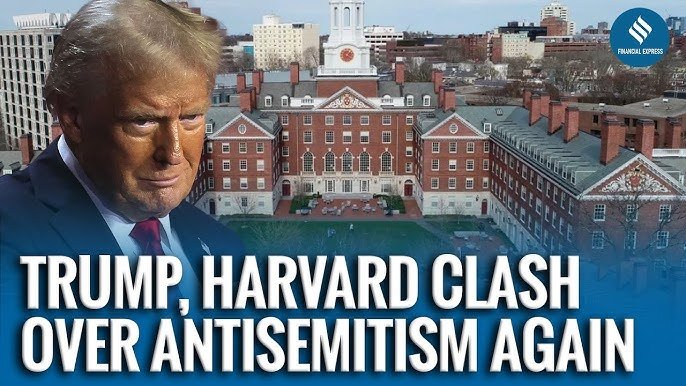
The battle between the US government and elite universities has entered a new and intense phase. In 2026, the Trump administration filed a fresh lawsuit against Harvard University, accusing it of failing to protect Jewish and Israeli students from antisemitism.
But this is not just a legal dispute—it is a deeper clash over free speech, campus activism, federal power, and the future of higher education in America.
This story sits at the intersection of politics, education, and identity—and its consequences could ripple far beyond one university.
A Lawsuit That Sparked National Debate
In March 2026, the US Department of Justice filed a lawsuit against Harvard in a Massachusetts federal court. The allegation was serious: the university had shown “deliberate indifference” toward antisemitic harassment on campus.
According to the government, Jewish and Israeli students faced hostility, exclusion, and harassment—especially during protests linked to the Israel-Gaza conflict.
The lawsuit claims that Harvard failed to enforce its own rules, creating a hostile educational environment in violation of federal civil rights laws.
The stakes are enormous—not just reputational, but financial.
Billions of Dollars at Risk
This is not a symbolic lawsuit.
The US government is seeking billions of dollars in damages and has threatened to cut off federal funding to Harvard.
To understand the scale:
- Harvard receives hundreds of millions annually in federal research funding
- Total funding at risk could reach billions
- Previous attempts already included freezing $2.2 billion in grants
If these actions succeed, they could disrupt critical research in medicine, science, and technology.
This raises a bigger question—should funding be used as a tool to enforce campus policies?
The Root of the Conflict: Campus Protests
The controversy did not emerge in isolation.
It traces back to campus protests following the October 7, 2023 Hamas-Israel conflict.
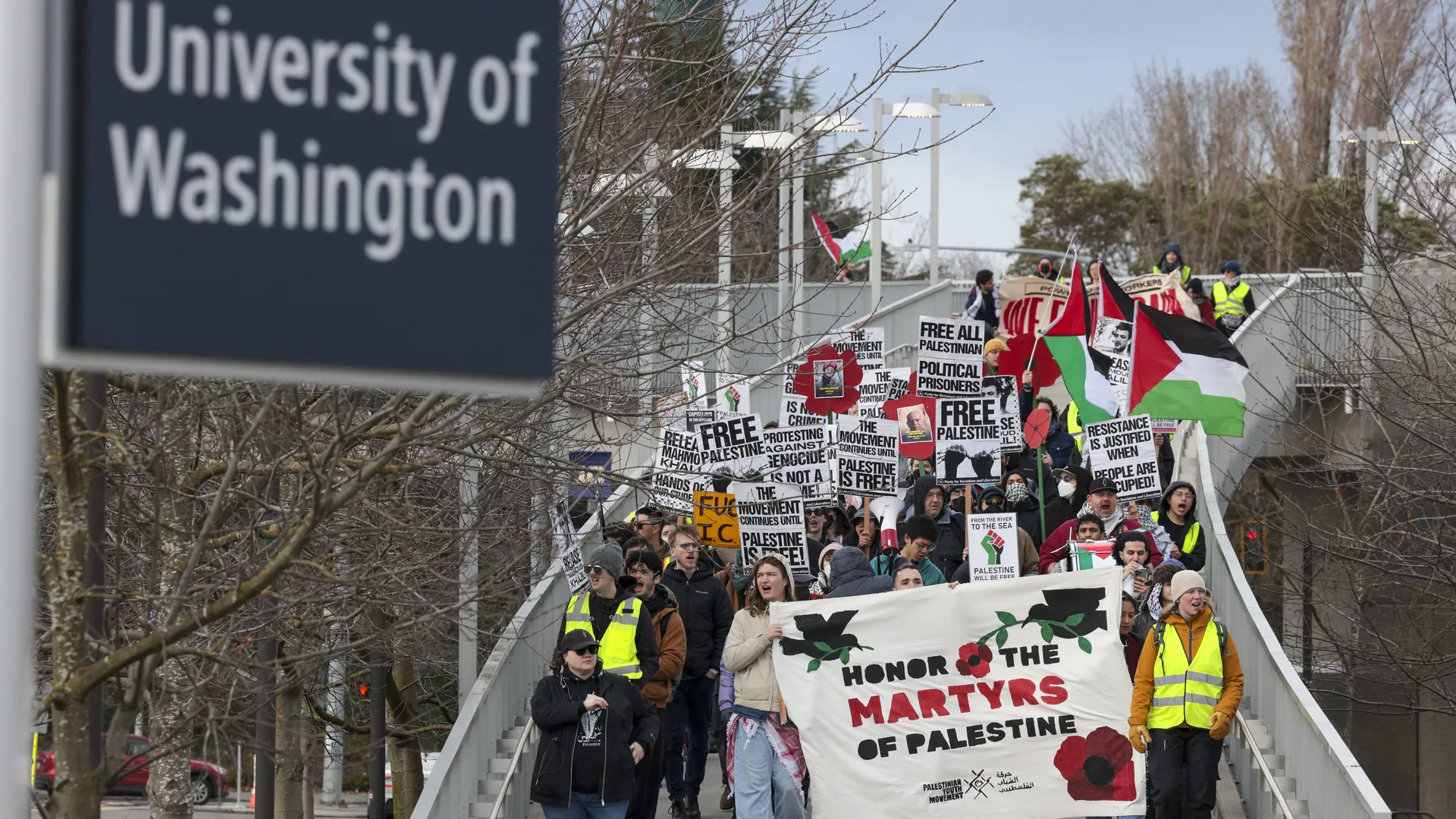
Across US universities, including Harvard, students organised demonstrations—many supporting Palestine, others supporting Israel.
At Harvard, a pro-Palestinian encampment in 2024 became a flashpoint.
The administration argues that such protests crossed a line—leading to:
- Harassment of Jewish students
- Social exclusion
- Unsafe campus environments
But critics argue something very different.
Free Speech vs Campus Safety: A Delicate Balance
At the heart of this issue lies a complex tension:
Where does free speech end and discrimination begin?
Universities have traditionally been spaces for open debate—even controversial ones. But when speech is perceived as threatening or exclusionary, institutions face pressure to intervene.
The Trump administration has taken a strong stance, asserting that universities must actively prevent antisemitism—even if it means restricting certain forms of protest.
Critics, however, worry about the consequences.
Some argue that the government is using antisemitism concerns as a pretext to control universities and suppress dissent.
This is where the debate becomes deeply political.
Harvard’s Response: “Politically Motivated”
Harvard has strongly rejected the allegations.
The university insists that it:
- Has strict anti-discrimination policies
- Is actively working to combat antisemitism
- Supports open dialogue and academic freedom
Officials have described the lawsuit as retaliatory and politically driven, rather than a genuine attempt to protect students.
This defence reflects a broader concern among universities—that federal intervention may undermine institutional independence.

A Pattern of Escalation
This lawsuit is not an isolated event—it is part of a larger pattern.
Over the past year, tensions between the Trump administration and Harvard have steadily escalated:
- February 2026: Government seeks $1 billion in damages
- Earlier lawsuits: Allegations over admissions policies and document access
- Funding freezes: Billions in research grants temporarily blocked
Each step has intensified the conflict.
What began as criticism has evolved into a full-scale legal and political battle.
The Role of Federal Power in Education
This case raises a fundamental question:
How much control should the government have over universities?
Traditionally, US universities operate with significant autonomy. But federal funding gives the government leverage.
Through this lawsuit, the administration is signalling a shift:
- Universities may face stricter federal oversight
- Compliance with civil rights laws will be aggressively enforced
- Funding may become conditional on campus policies
This could redefine the relationship between higher education and the state.
The Broader Campaign Against Universities
Harvard is not the only institution under scrutiny.
The administration has launched investigations into multiple universities, focusing on:
- Antisemitism
- Diversity, Equity, and Inclusion (DEI) policies
- Campus protests
Some critics describe this as part of a broader ideological campaign against higher education.
Supporters, however, see it as a necessary step to ensure accountability.
Either way, universities are now operating in a more politically charged environment than ever before.
Impact on Students: Fear, Confusion, and Division
While legal arguments dominate headlines, students are living the reality.
On campuses:
- Jewish students report concerns about safety and inclusion
- Pro-Palestinian students worry about restrictions on speech
- Many feel caught in a deeply polarised environment
This has transformed campuses from centres of learning into arenas of ideological conflict.
The Legal Core: Title VI of the Civil Rights Act
The lawsuit is built on Title VI, a federal law that prohibits discrimination in institutions receiving government funding.
The key argument:
If Harvard allowed a hostile environment based on identity, it may have violated federal law.
But proving this is not simple.
The court must determine:
- What constitutes harassment vs free speech
- Whether Harvard’s response was adequate
- Whether federal intervention is justified
This makes the case legally complex—and highly consequential.
A Global Lens: Why This Matters Beyond the US
This controversy is being closely watched around the world.
Countries like India, the UK, and Canada face similar challenges:
- Campus protests on global issues
- Rising identity-based tensions
- Balancing freedom and responsibility
The Harvard case could set a precedent for how governments respond to such situations.
The Future of Higher Education
Looking ahead, this case could reshape universities in several ways:
- Stricter Campus Regulations
Universities may introduce tighter controls on protests and speech.
- Increased Federal Oversight
Government involvement in academic affairs may grow.
- Shift in Campus Culture
Students may become more cautious in expressing views.
- Financial Uncertainty
Dependence on federal funding may become a vulnerability.
The Bigger Question: What Should Universities Be?
At its core, this debate is philosophical.
Should universities be:
- Spaces of unrestricted expression, even if uncomfortable?
- Or environments of strict safety and regulation?
Can both coexist?
There are no easy answers.

Final Thoughts: A Defining Moment
The Trump Harvard antisemitism lawsuit 2026 is more than a legal battle—it is a defining moment for education, democracy, and free expression.
It forces us to confront difficult questions:
- How do we protect students without silencing voices?
- How much power should governments have over universities?
- What role should education play in a divided world?
As this case unfolds, one thing is clear:
The future of higher education is being debated—not just in classrooms, but in courtrooms.
And the outcome will shape generations to come.