India’s social and cultural landscape is vast and ancient, shaped by communities and traditions that have persisted for centuries. Among these, the Maithil Brahmins hold a unique place, especially in the region known as Mithila. In this article, we will explore the origins of the Jha surname, its cultural roots, and the broader history and identity of the Maithil Brahmin community — from ancient times to the modern era.
Who are the Maithil Brahmins?
The Maithil Brahmins are a sub‑group of Brahmins traditionally associated with the historical region of Mithila, which today lies mostly within the Indian state of Bihar and parts of Nepal. In ancient times, Mithila was a distinct cultural and political area — a kingdom with its own traditions and scholarly heritage.
Because they originate from this region, they are called Maithil Brahmins — meaning Brahmins of Mithila. They are traditionally considered part of the Panchgan Brahmins, a larger Brahmin grouping in India.
Over centuries, Maithil Brahmins have contributed significantly to philosophy, religion, literature, and governance, and have maintained a strong cultural identity tied to both Vedic traditions and regional practices.

The Jha Surname: Where Does it Come From?
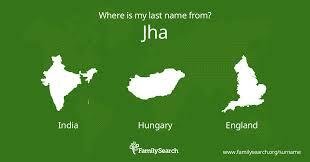
One of the most common and recognizable surnames among Maithil Brahmins is “Jha.” But how did this name originate?
The word “Jha” is believed to be an evolved form of the Sanskrit word “Upadhyaya.” In ancient times, “Upadhyaya” referred to a teacher or a learned person — especially one who taught the Vedas and other sacred texts. Over long centuries, as languages shifted and pronunciation changed, the term passed through modified forms, including “Ojha,” and eventually shortened further to become just “Jha.”
This kind of linguistic evolution — where long Sanskrit words adapt through colloquial use — is common in many Indian surnames. The Jha surname, therefore, carries deep historical roots tied to scholarship and teaching.
The Ancient Lineage of Brahmins
In traditional belief, all Brahmins trace their lineage to the 24 ancient sages (Rishis) from the Vedic period. Among these, 15 of the Rishis’ descendants were said to have lived in Mithila, making the region especially important for the Brahminical tradition in ancient India.
Maithil Brahmins thus carry a distinct identity — both in terms of genealogy and cultural heritage — separate from, but connected to, the broader Brahmin communities across the subcontinent.
The Six Major Maithil Brahmin Subgroups
Within the Maithil Brahmin community itself, scholars and historians identify six primary subgroups or “Kuls”:
- Jha
- Ojha
- Mishra
- Pathak
- Acharya / Saraswati / Upadhyay
- Roy / Kewat / Vakshi / Tripathi / Shukla
These names represent family lineages, traditional occupations (especially in scholarship and teaching), and regional distinctions within the broader Maithil community.
Historically, these lineages helped organize society, marriage alliances, and religious duties. In some ways, they were an extension of the ancient Vedic Varna system — specifically within Brahmin ranks.
Vedic Traditions of Maithil Brahmins
Maithil Brahmins are known for their deep commitment to Vedic scholarship. They traditionally follow two Vedas:
- Sama Veda
- Yajur Veda
Within these, they follow specific “Shakhas” or branches — the Kauthuma branch for Sama Veda, and the Madhyandina branch for Yajur Veda.
The Sama Veda is closely associated with chants and melodies, while the Yajur Veda deals with rituals and sacrificial formulas. Maithil Brahmins who follow these traditions are sometimes called Chhandogya or Vajasneyi Brahmins, based on the Vedic texts they study.
For many centuries, these traditions were preserved through strict oral transmission and scholarly practice.
The Geographical Spread of Maithil Brahmins
Historically, the heartland of the Maithil Brahmin community was the broader region of Mithila — not just in Bihar, but extending into present‑day Nepal. Parts of northeastern India and southern Nepal formed an integral part of what was once a unified cultural and linguistic region.
Today, the Maithil Brahmin community is found not only in Bihar and Nepal, but also in:
- Jharkhand
- Uttar Pradesh (especially Braj region)
- Delhi
- Gujarat
- Madhya Pradesh
- Rajasthan
The community also spread during periods of war, migration, and cultural exchange — especially during the medieval era.

Maithil Brahmins in the Braj Region
During the reign of various medieval rulers — from Ghiyas ud‑Din Tughlaq to Emperor Akbar — many Maithil Brahmins migrated from Mithila to other parts of North India. One significant region where they settled was Braj (around Agra, Mathura, Aligarh, and nearby districts).
In this period, Braj became a home to many Maithil scholars who served in royal courts, temples, and as teachers. Over time, they spread even further into areas like:
- Delhi
- Ajmer
- Jaipur
- Jodhpur
- Bikaner
- Baroda
- Dahod
- Lucknow
- Kanpur
This migration was influenced not only by opportunity but also by hardship — including persecution during the rule of Mughal Emperor Aurangzeb, which forced many communities to move for safety.
From roughly 1658 CE to the Indian Rebellion of 1857, this migration and separation from the original Mithila region continued until modern cultural ties were reestablished.
Reconnection After the 1857 Uprising
After the turmoil of the 19th century — especially after the 1857 Indian Rebellion — Indian reformers began promoting cultural unity and social rebirth. Among them was Swami Brahmanand Saraswati, a spiritual leader who worked to unite scattered Maithil Brahmins across India.
Swami Brahmanand started contacting Maithil Brahmins who had settled far from their ancestral lands, encouraging them to reconnect with their cultural roots in Mithila. As a result, communication and travel between Maithil Brahmins in Agra, Braj, and Mithila itself were reestablished.
During this period, the Maithil Siddhanta Sabha was formed in Aligarh to support cultural dialogue and revive traditional practices. Letters and scholarly exchanges became common, helping bridge the physical and cultural distances that had grown over centuries.
This renewed sense of community helped stabilize the identity of Maithil Brahmins — even if migration and diasporic settlement continued.
Social Structure: The Panji Tradition
One of the oldest cultural practices among Maithil Brahmins — still remembered though fading — is the tradition of “Panji” record‑keeping.
The Panji system was a detailed genealogical archive that documented family lineages, marriage alliances, and ancestry for both Maithil Brahmins and Maithil Kayasthas. These records were historically maintained in written form and were consulted in arranging marriages to ensure proper social alignment.
While the tradition of maintaining Panji records in written form has diminished in modern times, it was once a vital part of social life in Maithil culture.
Religion and Worship
Traditionally, Maithil Brahmins are predominantly Shakta, meaning they primarily worship the Goddess (Devi). Among those who are Vaishnavas, devotion is directed toward Lord Vishnu. Those who follow Shaiva traditions worship Lord Shiva.
This diversity reflects the inclusive nature of Indian spirituality — where multiple paths of devotion coexist, even within the same community. Maithil Brahmins respected not only the ancient Vedic texts but also the living traditions of temple worship and community festivals.
Political and Cultural Influence in Modern Times
By the 1960s and 1970s, Maithil Brahmins began to emerge as influential figures in regional politics, especially in Bihar. Leaders such as Pandit Vinodanand Jha and Lalit Narayan Mishra became prominent voices in public life, raising the community’s profile beyond strictly theological or scholarly roles.
When leaders like Dr. Jagannath Mishra rose to positions of political importance, several Maithil Brahmins held key administrative and social roles in the state. This era showed that the community was not just rooted in ancient tradition, but also active in shaping modern India’s political and cultural landscape.
The Identity of Maithil Brahmins Today
Today, Maithil Brahmins are found throughout India and Nepal, thriving in fields such as:
- Education and scholarship
- Politics
- Law
- Medicine
- Arts and literature
- Administration and public service
Even though many have moved far from Mithila, the cultural memory of their origin remains strong — rooted in language, ritual, and tradition.
While modern life has naturally changed social structures like the Panji record and many traditional rules, the Maithil Brahmin identity continues to be a source of pride and belonging for millions.
Conclusion
The story of the Jha surname and the Maithil Brahmins is not just a story of a community — it is a story of culture, migration, resilience, and continuity. From ancient Vedic scholars to modern political leaders, the Maithil Brahmins have maintained a remarkable cultural legacy. They are a living reminder of India’s layered history, where regional identity and spiritual tradition coexist within the broader narrative of the subcontinent.
Through centuries of change — from ancient Mithila to modern India — the tradition of learning, devotion, and community has endured. The Jha surname, in its simplicity, carries within it the echoes of teachers, scholars, and generations who preserved knowledge against all odds.
That is why the story of the Maithil Brahmins — and of Mithila itself — remains an important chapter in the human story of South Asia.