There was a time when machines replaced manual labour, and people feared losing jobs to engines and factories. Centuries later, history seems to be repeating itself — only this time, the revolution is not powered by smoke and steel, but by intelligence and algorithms.
Welcome to the age of Artificial Intelligence (AI) — a world where machines not only obey but also think, predict, and sometimes create.
As AI continues to penetrate every corner of our economy — from customer care to coding, design to decision-making — one question echoes louder than ever:
“Will AI take our jobs?”
But perhaps a more empowering question to ask is:
“How can we grow with AI?”

The Indian Job Market: An Era of Transition
India, the world’s youngest workforce hub, is standing at a historic turning point. According to 2025 market reports by TeamLease Digital and NASSCOM, nearly 65% of Indian companies are now integrating some form of AI automation into their business processes. While this shift is making routine roles redundant, it is also creating an entirely new spectrum of opportunities.
In 2025, India’s job scene reflects a dual reality:
- Tech roles are booming, with average salary hikes of 30–40% in AI, data science, cloud computing, and cybersecurity.
- Non-tech roles are evolving, too — marketing, education, healthcare, and even HR are transforming with AI-powered tools.
According to Business Standard, AI-related job postings have grown by over 45% compared to 2023, while roles in traditional sectors like manufacturing, clerical work, and basic IT support have declined by nearly 15%.
This clearly signals one truth: the future belongs not to those who resist change, but to those who relearn and reinvent.
Tech Salaries 2025: The Golden Skills of the New Decade
The Indian tech job market has become a battlefield of skill and adaptability. In 2025, companies are no longer asking for degrees — they are asking for digital fluency.
Here’s what the salary landscape looks like in India today:
| Role | Average Annual Salary (2025) | Growth Trend |
| AI & Machine Learning Engineer | ₹12–28 LPA | 🔺 +40% |
| Data Scientist | ₹10–22 LPA | 🔺 +35% |
| Cloud Architect | ₹15–30 LPA | 🔺 +32% |
| Cybersecurity Expert | ₹9–20 LPA | 🔺 +28% |
| Prompt Engineer / AI Trainer | ₹8–18 LPA | 🔺 +45% |
These figures tell a story — AI isn’t taking away all jobs; it’s changing what jobs mean.
In fact, LinkedIn’s 2025 Workforce Report shows that over 70% of top-paying roles in India now require AI literacy — not necessarily programming expertise, but the ability to use AI tools creatively and responsibly.
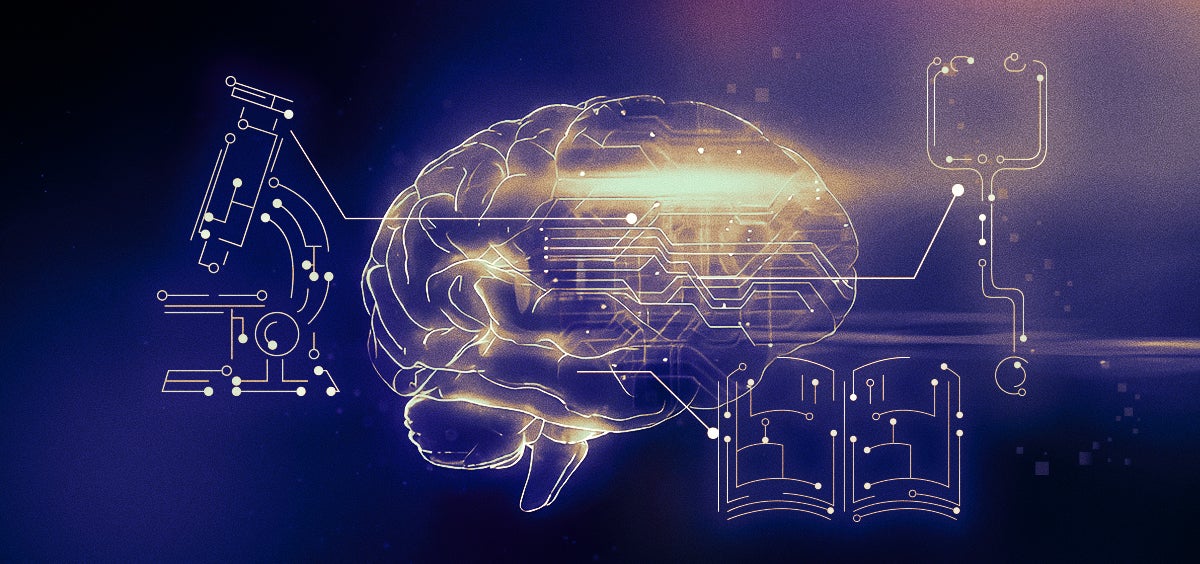
Non-Tech Jobs: AI’s Surprising Allies
It’s easy to assume that only techies will survive the AI wave, but reality paints a broader picture.
Fields like content creation, education, psychology, healthcare, and even law are finding new life through intelligent tools.
- Teachers are using AI to personalise learning for every student.
- Doctors are relying on AI-driven diagnostics for faster and more accurate treatment.
- Writers and journalists are using AI as a co-creator to enhance storytelling and research.
- Entrepreneurs are using AI analytics to predict trends and customer behaviour.
Instead of eliminating human potential, AI is amplifying it — turning routine work into creative exploration.
A report by The Economic Times points out that while some entry-level roles in non-tech sectors are shrinking, mid- and senior-level professionals with AI adaptability are seeing up to a 25% salary hike in 2025.
The Shift: From Job Security to Skill Security
The traditional idea of “a safe job” has become obsolete. In this new economy, skills are the only security.
AI has redefined employability — not as a position held, but as a capacity to evolve.
Let’s face it — the workforce of 2030 will look nothing like today’s.
Jobs like AI ethicist, data storyteller, digital twin engineer, and metaverse architect — once unheard of — are already becoming mainstream.
Meanwhile, roles rooted in repetition — like data entry, telemarketing, or basic customer service — are slowly fading.
But here’s the bright side: humans are irreplaceable where empathy, ethics, and creativity are required.
No matter how advanced an algorithm becomes, it cannot dream, empathise, or lead the way a human can.
Reskilling: The New Currency of Success
If 2024 was about realising the power of AI, 2025 is about learning to live with it.
AI has become the new electricity — invisible yet indispensable. And those who learn to harness it will lead the next economic revolution.
The Indian government’s Digital Skilling Mission 2025 and initiatives by private firms like Infosys Springboard and Google India’s AI-First Learning Program are opening massive opportunities for youth and mid-career professionals to upskill.
Platforms like Coursera, Simplilearn, and IIT-backed programmes have seen a 60% surge in AI and data science enrolments in just one year.
As one NASSCOM official rightly said,
“The question isn’t whether AI will replace humans, but whether humans will learn to work with AI.”
The Human Edge: Creativity, Compassion, and Critical Thinking
Amid all the buzz about automation, we often forget the simplest truth — AI learns from humans.
Every model, every algorithm, every chatbot begins its journey from human input, human values, and human creativity.
So while AI can analyse, it cannot empathise.
It can imitate art, but it cannot feel beauty.
It can predict trends, but it cannot understand dreams.
This is where humans hold an unshakable edge — the power of emotional intelligence, imagination, and moral judgement.
The future of work will therefore not be “AI versus humans” but “AI with humans.”
Those who learn to combine creativity with computation will become the architects of a new India.
The Road Ahead: From Fear to Freedom
Yes, AI will disrupt industries.
Yes, it will make some roles obsolete.
But it will also unlock infinite possibilities for those who embrace it.
India, with its vast pool of tech talent and growing digital economy, stands at a golden threshold.
If our workforce learns to blend innovation with intelligence, then this revolution will not destroy jobs — it will redesign them.
The future belongs to the curious, courageous, and creative.
To those who dare to learn, unlearn, and relearn.
So the next time you hear, “AI is taking jobs,” remember —
it’s not taking away employment;
it’s taking away stagnation.
Every industrial shift in history began with fear — and ended with progress.
The AI era will be no different. What matters now is not how fast AI grows, but how fast we grow with it.
Because in this intelligent new world, survival won’t depend on what you know —
but on how swiftly you learn, adapt, and innovate.