Introduction
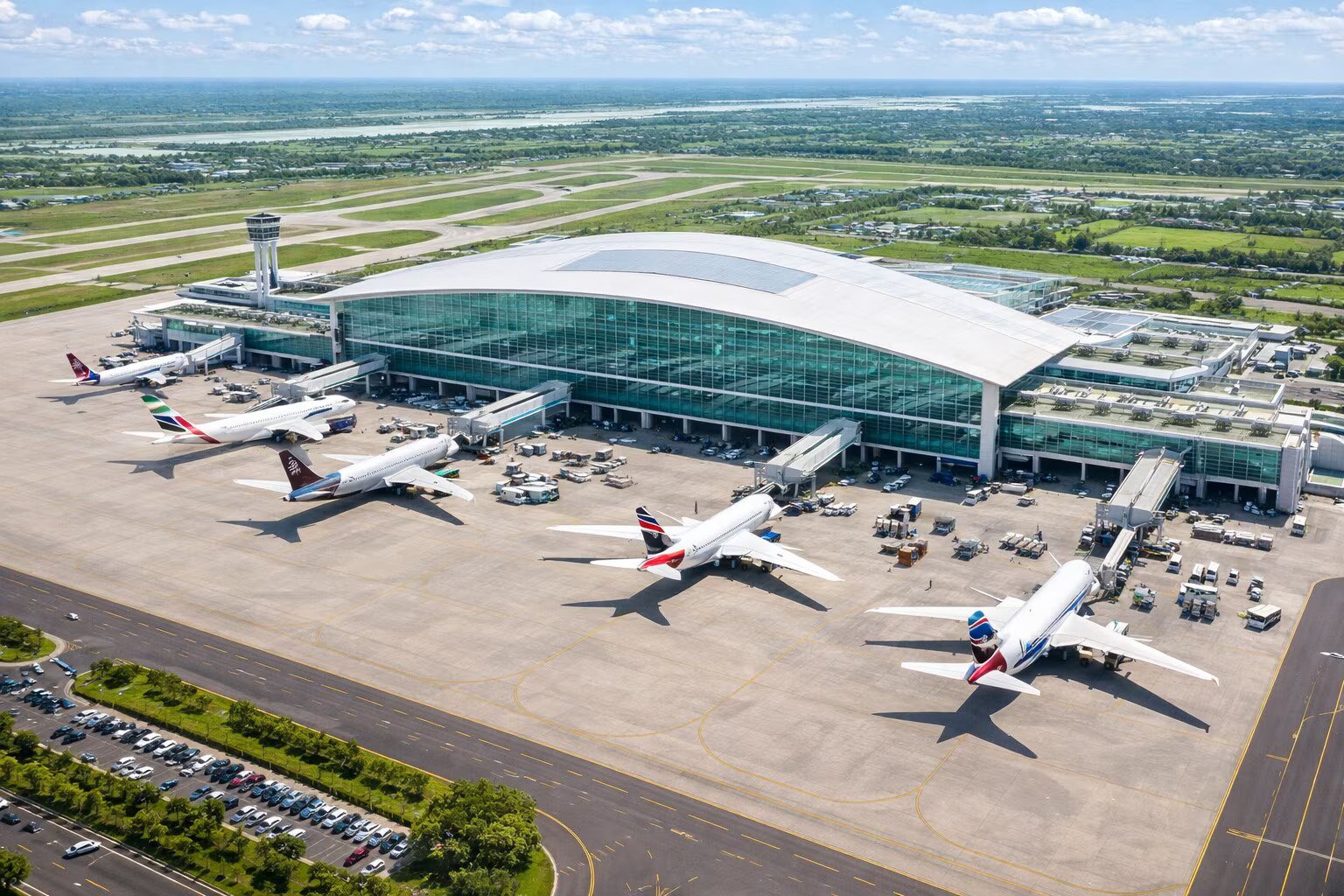
Every few years, Bihar hears about a big project that promises to change daily life. Some fade into paperwork. A few slowly become reality. The recent approval of the Sonpur International Airport feels like one of those moments people want to believe in—but carefully. For decades, travellers from Patna and nearby districts have adjusted their plans around limited international connectivity. Many still take trains to other cities just to catch overseas flights. Now, with a greenfield airport proposed across the Ganga in Sonpur, the conversation has shifted from “why not” to “maybe this time.” The hope is real—but so is the wait ahead.
More than an Announcement
In Bihar, people have learned not to celebrate infrastructure announcements too early. Experience has made them patient—and slightly cautious.
What makes this development different is that the state cabinet has moved beyond talk. Under Chief Minister Nitish Kumar, the government has approved land acquisition for a new international greenfield airport in Sonpur near Patna. The target year for completion has been set at 2030.
This step matters. In large public projects, land approval is often the point where plans either begin moving forward—or quietly stall. Clearing this stage suggests the government is at least serious about pushing the project ahead.
Still, people will be watching what happens next.

Why Sonpur was Chosen
The proposed airport site lies in the Dariyapur Chawar area of Saran district, between Hajipur and Dumaria. Around 4,200 acres of land are expected to be acquired.
On the map, this location makes practical sense. It sits north of the Ganga, while most current aviation activity serving Patna is located on the southern side. For residents of north Bihar, this could eventually mean shorter, less stressful journeys to catch international flights.
Anyone who has travelled across the river during peak hours knows why this matters.
If connectivity improves as planned, districts like Saran, Vaishali, and Muzaffarpur could feel the difference first.
The Investment Signals Big Intent
The cabinet has cleared about ₹1,302 crore just for land acquisition. That figure alone tells us this is not being planned as a small regional airstrip.
Officials have indicated the runway will be long enough to handle wide-body aircraft used on major international routes. This detail is crucial, because Bihar’s biggest aviation limitation has never been demand—it has been infrastructure capacity.
If Sonpur gets the runway length and technical design right, it could finally allow direct long-haul flights that passengers currently access from other metros.
For frequent international travellers from Bihar, that would be a quiet but meaningful shift.
Why the Existing Airport isn’t Enough
To understand the importance of this project, one must look honestly at the current situation.
Pressure at Patna Airport
Patna’s Jay Prakash Narayan International Airport handles heavy passenger traffic but operates under physical constraints. The runway length and surrounding urban development leave very little room for expansion.
The impact shows up in everyday ways:
- limited long-haul international options
- congestion during busy hours
- restricted future scaling
Because of this, many travellers from Bihar still plan their international journeys via Delhi or Kolkata.
Bihta Helps—but Only Partly
The airport project at Bihta will certainly ease some domestic pressure. However, it is being developed alongside an Air Force facility and does not offer the full flexibility of a standalone greenfield international hub.
That is why Sonpur carries a different level of expectation.
What a Greenfield Airport Could Change
The word “greenfield” may sound technical, but its importance is simple: the airport is being built from scratch on new land.
This gives planners something older airports rarely have—space to think long-term.
With proper planning, Sonpur could feature:
- a longer, safer runway
- modern passenger terminals
- better cargo infrastructure
- room for expansion decades later
For a growing state, planning ahead matters. Retrofitting old airports often costs more and delivers less.
If executed well, Sonpur could become Bihar’s most future-ready aviation project.

The Human Side of the Story
Infrastructure discussions often focus on investment numbers and technical design. But there is also a human angle here that rarely gets enough attention.
Bihar has a large migrant population working in the Gulf and Southeast Asia. For many families, international travel currently begins with a long domestic journey—sometimes overnight—just to reach the departure airport.
If a full-scale international airport becomes operational near Patna, it could quietly remove a major layer of stress for these families.
Less rushing. Fewer connecting uncertainties. Shorter travel chains.
Sometimes the biggest impact of infrastructure is felt in small personal moments.
The Timeline Question Everyone Is Asking
The government has set 2030 as the target. On paper, that sounds reasonable.
But people in Bihar—and across India—have seen enough big projects to know that timelines often stretch. Land disputes, environmental approvals, funding changes, and contractor delays can all slow momentum.
The current approval is a strong beginning. The real test will be consistency over the next few years.
If visible progress continues year after year, confidence will grow naturally.
If the project slows early, public scepticism will return just as quickly.
A Moment of Guarded Optimism
Right now, the public mood is not explosive excitement. It is something more measured—hope mixed with caution.
People want this airport. Businesses want it. Migrant families would certainly welcome it.
But they also want to see bulldozers, survey teams, and construction timelines—not just announcements.
Bihar has reached the stage where delivery matters more than declarations.
Conclusion
The approval of the Sonpur International Airport is an important step in Bihar’s long journey toward better air connectivity. It shows intent, scale, and a willingness to address a real infrastructure gap near Patna.
But the journey from cabinet file to operational runway is long and demanding.
If the government maintains steady execution, Sonpur could genuinely change how Bihar connects with the world. Travel could become easier, investment could follow, and the state could finally gain the modern aviation hub it has long needed.
For now, though, people are watching quietly—and waiting for the first real signs of take-off.