There are stories that fade with time, and then there are stories that grow stronger with every passing generation. The story of Maa Sita belongs to the second kind. It does not stay confined to books—it travels through temples, festivals, songs, and the quiet faith of millions.
For centuries, one question has gently lived in the hearts of devotees: Where was Maa Sita truly born?
Is it the sacred soil of Punaura Dham in Sitamarhi (Bihar), where she is believed to have emerged from the earth? Or is it Janakpur (Nepal), the grand city that nurtured her childhood and shaped her destiny?
This is not just a question of geography. It is a journey into mythology, culture, identity, and belief. And in recent years—especially with the massive temple project at Punaura Dham—this conversation has taken a new, powerful turn.
This pillar article goes deep. It connects history with faith, travel with storytelling, and ancient beliefs with modern development. By the end, what emerges is not just an answer—but a complete understanding.
The Divine Birth of Maa Sita: A Story Rooted in the Earth
The birth of Maa Sita is unlike any other narrative in Indian mythology. It is simple, silent, and deeply symbolic.
King Janaka of Mithila was performing a sacred ritual during a time of drought. As part of this ritual, he took a plough and began to till the land himself—a king humbling himself before nature.
In that moment, something extraordinary happened.
From the furrow created by the plough, a baby girl emerged. Calm, radiant, and divine.
There were no witnesses beyond the king, no grand celebrations—only a quiet realisation that this was no ordinary child.
She was named Sita, meaning “furrow.”
This origin is powerful. It connects her directly to the earth—making her not just a goddess, but a symbol of nature, purity, and life itself.
And because her birth is tied to land, the question of which land becomes deeply emotional and culturally significant.
Punaura Dham, Sitamarhi: The Birthplace Believed by Millions
Located about 5 kilometres from Sitamarhi town in Bihar, Punaura Dham is widely believed to be the birthplace of Maa Sita.
This belief is not recent. It has lived for centuries in the traditions of the Mithila region. Local people do not see it as a theory—they see it as truth passed down through generations.
The site is known as Janaki Janmasthali, meaning the birthplace of Janaki (another name for Sita).
At the centre of this sacred land is a temple dedicated to Maa Sita. Nearby lies Janaki Kund, a pond that holds deep spiritual significance. Devotees believe that its waters carry blessings, especially for family well-being and fertility.
What makes Punaura Dham unique is its simplicity. It does not overwhelm—it quietly invites belief.
And now, with the ongoing grand temple project, this quiet faith is stepping into a larger, global spotlight.

Janakpur, Nepal: The Land of Upbringing and Legacy
Across the India-Nepal border lies Janakpur, a city deeply woven into the life of Maa Sita.
If Punaura Dham represents her birth, Janakpur represents her life. It is believed to be the capital of King Janaka’s kingdom—the place where Sita grew up as a princess.
The magnificent Janaki Temple stands as a testament to devotion and architectural brilliance. Built in traditional Mithila style, it attracts pilgrims from across the world.
Festivals like Vivah Panchami, celebrating the marriage of Ram and Sita, turn Janakpur into a vibrant spiritual centre.
Janakpur does not strongly contest the birthplace claim in the same way. Instead, it carries the emotional and cultural legacy of Sita’s life.
Together, Sitamarhi and Janakpur form a complete narrative—birth and upbringing, origin and journey.
The 2025–2026 Transformation: Rise of Punaura Dham as a Global Pilgrimage Hub
For decades, Punaura Dham remained a sacred yet relatively lesser-known pilgrimage site.
That changed dramatically with the announcement of a grand temple project in 2025.
The Bhoomi Pujan ceremony, attended by top leaders, marked the beginning of a massive transformation.
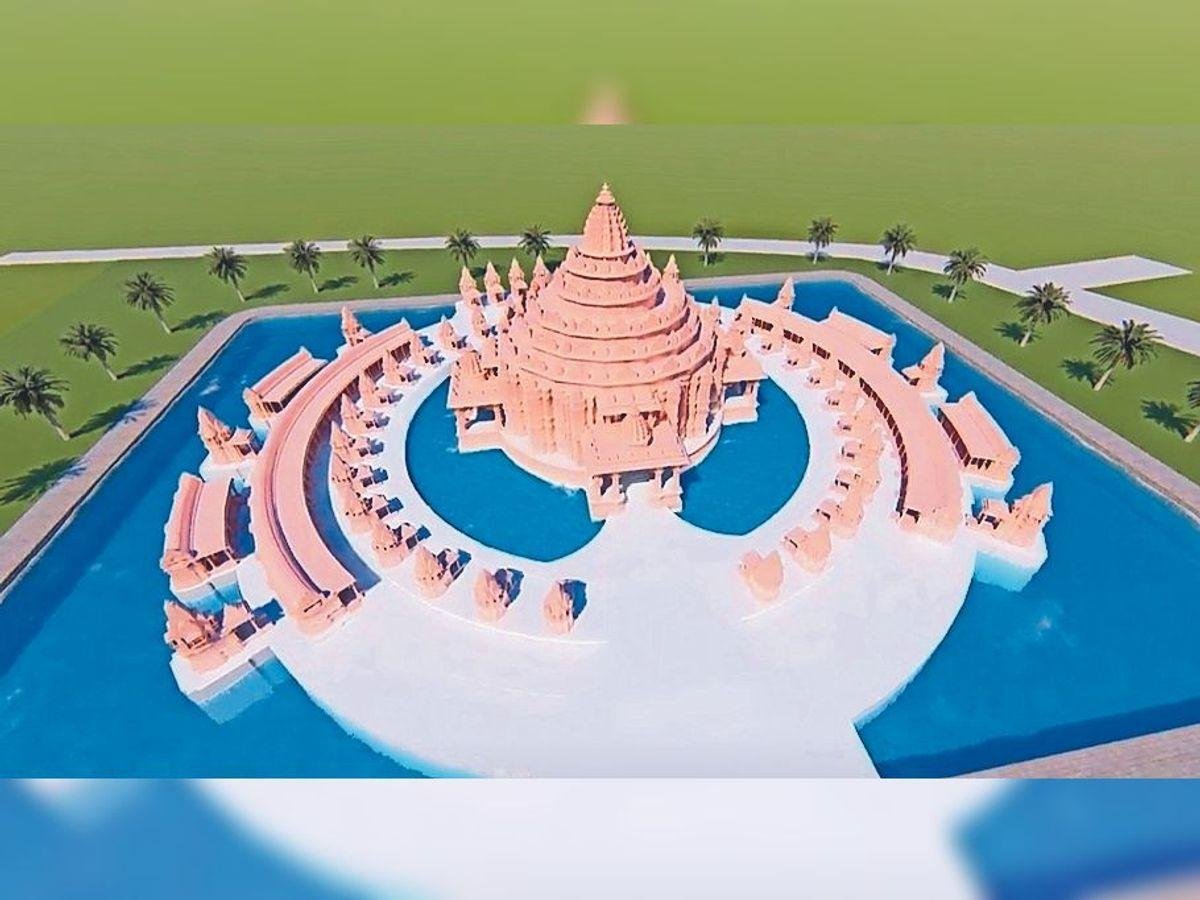
The proposed temple complex is spread across more than 60 acres and is designed to be far more than a place of worship. It is envisioned as a spiritual ecosystem.
Plans include immersive Ramayana galleries, meditation centres, pilgrim facilities, and cultural spaces.
This project is not just about building a temple—it is about creating an experience.
It signals a shift—from local belief to global recognition.

Cultural Revival: Mithila’s Moment of Recognition
The development of Punaura Dham is also a story of cultural revival.
The Mithila region, known for its rich traditions, literature, and Mithila paintings, has long held a quiet cultural strength.
With this project, that strength is finally receiving wider attention.
Tourism is expected to grow. Infrastructure is improving. Local artisans, small businesses, and service providers are likely to benefit.
This is not just religious growth—it is economic and cultural empowerment.
Ramayana Circuit: Walking Through the Epic
The idea of the Ramayana Circuit is gaining momentum, connecting major locations from the epic into a single spiritual journey.
This includes:
- Ayodhya (birthplace of Lord Ram)
- Sitamarhi (birthplace of Sita, as believed)
- Janakpur (her upbringing and marriage)
- Other sacred sites across India and Nepal
This circuit allows devotees to experience the Ramayana not as a story, but as a journey.
Each location becomes a chapter. Each step becomes a connection.
Travel Guide: Sitamarhi & Janakpur
Planning a visit to these sacred locations is becoming easier with improving connectivity.
Sitamarhi is well connected by rail and road, especially from Patna and other major cities in Bihar.
Janakpur can be reached via the India-Nepal border, with regular transport options available.
The best time to visit is between October and March, when the weather is pleasant. Festivals like Vivah Panchami offer a deeper cultural experience.
Accommodation options are steadily improving, especially with the expected rise in tourism due to the temple project.
Why This Topic Matters Today
In a fast-moving world, stories like that of Maa Sita offer grounding.
They remind us of values—strength, patience, dignity, and resilience.
The question of her birthplace is not just about history. It is about staying connected to those values.
And as Punaura Dham rises as a global spiritual centre, it reflects something deeper—the desire to reconnect with roots.
FAQs – Sita Birthplace, Sitamarhi & Janakpur
- Where is Punaura Dham located?
Near Sitamarhi in Bihar, close to the India-Nepal border.
- Is Punaura Dham officially recognised as Sita’s birthplace?
It is widely believed and accepted by many devotees, though interpretations vary.
- What is Janakpur famous for?
It is believed to be the place where Sita grew up and where her marriage to Lord Ram took place.
- What is the new temple project at Punaura Dham?
A large-scale temple complex aimed at developing it into a global pilgrimage destination.
- Can Sitamarhi and Janakpur be visited together?
Yes, both places are close and often covered in a single trip.
- What is the Ramayana Circuit?
A spiritual travel route connecting key locations associated with the Ramayana.
- What is the best time to visit?
October to March is ideal.
Final Thoughts
Some truths are not meant to be confined to a single answer.
Maa Sita’s story is one of them.
Whether one stands in Punaura Dham or walks through Janakpur, the feeling remains the same—a connection to something timeless and deeply human.
And as the temple rises, as pilgrims arrive, and as the story continues to unfold, one thing becomes clear:
This is not just about the past.
It is about keeping faith alive in the present.
Quick Summary
- Punaura Dham is widely believed to be Sita’s birthplace
- Janakpur represents her upbringing and life
- A grand temple project is transforming Sitamarhi
- The Ramayana Circuit connects multiple sacred sites
- The debate is about perspective, not conflict