Introduction
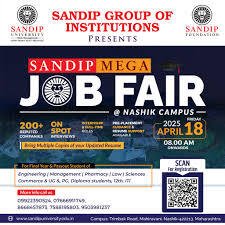
In today’s uncertain job market, even capable young people often find themselves stuck between degrees and opportunities. Applications are sent, emails are waited on, and months quietly pass. It is in this backdrop that the recent announcement from Sandip University has begun to draw real attention.
During a Bhoomi Pujan ceremony followed by a press interaction, university officials confirmed that a large employment fair will soon be organised on campus. The tone of the briefing was not overly dramatic — and perhaps that is what made it sound more genuine. The university’s stated aim is simple: bring employers and job seekers onto the same ground, face to face, without the usual distance and delay.
For many young aspirants in the region, that alone feels like a welcome development.
What Was Shared in the Press Conference
Speaking to the media during the Bhoomi Pujan event, university representatives said preparations for the employment fair have already begun. Invitations are being planned for companies across different sectors, and the organisers appear keen to ensure that the event is not limited to a routine campus placement exercise.
Officials made it clear that the fair is intended to benefit a wider pool of candidates — not just students currently studying at the university. This broader approach suggests the institution is trying to respond to a real ground-level need: access.
Because for many young people, the problem is not willingness to work — it is simply reaching the right opportunity.
Why Employment Fairs Still Matter
In an age of online portals and automated hiring systems, one might wonder whether physical job fairs still hold relevance. But anyone who has seriously searched for work knows the answer.
Digital applications are easy to send but hard to track. Responses are uncertain. And for candidates from smaller towns, repeated travel for interviews is often expensive and exhausting.
A well-organised employment fair changes this dynamic. It compresses months of searching into a single day of interaction. It allows candidates to speak directly to recruiters, clarify doubts instantly, and make a human impression that no online form can fully capture.
That is why, despite the digital shift, such fairs continue to attract strong interest.
Who is Likely to Benefit
One of the more encouraging signals from the announcement is the inclusive participation model. The university has indicated that the opportunity will extend beyond its own student community.
Those expected to benefit include:
- Fresh graduates looking for their first break
- Diploma and technical candidates
- Experienced job seekers exploring new roles
- Youth with basic qualifications seeking entry-level work
If implemented sincerely, this wider eligibility could make the fair particularly meaningful for candidates from nearby districts who often remain outside major recruitment networks.
Companies and Sectors in Focus
While the final list of participating organisations is still being compiled, the university has reportedly begun outreach across multiple industries. Early indications suggest possible participation from sectors such as IT, manufacturing, banking, management, services, and retail.
Of course, the real impact of the fair will depend heavily on the seriousness and diversity of the companies that eventually confirm their presence. Quantity matters — but quality matters more.
Still, the intent to bring a multi-sector mix is a positive sign.
What the Day May Look Like
If the preparations discussed in the press interaction translate smoothly into execution, candidates can expect a structured but busy environment on the day of the fair.
Typically, such events begin with on-spot registration, followed by document verification and movement toward company-specific interview areas. Some recruiters may conduct quick screening rounds, while others may hold slightly longer interactions.
In favourable cases, shortlisted candidates may even receive provisional offers the same day. While this is never guaranteed, it remains one of the biggest motivations for attendees.
A Moment of Realism for Aspirants
Announcements create excitement — but outcomes depend on preparation.
Candidates who treat employment fairs casually often return disappointed. Those who arrive prepared usually walk away with at least a strong lead.
Anyone planning to attend would be wise to:
- Carry multiple copies of an updated CV
- Revise basic interview questions
- Keep academic and identity documents ready
- Maintain realistic expectations
Opportunity may come to the venue — but readiness must come from the candidate.

Conclusion
The upcoming employment fair at Sandip University, announced during the Bhoomi Pujan press conference, feels less like a routine institutional event and more like a timely response to a genuine need. In a period when many young people are quietly searching for direction, platforms that create direct employer interaction still carry real weight.
Whether the fair ultimately becomes a turning point for many candidates will depend on execution, company participation, and individual preparation. But the signal from the university is clear: it is attempting to step beyond classrooms and engage with the employment realities outside the campus gates.
For job seekers in and around the region, this is not just another announcement to scroll past. It is an opportunity that deserves attention — and thoughtful preparation.