Introduction
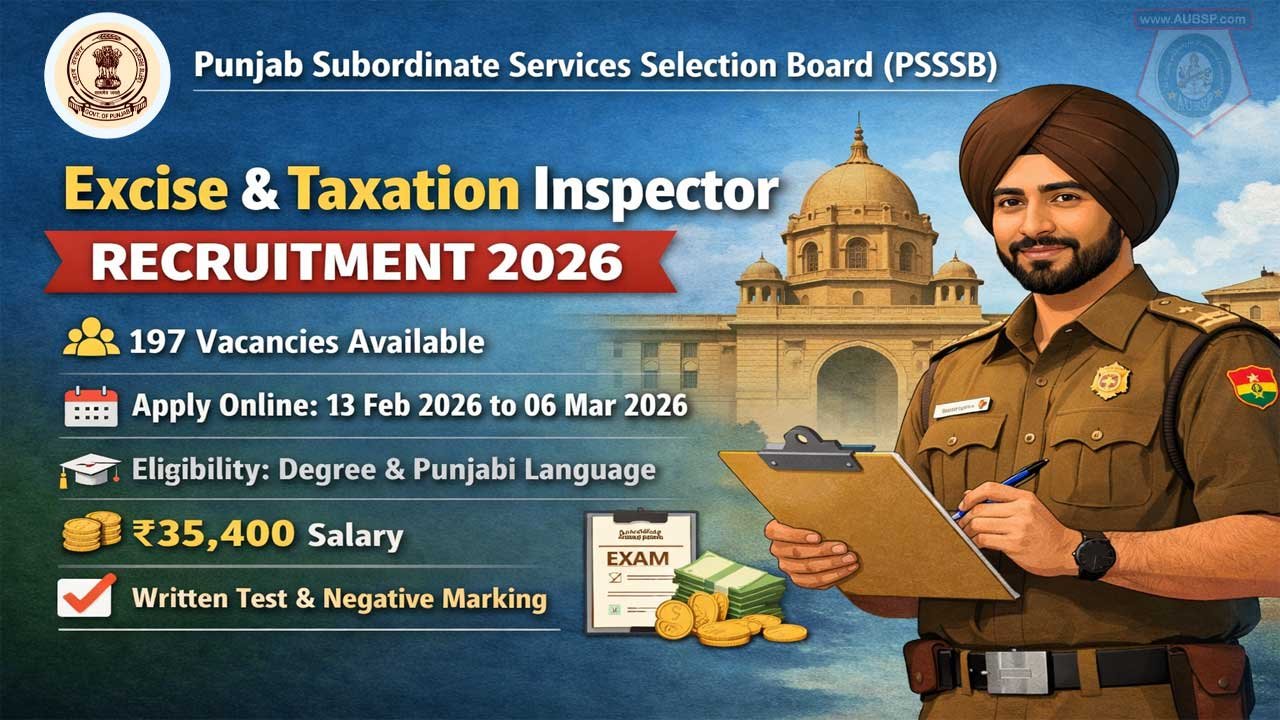
Every serious government job aspirant knows this feeling. Months go by in preparation mode—books open, mock tests attempted, notifications checked almost out of habit. Most of the time, nothing significant appears. And then suddenly, a recruitment notice drops that makes people sit up a little straighter. The PSSSB Excise and Taxation Inspector Recruitment 2026 has created that exact stir among candidates across Punjab.
This is not just because of the job title, but because of the number—197 vacancies is a meaningful figure in today’s competitive environment. For graduates who have been waiting patiently for a solid Group C opportunity, this notification feels timely. Still, excitement alone does not convert into selection. What usually works is calm understanding, early preparation, and avoiding the small mistakes that many candidates unknowingly make. That is why going through the details properly matters more than rushing to the apply button.
A Quick Look at the Recruitment
The recruitment has been announced by the Punjab Subordinate Services Selection Board (PSSSB) for the post of Excise and Taxation Inspector under Group C services. Within the state government structure, this role is considered reasonably balanced—responsible enough to carry weight, yet not excessively field-heavy.
One important thing seasoned aspirants notice immediately is the scale. Inspector-level vacancies in Punjab do not appear in such numbers very frequently. When they do, competition naturally tightens. Candidates who have been preparing seriously for state-level posts often treat such notifications as moments that should not be taken casually.
The online application window opened on 13 February 2026 and will close on 06 March 2026. The time frame is adequate but not something to stretch unnecessarily. Waiting until the final days often creates avoidable pressure.
Vacancy Picture and Reservation
According to the notification, a total of 197 posts have been announced. Out of these, 65 posts are reserved for women candidates, reflecting the state’s continued push towards wider participation of women in government services.
Reservation for other categories will apply as per Punjab government rules. Candidates should take a few careful minutes to verify their category status and supporting certificates before applying. In many recruitments, otherwise well-prepared candidates face trouble later simply because of small documentation mismatches.
Salary: Beyond the Monthly Figure
On paper, the job offers a basic pay of ₹35,400. The approximate gross monthly salary falls between ₹45,000 and ₹55,000, depending on allowances. For fresh graduates especially, this is a respectable starting point.
However, those who have observed government careers closely know that the real value builds gradually. Along with the base salary come Dearness Allowance revisions, House Rent Allowance, medical benefits, and pension-related provisions as per rules in force. Over the years, increments and promotions tend to strengthen the overall financial position.
For many candidates comparing uncertain private jobs with government service, this steady progression often matters more than the starting number itself.
Eligibility: Where Many Candidates Slip
Before getting too deep into preparation mode, it is wise to pause and check eligibility carefully. A surprising number of candidates lose their chance not in the exam hall but at the document stage.
Educational Qualification
Applicants must hold a graduation degree in any stream from a recognised university. In addition, a 120-hour computer course or O Level certification is required. The candidate must also have studied Punjabi at the Matric level.
The Punjabi requirement may look routine, but it deserves attention. Every year, some applicants realise late that their documents do not fully satisfy this condition.
Age Limit
The age criteria follow standard PSSSB norms, with relaxations available for reserved categories as per Punjab government rules. Since these relaxations vary, checking the detailed notification is always the safer approach.
Selection Process: Understand the Flow
The recruitment process is divided into two stages. Knowing what each stage demands can quietly improve preparation quality.
Part A – Punjabi Test (Qualifying)
The first stage is a Punjabi language test. It is qualifying in nature, meaning the marks will not be counted in the final merit. Still, clearing it is compulsory.
Many candidates treat this paper lightly and later regret it. In reality, a steady revision of basic Punjabi grammar and comprehension is usually enough to cross this stage comfortably.
Part B – Written Examination (Merit Based)
The second stage is the main written examination, and this is where the real competition unfolds. The paper carries negative marking of 0.25 marks for each wrong answer.
Because of this, accuracy quietly becomes more valuable than aggressive attempts. Candidates who practise mock tests regularly tend to develop the calm judgment this exam rewards.
Application Process: Simple but Sensitive
The form is online, but that does not mean it should be filled casually. Small errors here have a habit of surfacing later at inconvenient stages.
Candidates must begin by registering on the official PSSSB portal using an active mobile number and email ID. These should remain accessible throughout the recruitment cycle. While entering personal details, matching the exact spelling from official documents is important.
After uploading the photograph, signature, and required certificates in the prescribed format, candidates must complete the fee payment. Before final submission, reviewing the entire form slowly—just once—is often enough to catch most mistakes. Saving the confirmation page is a small step that often proves useful later.
A Practical Preparation Approach
In exams like this, dramatic study bursts rarely work. What tends to help is steady, repeatable effort.
First, make sure the Punjabi qualifying paper is under control so it does not become a last-minute worry. After that, most of the focus should move toward the written exam syllabus.
Instead of collecting too many books, it usually helps to choose a few reliable sources and revise them multiple times. Mock tests deserve special attention because of the negative marking system. Over time, they train the mind to avoid unnecessary risks.
Keeping documents ready and organised is another quiet step that experienced candidates never ignore.

Why This Recruitment is Getting Attention
Large inspector-level openings in Punjab have not been appearing very frequently in recent times. That alone explains why this notification is being watched closely. The Excise and Taxation Inspector role offers a steady, structured career path that many graduates actively seek.
With 197 vacancies available, the opportunity is realistically competitive but not discouragingly narrow. Candidates who prepare patiently and avoid panic-driven mistakes usually give themselves a fair chance.
Important Dates
Marking dates early often prevents last-minute regret.
- Application Start: 13 February 2026
- Last Date to Apply: 06 March 2026
Applying early generally keeps the mind free for focused preparation later.
Final Thoughts
The PSSSB Excise and Taxation Inspector Recruitment 2026 is the kind of opportunity that serious aspirants quietly wait for. It offers stability, a respectable salary path, and a clearly defined selection process. Nothing about it is effortless—but then, meaningful government jobs rarely are.
Candidates who approach this with patience, organised preparation, and careful form filling will naturally stand in a stronger position. In competitive exams, success often comes not from doing something extraordinary, but from doing the ordinary steps consistently well.
—-Lalit Jha, MD, Pen to Print Publication