India’s education system is quietly undergoing a powerful shift—one that could redefine what it means to be a “professor.” Imagine becoming a university professor without a PhD or NET qualification. Sounds surprising? That’s exactly what the University Grants Commission (UGC) has made possible through its innovative concept of Professor of Practice (PoP).
This move is not just a policy update; it is a mindset shift—bringing real-world expertise into classrooms and bridging the long-standing gap between theory and practice.
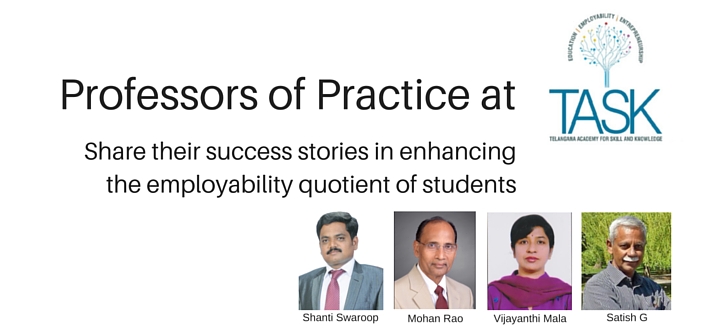
What is a Professor of Practice?
A Professor of Practice is not your conventional academic. Instead of being defined by degrees, this role values real-world experience and professional excellence.
These are individuals who have spent years mastering their craft—be it journalism, music, entrepreneurship, defence services, or technology. According to UGC guidelines, such professionals can now be appointed as professors in universities even without traditional academic qualifications like PhD or NET.
The idea is simple yet powerful: students should not only learn from textbooks but also from people who have lived the subject in real life.

Why Did UGC Introduce This Concept?
For years, a common criticism of higher education in India has been its disconnect from industry realities.
Students graduate with degrees but often lack practical skills. Employers frequently note that fresh graduates require additional training before they become job-ready.
The Professor of Practice model directly addresses this issue by:
- Bringing industry insights into classrooms
- Teaching practical application of theoretical concepts
- Enhancing employability and career readiness
In essence, it aligns education with the needs of the modern job market.
Eligibility Criteria: Experience Over Degrees
Unlike traditional academic roles, the eligibility for Professor of Practice focuses on experience rather than formal qualifications.
Key requirements include:
- Around 15 years of professional experience in a relevant field
- Demonstrated expertise and recognition in the domain
- Ability to contribute to teaching, mentoring, and innovation
Fields such as engineering, science, media, literature, entrepreneurship, social sciences, and the arts are all included under this framework.
This opens the door for a diverse range of experts to shape the next generation.
Real-Life Example: Malini Awasthi’s Appointment
One of the most talked-about examples of this initiative is the appointment of Padma Shri folk singer Malini Awasthi as a Professor of Practice at Chaudhary Charan Singh University (CCSU), Meerut.
Her selection reflects the true spirit of the programme.
With decades of experience in Indian folk music and cultural preservation, she brings something no textbook can offer—authentic knowledge, stage experience, and a deep understanding of India’s artistic heritage.
Students under her guidance are expected to gain:
- Exposure to real performance environments
- Insights into cultural traditions
- Practical career guidance in the arts
This is education stepping beyond classrooms and entering the real world.
How This Benefits Students
The introduction of Professors of Practice is a major win for students.
- Learning That Goes Beyond Theory
Students get to understand how concepts are applied in real-life situations. This makes learning more meaningful and engaging.
- Better Career Opportunities
Industry experts often bring networks, internship opportunities, and career insights, helping students transition smoothly into jobs.
- Skill Development
From communication and leadership to technical expertise, students gain skills that employers actually value.
- Exposure to Innovation
Experienced professionals often encourage new ideas, startups, and creative thinking on campus.
Benefits for Universities
This model is not just beneficial for students—it also strengthens institutions.
- Universities become more industry-connected
- Courses become more relevant and dynamic
- Campuses evolve into innovation hubs
It also enhances the institution’s reputation by associating with well-known professionals from various fields.
Tenure and Appointment Structure
The role of Professor of Practice is typically offered on a contract basis, often for one year.
However, the appointment can be extended depending on performance and contribution.
This flexible structure ensures that universities can bring in experts as needed while maintaining quality standards.
Bridging the Gap Between Classroom and Career
Perhaps the biggest strength of this initiative lies in its ability to bridge a critical gap.
For decades, education and industry have functioned in parallel worlds. The Professor of Practice model brings them together.
Students no longer have to wait until their first job to understand how things work. They start learning it right in college.
A Step Towards NEP 2020 Goals
The introduction of Professors of Practice aligns closely with the goals of India’s National Education Policy (NEP) 2020.
NEP emphasises:
- Multidisciplinary learning
- Skill-based education
- Industry collaboration
This initiative supports all three, making education more flexible, inclusive, and future-ready.
Challenges and Considerations
While the concept is promising, it also comes with challenges.
- Ensuring quality and consistency across institutions
- Balancing academic rigour with practical knowledge
- Integrating professionals into academic structures
However, these challenges are manageable and expected in any transformative reform.
The Bigger Picture: Redefining Education
At its core, the Professor of Practice initiative represents a broader shift in how we define knowledge.
It challenges the idea that only academic degrees validate expertise. Instead, it recognises that experience, innovation, and real-world impact are equally valuable.
This is especially important in today’s fast-changing world, where industries evolve faster than textbooks.
Final Thoughts
The UGC’s Professor of Practice initiative is more than just a policy—it is a bold step towards making education practical, relevant, and future-focused.
By bringing industry leaders, artists, and professionals into classrooms, India is creating a learning environment that is richer, more dynamic, and deeply connected to reality.
In the coming years, this model could reshape not just universities, but the very idea of education in India.
Because sometimes, the best teacher is not the one with the most degrees—but the one with the most experience.