Introduction
Some voices are not just heard—they are felt, remembered, and passed on like a cherished legacy. In the culturally rich land of Mithila, one such voice belongs to Mridula Jha, fondly known as the “Nightingale of Mithila.” Her journey is not merely about music; it is a story of heritage, discipline, passion, and an unwavering commitment to art. Born into a prestigious Maithil family, her life reflects a rare blend of aristocratic upbringing and artistic brilliance. Over the decades, she has nurtured and preserved the musical traditions of Mithila, leaving an indelible mark on cultural history.
A Legacy Rooted in Prestige and Values
Mridula Jha was born into an illustrious family that symbolised intellectual brilliance and social commitment. Her father, Dr Bhavnath Misra, held the distinguished title of being the first FRCP in the Maithil community, a remarkable achievement that placed the family among the most respected in the region. Her mother, Gauri Mishra, was affectionately known as the “Mother Teresa of Mithila,” admired for her compassion and service to society. Growing up in such an environment meant that excellence, discipline, and empathy were not taught—they were lived every day.
This deeply rooted cultural and moral foundation shaped Mridula Jha’s personality and artistic sensibilities. Her upbringing was filled with exposure to literature, music, and intellectual discussions, which naturally drew her towards the world of performing arts. While many inherit privilege, she transformed it into purpose, using her background as a stepping stone to pursue creative excellence.
The Early Spark: A Natural Inclination Towards Music
From a young age, Mridula Jha displayed an extraordinary inclination towards music and performance. Her voice carried a unique depth, capable of expressing both devotion and emotion with equal intensity. It was not long before her talent began to receive recognition, and she started performing in local cultural settings. These early experiences became the foundation of a journey that would later inspire countless aspiring artists across Mithila.
Her passion for acting also opened new doors, leading to her selection at the prestigious Film and Television Institute of India (FTII), Pune. This achievement itself speaks volumes about her versatility and dedication, as FTII is known for nurturing some of the finest talents in Indian cinema. Although her musical journey remained central, this exposure to acting added new dimensions to her artistic expression, enriching her performances with dramatic depth.

Breaking into the Public Sphere: Radio and Early Recordings
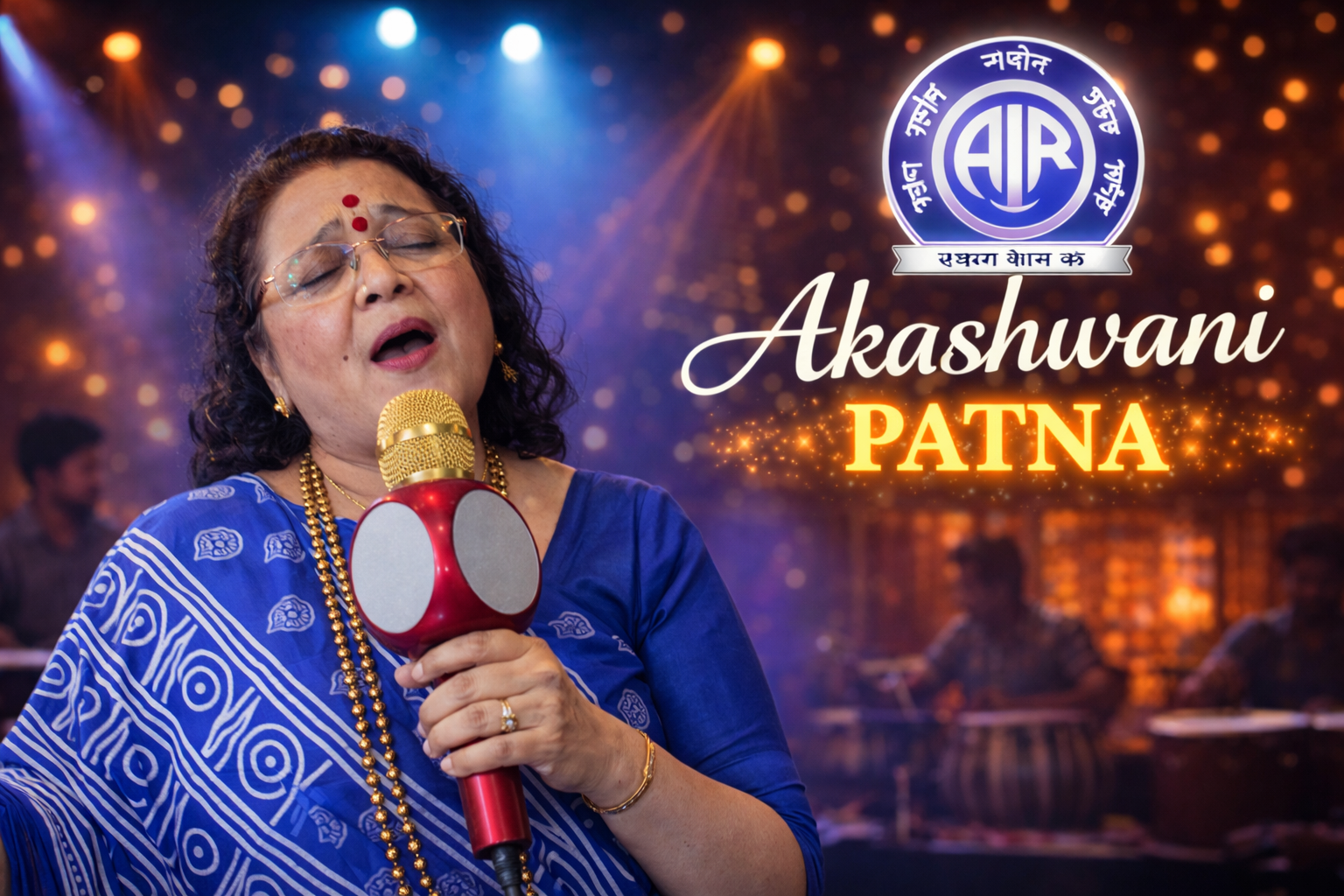
The year 1969 marked a turning point in Mridula Jha’s career when her voice was broadcast on the Patna Radio Station. She participated in programmes such as “Chaupal” and “Ghar Aangan,” which were immensely popular among listeners at the time. These broadcasts not only brought her recognition but also introduced her voice to households far beyond Mithila, establishing her as a promising artist in the regional music scene.
Her early recordings, including the production of a disc, further strengthened her presence in the music industry. At a time when opportunities for regional artists, especially women, were limited, her achievements stood out as a testament to her determination and talent. Each performance reflected her deep connection with Maithili culture, making her songs resonate with authenticity and emotional richness.
A Milestone Moment: Independent Musical Identity
In 1976, Mridula Jha took a significant step by establishing her independent musical identity. She began performing and recording Vidyapati geet, a genre deeply rooted in the poetic and devotional traditions of Mithila. These songs, known for their lyrical beauty and spiritual depth, require not just vocal skill but also a profound understanding of cultural nuances.
Her rendition of “Jai Jai Bhairavi” became particularly notable, showcasing her ability to blend classical elements with regional flavour. Through her music, she brought the timeless poetry of Vidyapati to life, making it accessible to both traditional audiences and younger generations. This phase of her career cemented her position as a torchbearer of Mithila’s musical heritage.
Expanding Horizons: Television and Cassette Era
As technology evolved, so did Mridula Jha’s reach and influence. She featured in two television programmes that highlighted her exceptional singing abilities, allowing her to connect with a wider audience. Television, at the time, was an emerging medium, and her presence on screen marked a new chapter in her artistic journey.
In 1991, she released cassettes from Pandav Nagar, Delhi, further expanding her musical footprint. The cassette era was a crucial phase for regional artists, as it allowed their work to travel across geographical boundaries. Her recordings became a medium through which the essence of Mithila’s culture could be experienced by people living far from their roots. This period not only enhanced her popularity but also ensured that her music reached diverse audiences.
Preserving Tradition in the Digital Age
Even in the modern era, Mridula Jha continues to remain relevant by embracing digital platforms. Through her YouTube channel, “Sing with Mridula,” she has created a space where traditional Maithili music meets contemporary accessibility. This initiative reflects her forward-thinking approach, ensuring that the rich musical heritage of Mithila is preserved and shared with a global audience.
Her digital presence is not just about performances; it is also about mentorship and inspiration. By sharing her work online, she encourages younger artists to explore and embrace their cultural roots. In a world dominated by fast-changing trends, her efforts serve as a reminder of the timeless value of tradition.
A Voice that Defines Mithila’s Cultural Identity
Mridula Jha’s contribution goes beyond music; it is about cultural preservation and identity. Mithila, known for its rich traditions, literature, and art forms, finds a powerful representative in her voice. Her songs carry the essence of the region, reflecting its emotions, spirituality, and heritage.
Through decades of dedication, she has become more than an artist—she is a cultural ambassador. Her journey highlights the importance of staying connected to one’s roots while adapting to changing times. For many, her music is not just entertainment; it is a bridge to their heritage and a source of pride.
Challenges, Resilience, and the Spirit of an Artist
Like any meaningful journey, Mridula Jha’s path was not without challenges. The evolving music industry, limited opportunities for regional artists, and societal expectations could have been barriers. However, her resilience and commitment allowed her to overcome these obstacles with grace and determination.
Her story serves as an inspiration for aspiring artists, especially women, who seek to carve their own path in creative fields. It reminds us that true artistry lies not just in talent but in perseverance and passion. Each phase of her life reflects a quiet strength that continues to inspire generations.
The Legacy Continues
Today, Mridula Jha stands as a symbol of artistic excellence and cultural pride. Her journey from radio broadcasts to digital platforms illustrates a remarkable evolution, driven by passion and purpose. She has not only created music but also nurtured a legacy that will continue to influence future generations.
Her life is a reminder that art, when rooted in authenticity, transcends time and boundaries. As the “Nightingale of Mithila,” her voice will continue to echo in the hearts of those who cherish the beauty of tradition and the power of music.
Frequently Asked Questions (FAQs)
- Who is Mridula Jha?
Mridula Jha is a renowned Maithili singer, often referred to as the “Nightingale of Mithila.” She is known for her soulful renditions of traditional songs, especially Vidyapati geet, and has played a significant role in preserving the musical heritage of the Mithila region. Her journey spans decades, from radio performances to digital platforms, making her a respected cultural figure.
- Why is Mridula Jha called the “Nightingale of Mithila”?
She earned this title because of her melodious voice and her deep contribution to Maithili music. Much like a nightingale is admired for its beautiful singing, her voice has captivated audiences for generations. Her ability to bring emotion and authenticity into every performance makes her stand out.
- What are Vidyapati geet, and why are they important?
Vidyapati geet are devotional and romantic songs based on the poetry of the great Maithili poet Vidyapati. These songs are an essential part of Mithila’s cultural identity, known for their lyrical beauty and spiritual depth. Mridula Jha’s performances have helped keep this tradition alive and relevant even today.
- What were Mridula Jha’s early achievements?
Her early achievements include singing on Patna Radio Station in 1969 in programmes like “Chaupal” and “Ghar Aangan.” She also recorded music discs and gained recognition at a time when opportunities for regional artists were limited. Her selection at FTII Pune further highlights her artistic versatility.
- Did Mridula Jha work in television or films?
Yes, she was featured in two television programmes that showcased her singing talent. Although she was selected for FTII Pune due to her interest in acting, her primary focus remained music, where she made her most lasting impact.
- What role did cassettes play in her career?
In 1991, she released cassettes from Delhi, which helped her music reach a wider audience. During that era, cassettes were a powerful medium for spreading regional music, and her recordings allowed people across India to connect with Mithila’s cultural sounds.
- Is Mridula Jha active in the digital era?
Yes, she has embraced modern platforms through her YouTube channel “Sing with Mridula.” This initiative allows her to share her music with a global audience and inspire younger generations to appreciate traditional Maithili songs.
- What makes Mridula Jha’s contribution unique?
Her contribution is unique because she has successfully bridged generations—starting from radio and cassettes to digital media—while staying rooted in tradition. She has not only preserved Maithili music but also made it accessible to modern listeners.
- How has her family background influenced her career?
Coming from a prestigious and culturally rich family, she was exposed to values of discipline, service, and intellectual growth from an early age. This environment played a crucial role in shaping her artistic journey and commitment to excellence.
- Why is her story important today?
Her story is important because it highlights the value of preserving regional culture in a rapidly changing world. It inspires artists to stay connected to their roots while adapting to new platforms and opportunities.
Major Takeaway
In a world where trends come and go, voices like Mridula Jha’s remain timeless. Her journey is a blend of heritage, talent, and resilience, making her an enduring icon of Mithila’s cultural landscape. Through her music, she has not only entertained but also preserved a rich tradition that might otherwise have faded with time.
Her story encourages a deeper appreciation for regional art forms and reminds us of the importance of nurturing cultural roots. As long as her songs are sung and remembered, the spirit of Mithila will continue to thrive.