Introduction
When one speaks of Mithila, the mind naturally travels to a land of scholarship, devotion, and deep-rooted traditions. The Maithil Brahmin community stands at the heart of this cultural universe. From the lyrical genius of Vidyapati to the melodious voice of Udit Narayan, and from the cricketing fame of Kirti Azad to the powerful parliamentary voice of Manoj Kumar Jha, the contribution of this community to India’s intellectual and cultural life has been remarkable. But who exactly are the Maithil Brahmins? What is their history, and why is their identity considered unique in Indian society? Let us understand their rich legacy in depth.
Origin of the Term “Maithil Brahmin”
The term Maithil Brahmin refers to those Brahmins who traditionally belong to the Mithila region and speak the Maithili language. Historically, they have been known for their deep command over the Vedas, religious rituals, philosophy, and spiritual traditions.
They are counted among the Pancha-Gauda Brahmins, one of the five major northern Brahmin groups:
- Saraswat
- Kanyakubja
- Gauda
- Utkal
- Maithil
What sets Maithil Brahmins apart is their strong connection with the Panji system (genealogical records), their highly structured marriage traditions, and their preservation of Maithili language and customs.
Geographical Presence
Maithil Brahmins are primarily residents of the Mithila region, which spans parts of India and Nepal.
In India (mainly Bihar)
They are largely found in districts such as:
- Darbhanga
- Madhubani
- Samastipur
- Saharsa
- Purnia
- Bhagalpur
- Katihar
In Nepal
A significant population lives in the Terai belt, especially around:
- Janakpur (major cultural centre)
Smaller populations also reside in Jharkhand, Uttar Pradesh, and other migrated pockets.
Estimated Population
The exact population of Maithil Brahmins is difficult to determine. However, various estimates suggest their numbers lie between 11 to 16 lakh across India and Nepal combined.
Common Surnames Among Maithil Brahmins
Several surnames are traditionally associated with the community, often reflecting scholarly or ritual roles:
- Jha (most common and prestigious)
- Mishra / Misra
- Thakur
- Ojha
- Pandit
- Pathak
- Dubey
- Tripathi / Trivedi
- Chaubey
- Sharma
- Rai / Roy
- Chaudhary
- Yajnik
- Maithil
Some families also use gotra-based surnames such as Shandilya or Kashyap.
The Rare “Khan” Surname
Interestingly, a few Maithil Brahmin families in parts of Bihar (notably Saharsa region) use the surname Khan. According to local tradition, during the Mughal era, certain Brahmins received honorary titles like Khan or Khan Bahadur for their bravery or administrative service. Though rare, this reflects the complex historical interactions of the region.
Language and Identity: The Role of Maithili
Maithili is an ancient Indo-Aryan language with a proud literary heritage. It is closely related to Sanskrit and is known for its grammatical richness and classical vocabulary.
Key facts:
- Included in the Eighth Schedule of the Indian Constitution
- Rich medieval and modern literature
- Strong cultural marker of Mithila identity
For Maithil Brahmins, Maithili is not merely a language — it is a civilisational identity.
Historical Evolution of Maithil Brahmins
The history of the community can broadly be divided into three phases.
-
Ancient Period (Vedic to Gupta Age)
The origin of Maithil Brahmins is linked to the ancient Videha kingdom, ruled by the philosopher-king King Janaka.
Key highlights:
- Patronage of Vedic scholars
- Presence of the great sage Yajnavalkya
- Contribution to Nyaya, Mimamsa, Yoga, and Sankhya philosophies
- Composition of the Brihadaranyaka Upanishad in the Mithila region
This era established Mithila as a major intellectual centre.
-
Medieval Period (Gupta to Mughal Era)
During this time, Mithila flourished as a hub of learning.
Important developments:
- Growth of Sanskrit scholarship
- Rise of ritual specialists
- Emergence of two broad streams:
- Karmi/Karmakandi (Vedic ritualists)
- Kanthi/Ramanandi Vaishnav (bhakti-influenced)
Royal patronage under regional dynasties ensured that Maithil Brahmins occupied respected court positions.
-
British Period (1757–1947)
This phase saw adaptation to modern education.
Maithil Brahmins emerged as:
- Teachers
- Lawyers
- Civil servants
- Writers
- Freedom fighters
The community also actively participated in social reforms such as women’s education and the campaign against child marriage.
Vedic Affiliations
Most Maithil Brahmins follow two Vedic traditions:
- Shukla Yajurveda (Vajasaneyi branch) – dominant
- Samaveda (Chandogya branch) – smaller section
Traditional Social Categories
Historically, Maithil Brahmins were grouped into four categories:
- Shrotriya – deeply learned Vedic scholars
- Yogya – ritual specialists
- Panji-kar – genealogists maintaining family records
- Jaivar – agriculturally engaged families
The Unique Panji System
One of the most distinctive features of the Maithil Brahmin community is the Panji system, a meticulously maintained genealogical record.
Purpose
- Tracks family lineages for multiple generations
- Prevents prohibited marriages
- Verifies compatibility before weddings
Historical Origin
Tradition attributes its formal organisation to King Harisingh Dev in the 14th century.
Even today, Panjikars issue Aswajan certificates before marriages — a practice rarely found elsewhere in India in such organised written form.
Important Gotras
Some of the major gotras among Maithil Brahmins include:
- Vatsa
- Shandilya
- Kashyap
- Parashar
- Katyayan
- Gautam
- Bharadwaj
- Gargya
- Kaushik
- Savarna
- Atri
- Agastya
- Vashishtha
Role of “Mool”
Beyond gotra, mool identifies the specific ancestral branch or village lineage. Marriage within the same mool is strictly avoided, making the system highly refined.
Mithila Panchang
The Mithila Panchang is a specialised regional calendar developed and preserved by Maithil scholars.
It determines:
- Marriage muhurats
- Upanayan timings
- Festival dates (e.g., Madhushravani, Chhath)
Its traditional astronomical calculations are considered highly precise.
Cultural Distinctiveness
Maithil Brahmins differ from many other Brahmin groups in certain cultural practices.
Dietary Tradition
Unlike many Brahmin communities, Maithil Brahmins traditionally consume fish. In Mithila culture, fish is viewed as auspicious and rajasic, not impure.
Popular varieties include:
- Rohu
- Mangur
Ritual Strength
They are known for:
- Strict Vedic rituals
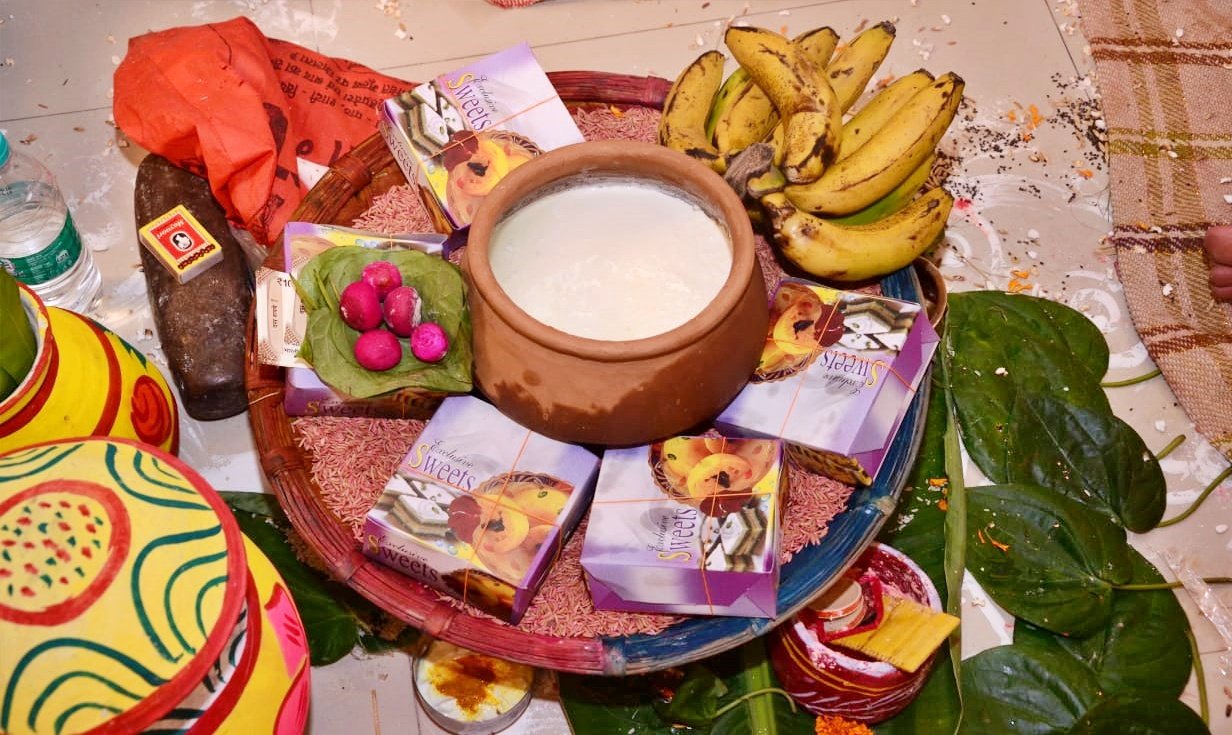
- Elaborate marriage ceremonies
- Rich folk songs and wedding traditions
- Highly structured genealogy
Famous Personalities from the Community
The Maithil Brahmin community has produced many distinguished figures across fields.
Literature and Philosophy
- Vidyapati – legendary poet
- Nagarjun – revolutionary Hindi-Maithili poet
- Vachaspati Mishra – great philosopher
- Mandan Mishra – Advaita thinker
- Gangesha Upadhyaya – founder of Navya Nyaya
Politics and Public Life
- Lalit Narayan Mishra – Union minister
- Jagannath Mishra – three-time CM
- Vinodanand Jha – former CM
- Manoj Kumar Jha – Rajya Sabha MP
- Parmanand Jha – Nepal’s first Vice President
Administration and Economics
- Lakshmi Kant Jha – 8th RBI Governor
- Aditya Nath Jha – senior ICS officer
Arts, Music and Sports
- Udit Narayan – Padma awardee singer
- Maithili Thakur – popular classical & folk artist
- Kirti Azad – 1983 World Cup winner
- Prabhash Kumar Chaudhary–Sahitya Akademi Awardee

Conclusion
The Maithil Brahmin community represents one of the most intellectually vibrant and culturally disciplined traditions in the Indian subcontinent. Rooted in Vedic scholarship yet adaptive to modern education, the community has preserved its identity through language, lineage records, and ritual precision.
From ancient philosophers of Mithila to modern singers, economists, and parliamentarians, their journey reflects continuity with change. The strength of the Maithil Brahmins lies not merely in their past glory but in their ability to carry forward a living tradition.
As India continues to evolve, the legacy of Mithila — scholarly, musical, philosophical, and deeply cultural — remains an enduring pillar of the nation’s civilisational heritage.