The concept of a “stable career” in India is quite different now than it was ten years ago. Success for millions of young Indians is no longer just about getting a government job, working in a corporate office, or doing a regular job. Instead, a new way has come about, one that is driven by cellphones, social media sites, and personal branding.
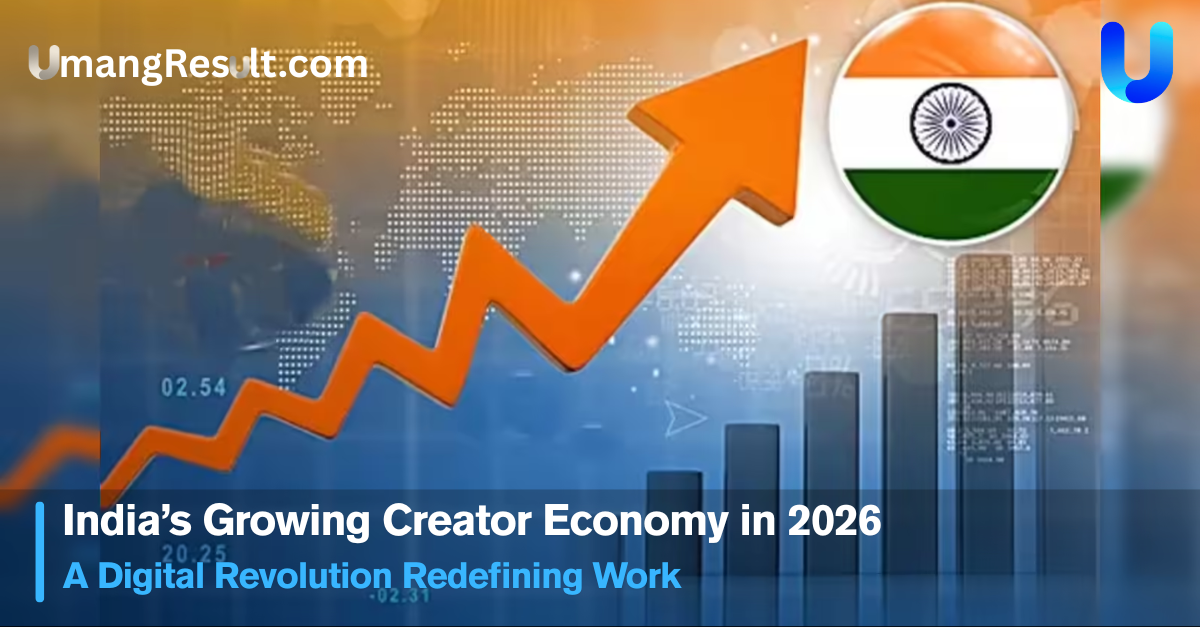
Welcome to India’s creative economy in 2026. This is a digital world that is emerging quickly, where people can establish audiences, make money from content, and transform their influence into cash.
Creators are changing the way people in India watch videos, acquire new skills, and even make judgements about what to buy. For example, there are YouTubers in Mumbai, financial teachers in Delhi, comedians in Tamil Nadu, and tech reviewers in Hyderabad.
But how substantial is this change? Why is it occurring now? And can it last?
Let’s go deeper.
What Is the Creator Economy?
The creator economy is made up of people who make digital content on their own and make money from their audience or via collaborations with brands.

In India, creators are:
- People who make videos for YouTube
- Influencers on Instagram
- People who are thought leaders on LinkedIn
- People who make podcasts
- Players and streamers
- Teachers of finance
- Mentors in your career
- Vloggers from the area
- People who compose newsletters
- Coaches on the internet
Creators don’t work for a company like typical employees do. They don’t simply work for corporations; they also cultivate their own audience and make money from it.
This strategy has grown from a “side hustle” to a real enterprise by 2026.
The Numbers Behind the Growth
India already has more than 800 million internet users, and that figure is to up. Low-cost cellphones and affordable data plans have made it possible for people in both rural and urban locations to access information.
More people using the internet means:
- More people watching
- More involvement
- More digital ads
- More chances to make money
Reports say that India has millions of active content creators, and thousands of them make a lot of money full-time.
Celebrities are no longer the only ones who can make money from the creative economy. Even micro-creators with 10,000 to 50,000 followers are getting brand agreements and making careers that will last.
Why the Creator Economy Is Exploding in 2026
1. Cheap Internet and Smartphone Access
India’s cheap data revolution made it possible for digital growth to happen. It’s no longer a luxury to have high-speed internet; it’s become a basic need.
Students in tiny areas now have the same access to content as those in big ones. This equal access has made chances more equal.
2. Short-Form Content Changed Everything
Short videos changed how people make content.
Platforms such as:
- Reels on Instagram
- Shorts on YouTube
- Moj
- Josh
Let creators become famous without having to buy pricey cameras or hire editing teams.
A 30-second film that people may relate to can get millions of views in 2026. It’s easier to find things and get in.
This has helped creators develop quickly, especially among younger audiences.
3. Regional Content Is Thriving
English and Hindi used to be the most used languages in India’s internet environment. But in 2026, material in regional languages is quite popular.
Tamil, Telugu, Marathi, Bengali, Punjabi, Gujarati, and Kannada creators are getting a lot of followers.
Why?
This is because people in the area feel more connected to creators who speak their language and understand their culture.
Brands have also learned that localised influencers frequently get more people to interact with them than national superstars.
Tier-2 and Tier-3 cities are becoming centers for creators.
4. Brands Are Shifting Advertising Budgets
Advertising that is done the old-fashioned way is not working as well anymore.
People trust suggestions from creators more than ads on TV.
In 2026:
- There has been a big rise in the amount of money spent on influencer marketing.
- Brands like micro- and nano-influencers because they get real interaction.
- Campaigns focused on performance are prevalent.
- Instead of one-time posts, brands are now working together for a long period.
Digital characters are increasingly at the center of marketing plans.
How Indian Creators Are Making Money
The ecology for making money has changed a lot.
Brand Collaborations
Still one of the main ways to make money. Companies pay producers to make reels, tales, long-form movies, and integrated content to market their products.
YouTube Ad Revenue
YouTube monetisation still pays out for long-form video providers, notably in the fields of education, finance, tech reviews, and gaming.

Affiliate Marketing
Creators make money by sharing affiliate links and promoting items.
Digital Products
A lot of creators currently sell:
- Classes on the web
- E-books
- Forms
- Workshops
- Content that is only available to you
This makes it possible to make more money than just brand partnerships.
Subscription Communities
More and more people are joining paid communities. Creators set up exclusive communities where they may give unique material, guidance, and mentoring.
This move toward community-based monetisation makes algorithms less important.
The Rise of Full-Time Creators
In 2026, many of Indians quit their regular careers to work full-time in content production.
What makes it appealing?
- Independence of location
- Schedules that can change
- Potential for revenue that can grow
- Freedom to do what you want
The creative economy gives people more freedom than corporate occupations do.
But it also requires discipline, consistency, and the ability to think strategically.
Education Creators Are Transforming Learning
One of the largest changes is in school.
Now, online teachers teach:
- Investing in the stock market
- Skills in coding and technology
- Getting ready for the UPSC
- Advice on careers
- Money management for yourself
- Speaking and writing in English
More and more, students study from digital artists instead of traditional coaching centers.
Education is no longer centralised.
In a lot of circumstances, online schools reach more people than schools that are in person.
Tier-2 and Tier-3 Cities Leading Growth
A lot of new inventors in 2026 originate from smaller cities.
Digital platforms have made it possible for people to connect with others wherever in the world.
People that make things in cities like
Indore, Coimbatore, Lucknow, Jaipur, and Guwahati
are creating audiences around the country.
These innovators have a distinct edge since they live in areas with lower expenses of living and a strong sense of community.
Professionalization of Content Creation
In the beginning, creators did everything on their own.
In 2026, serious innovators run their companies like businesses.
They have:
- Managers of content
- People who edit videos
- Designers of graphics
- Managers of brand partnerships
- Lawyers
Some innovators even set up businesses and recruit complete teams.
The field is growing up.
The Role of LinkedIn and Professional Content
Instagram and YouTube are the most popular sites for amusement, but LinkedIn has become a significant site for professional artists.
Career counsellors, founders, HR specialists, and finance pros develop their influence by posting new information often.
In 2026, personal branding became quite important.
Your internet presence is frequently just as important as your résumé.
Government Interest and Rules
As the creative economy expands, there are more and more talks about rules.
Important regions are:
- Disclosures for influencer advertising
- Following the tax laws
- Reporting income online
- Laws that protect consumers
The government now sees creators as an important part of the economy.
Policy frameworks may change to help and control the sector.
Is the Creator Economy Sustainable?
This is one of the questions that people argue over the most.
Some people say that too many people are moving into the area, which makes it unsustainable.
But think about this:
- Not everyone who starts a business makes it.
- Not all new businesses make money.
- Not every freelancer has a successful career.
The creator economy is the same.
It gives out:
- Staying the Same
- Making something valuable
- Realness
- Flexibility
People who want to be famous online may have a hard time. People who create trust over time are more likely to be successful.
The Shift From Fame to Community
Smart artists in 2026 care about more than simply fans; they care about their community.
People who follow you can stop following you. Platforms can change.
But devoted communities stay strong.
Email newsletters, secret groups, and direct communication methods are becoming more and more important.
Instead than relying on platforms, creators are learning how to own their audience.
How the Creator Economy Is Changing Indian Work Culture
The effect goes beyond social media.
It’s transforming how young Indians think about jobs.
Earlier way of thinking:
- Get a job
- Set salary
- Stability throughout time
New way of thinking:
- Create a personal brand
- Different ways to make money
- Freedom
People are starting to think that “being your own brand” is a good concept.
Even people who work for big companies are establishing side content profiles.
Impact on Traditional Media
Companies in the traditional media are changing.
Digital creators increasingly work alongside TV stations, newspapers, and magazines.
In certain areas, some artists have greater power than traditional superstars.
There’s no denying the power of individual creators.
Opportunities for Businesses
Brands that know how to use digital marketing are doing well.
Working with creators lets:
- Marketing that is aimed at a certain group
- Real storytelling
- More engagement
- Campaigns that don’t cost much
India’s marketing business is being directly affected by the creator economy.
The Future Outlook
India’s creator economy is projected to keep growing in the future.
Things to keep an eye on:
- More expansion in the area
- Tools for making content with AI help
- Startups that are driven by stronger creators
- More people from other countries are watching
- More clear rules and regulations
The ecology will be more organised and competitive.

Final Thoughts
In 2026, India’s expanding creator economy will change the way individuals work, make money, and gain power.
It shows:
- Digital empowerment
- Young people’s goals
- Mindset of an entrepreneur
- Opportunity that is not centralised
For a lot of Indians, making content is no longer just a dream; it’s a way to make a living.
But it’s not a quick way to get ahead.
It takes business sense, innovation, patience, and the ability to bounce back.
It’s not only about becoming viral in the creative economy.
It’s about creating value, gaining trust, and turning attention into lasting change.
And it’s apparent that this digital transformation is just going to become bigger in 2026.