India’s Unified Payments Interface (UPI) has gone from a test of digital payments in India to one of the most significant financial technologies in the world in less than ten years. What started as a simple means to move money between bank accounts quickly in 2016 has grown into a model that many governments are now attentively studying. UPI is no longer simply a success story for India; it is changing the way payments are made throughout the world.
UPI is a new way to do things: quick, cheap, and able to work with other systems. It is also developed as public digital infrastructure. Its rise is not only altering how Indians pay, but it is also making it harder for credit card firms and international banks to run their old worldwide payment networks.
The Birth of UPI: A Simple but Powerful Idea
The National Payments Corporation of India (NPCI) started UPI with one main goal: to make digital payments as easy as sending a text message. Before UPI, it was hard to do online bank transfers since they needed a lot of information, such account numbers, IFSC codes, and significant wait periods. Everything was easier with UPI.
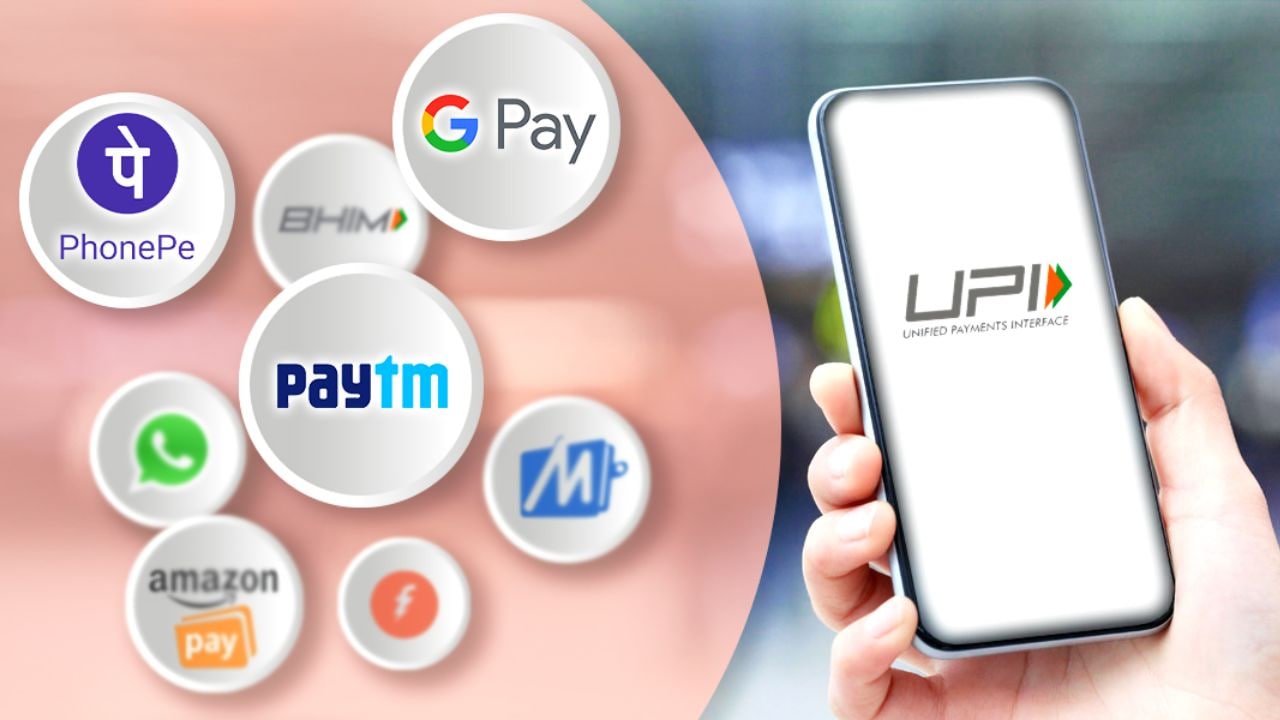
With UPI, anyone may transmit money right away using:
- A phone number
- A code for QR
- A virtual payment address, such as name@bank
The system is always on, even on weekends and holidays. Money moves between bank accounts in real time. No waiting, no middle layers.
What makes UPI so groundbreaking is that it brings together several banks and payment applications into one system that works with all of them. PhonePe, Google Pay, Paytm, and a bank’s own app all share the same UPI backbone.
Explosive Growth in India
UPI has grown in an amazing way. It started processing billions of transactions every month within a few years of its introduction. UPI will handle a huge amount of India’s digital retail payments by 2026.
Street vendors, vegetable dealers, small stores, big retail corporations, and even cab drivers all use UPI. You may often make digital payments with just a piece of paper with a QR code on it.
The main reasons for this rise are:
- How many people have smartphones
- Low-cost access to the internet
- The government wants people to use digital payments.
- Have faith in rapid settlement
UPI made people less reliant on cash and made it more easier for people to get access to financial services. Millions of people who couldn’t use digital banking before are now members of the official financial system.
Why UPI Is Different From Traditional Payment Systems
We need to look at UPI in relation to other payment systems to see how it affects the world.
Visa and Mastercard are credit card networks that charge businesses fees on transactions. This is called merchant discount rates (MDR). These costs might be anything from 1% to 3% or higher. This costs a lot of money for small firms over time.
But UPI was meant to be a low-cost public infrastructure. Merchant fees are low or nonexistent for many modest purchases. This makes it much cheaper to accept digital payments.
Speed is another important distinction. In many countries, it might take hours or even days to move money between banks. Transactions with UPI settle right away.
Interoperability is also very important. In certain places, payment applications only work with other apps. With UPI, any bank or app that wants to may easily work with others.
This open architecture makes it scalable and adaptable.
The Global Interest in UPI
As digital payments grow throughout the world, several nations are looking into India’s UPI approach. The answer is simple: it works on a large scale, is cheap, and helps people get access to financial services.
Some countries in Asia, the Middle East, and even portions of Europe are interested in working with India to adopt or integrate systems that are similar to UPI.

India has made deals with nations like these in the last several years:
- Singapore UAE
- France Sri Lanka
- Mauritius
These collaborations make it possible to send UPI payments across borders, which means that Indian enterprises and travellers may utilise UPI across the world.
This is a change in the way money works across the world. India’s digital payment infrastructure is increasingly accessing worldwide markets, not just Western payment networks that are growing throughout the world.
UPI and Cross-Border Payments
One of the most significant ways UPI is changing the global payment system is through cross-border integration.
Sending money across borders has always been expensive and slow. It costs a lot for migrant workers to send money home. Cross-border UPI agreements are meant to lower costs and make transfers easier.
For instance, connecting UPI with Singapore’s PayNow system lets people in both countries send money to each other right away.
If such models expand widely, they could:
- Lower the costs for sending money
- Make international transactions go faster
- Challenge the old ways of doing international banking
This might change the way money moves throughout the world over time.
Financial Inclusion on a Global Scale
UPI’s model is a guide for economies that are still growing.
A lot of nations have trouble with financial exclusion. Many people in the world do not have access to credit cards or formal banking. UPI shows that digital payments don’t need expensive infrastructure or large transaction fees.
Governments can make financial systems that work for everyone by constructing a public digital backbone and encouraging private companies to come up with new ideas on top of it.
India’s success indicates that digital transformation doesn’t have to rely just on big private companies. Public digital infrastructure may be a base for new ideas.
This idea, which is also known as “Digital Public Infrastructure,” is getting a lot of attention throughout the world.
Impact on Traditional Banks and Card Networks
UPI’s popularity also makes things harder for established banking companies.
In India, credit card penetration remains relatively low compared to Western markets. UPI’s rise in popularity has made people less reliant on card-based payments for everyday purchases.
If other nations use similar ideas, government-backed fast payment systems might compete with worldwide card networks.
Banks need to change too. They might need to focus on value-added services instead of mostly making money from transaction fees, such as:
- Lending
- Managing wealth
- Financial goods based on data
UPI moves the focus away from making money from processing payments and toward other financial services.
The Role of Government and Regulation
Strong backing from regulators is a big reason why UPI has been successful. The Reserve Bank of India (RBI) and the National Payments Corporation of India (NPCI) made sure that the system was safe, could grow, and was reliable.
From the start, data security, fraud detection, and regulatory control were top priorities.
Governments throughout the world that are watching UPI know that robust cooperation between the public and private sectors is very important. These kinds of systems can’t grow without clear rules and money for infrastructure.
UPI’s growth throughout the world also makes people wonder about how governments handle data and how well they can work together.
International agreements need to talk about:
- Privacy of data
- Ways to swap money
- Risks to cybersecurity
- Following the rules for anti-money laundering
These things will affect how frequently UPI-style systems are used.
UPI and the Future of Digital Economies
UPI has an impact on more than just payments. It opens the door to bigger digital ecosystems.
UPI works with in India:
- Platforms for e-commerce
- Services from the government
- Paying for utilities
- Models for subscriptions
- Apps for peer-to-peer financing
This integration encourages people to start their own businesses online. With little startup expenditures, small enterprises may run completely without capital.
Countries throughout the world that want to establish digital economy may regard UPI as a base on which other services might emerge.
A strong economic engine is made up of fast payments, digital identification systems, and mobile connection.
Challenges and Risks
Even while UPI is doing well, it still has problems.
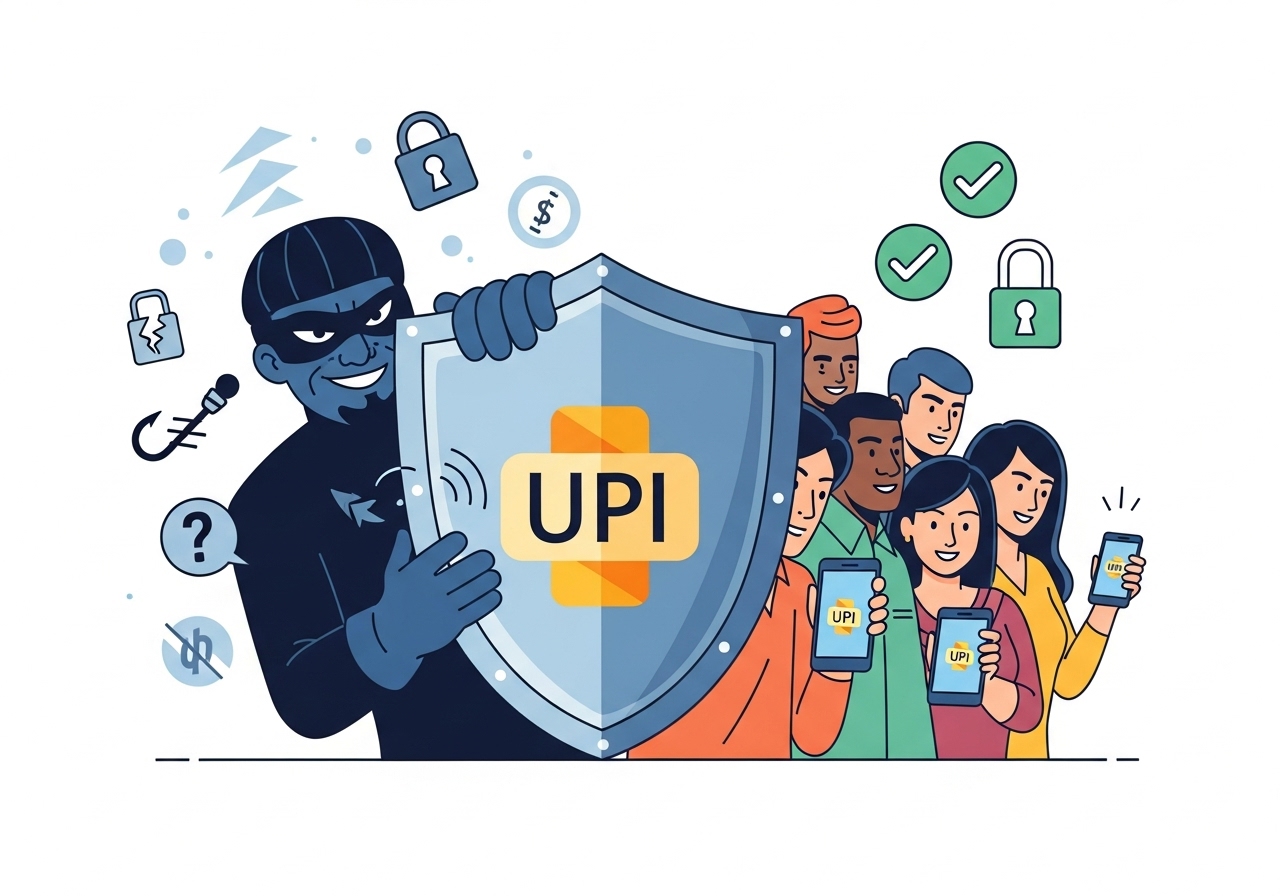
Cybersecurity dangers go up when the number of transactions goes up. You need to keep an eye out for fraud attempts, phishing schemes, and social engineering assaults all the time.
There is also the problem of how strong the infrastructure is. Systems that handle billions of transactions must have almost flawless uptime.
Going global makes things more complicated. Currency conversion, following the rules, and geopolitical factors may make it harder for people to embrace.
Also, UPI’s future might be affected by competition from other technologies like central bank digital currency (CBDCs) and private fintech inventions.
UPI’s Influence on Global Payment Innovation
The psychological effects of UPI may be its biggest influence on the world.
It shows that a developing country may be a leader in digital financial innovation on a large scale. Western firms have been in charge of global payment systems for a long time. That story is challenged by UPI.
Countries are now more sure that they can construct their own real-time payment systems.
As an example:
- The US started FedNow to make payments right now.
- SEPA Instant works in Europe.
- Brazil invented Pix, a very popular platform for fast payments.
Each system has its own special characteristics, but the worldwide trend toward rapid payments is quite similar to UPI’s principle.
UPI is a part of a bigger change that will make quick, cheap, and compatible digital payments the standard throughout the world.
The Road Ahead
UPI’s worldwide influence may grow in a number of ways in the future.
First, more integration across borders might make it easier to send and receive payments throughout Asia and the Middle East.
Second, working with fintech businesses might make it easier for people to buy and sell things online across borders.

Third, connecting to digital identity systems and open banking frameworks might make financial services more personalised and useful.
But security, privacy, and regulatory collaboration must be balanced with growth.
Conclusion
UPI is not just a way to pay; it is also a way to change the way money works in the digital world. India built a payment system that can grow, is open to everyone, and is cheap by combining public infrastructure with private innovation.
UPI’s reach goes beyond India’s borders in 2026. It changes the way people talk about financial inclusion, threatens established payment networks, and encourages new national systems.
It may not replace worldwide card networks right away, but it does provide a strong alternative. Its achievement shows that digital public infrastructure can compete on a global scale.
As more nations look into fast payment systems, UPI is a good example of how technology, rules, and new ideas can work together to change economies.
The way people pay for things throughout the world is changing. India’s UPI has become one of the most crucial actors in defining the future of money flow throughout the world as it has changed.