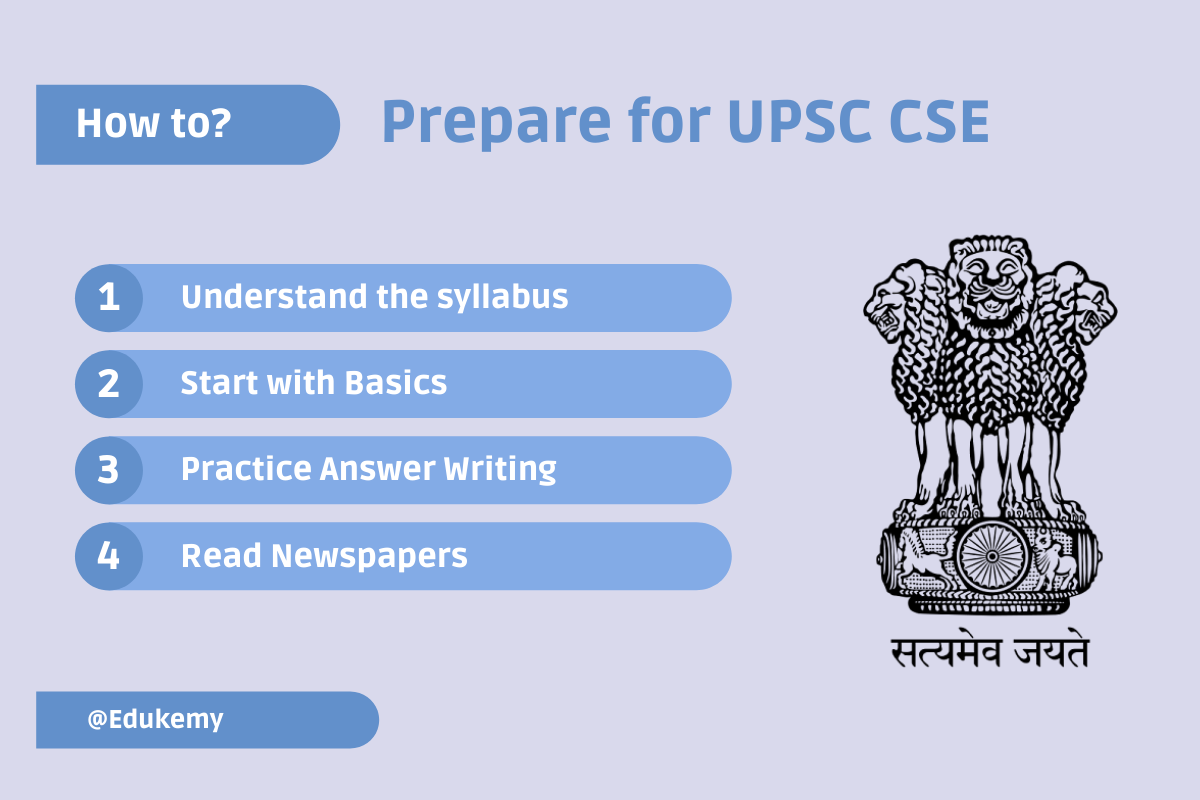
Preparing for the UPSC Civil Services Exam is one of the most ambitious goals a student can set for themselves. However, the biggest challenge for most aspirants is not the exam itself but figuring out how to start UPSC preparation effectively. Many candidates feel lost at the beginning — surrounded by confusion, myths, and overwhelming advice. This guide breaks that fog and helps you take your first confident steps toward becoming a civil servant.
Understanding the UPSC Journey

The Myth Around UPSC Preparation
There’s a common belief that one needs to study “everything under the sun” for UPSC. This myth has discouraged many potential aspirants. In reality, UPSC demands a focused and smart preparation strategy, not endless reading. Success in this exam comes from understanding concepts, staying consistent, and following a clear path — not from studying random material without direction.
The First Step: Building Seriousness
Before you dive into books and coaching, ask yourself — “Do I really want to do this?”
UPSC preparation requires commitment, discipline, and patience. It’s not something to pursue half-heartedly. Once you decide firmly, give yourself time to plan, schedule, and start reading sincerely.
Step 1: Begin with Newspapers
Why Reading Newspapers is Crucial
Aspirants often underestimate the importance of newspapers in UPSC preparation. Reading them daily builds awareness of current affairs, improves comprehension, and develops analytical thinking — all vital for prelims, mains, and the interview.
Which Newspapers to Read
Start with The Hindu, The Indian Express, or Times of India. Choose one newspaper and stick with it consistently. Don’t switch frequently — consistency matters more than variety.
How to Read Effectively
In the beginning, it’s normal not to understand everything you read. Articles on international issues like the Russia–Ukraine war or complex government schemes may seem confusing because you lack background knowledge. But with time and daily practice, you’ll start connecting dots — recognizing recurring topics, understanding policies, and building a holistic view of national and global affairs.
Tip: Maintain a notebook for current affairs and revise your notes regularly.
Step 2: Strengthen Your Foundation with NCERT Books
Why NCERTs are Non-Negotiable
NCERT books (Class 6–12) form the backbone of UPSC preparation. Written in simple language, they explain complex topics in an easy, structured manner. These books help you build conceptual clarity in subjects like History, Geography, Polity, Science, and Economics — all of which are part of the UPSC syllabus.
Where to Start
Pick any subject you enjoy — History, Geography, or Science — and start from Class 6 NCERTs. Gradually move up to Class 12. For example:
- Read History from Class 6–12 to understand India’s ancient to modern past.
- Read Geography to grasp India’s physical features and world geography.
- Read Polity to build the foundation for Indian Constitution and governance.
Practice from NCERT-Based Questions
After finishing each book, solve MCQs and previous year questions (PYQs) based on NCERTs. This helps you identify important concepts and areas you might have missed while reading.
Many educational platforms and UPSC forums, including Tathastu, offer free NCERT-based quizzes and PYQs — use them to test your learning.

Step 3: Move to Standard Reference Books
Transition from Basics to Advanced
Once you are confident with NCERTs, begin reading standard reference books for each subject — like Laxmikant for Polity, Spectrum for Modern History, or GC Leong for Geography.
This phase bridges the gap between foundational knowledge and exam-level preparation.
Choosing Between Coaching and Self-Study
There’s no single right path — it depends on your learning style:
- If you need structure and guidance: Join a good coaching institute. They provide mentors, schedules, and doubt-solving sessions to streamline your preparation.
- If you prefer self-study: Create a disciplined timetable. Allocate time for reading, revision, and practice. Consistency and time management are crucial here.
Remember, even if you join a coaching institute, reading, note-making, and revising are your personal responsibilities. No one else can do that part for you.
Step 4: Develop a Consistent Study Routine
Discipline is the Key
UPSC preparation is a marathon, not a sprint. Many aspirants fail not because they lack knowledge but because they fail to maintain consistency.
Plan small, achievable daily targets. For example, decide to read one chapter of Polity or one article from The Hindu every day. Stick to your plan no matter what.
Avoid procrastination — even a single day of delay can disturb your rhythm.
Managing Your Time
Create a weekly and monthly study schedule that includes reading, revision, and mock tests. Reward yourself for completing goals — it keeps motivation alive.
Step 5: Practice Answer Writing and Essay Writing
Why Answer Writing is Important
UPSC Mains is not about how much you know but how well you can articulate your thoughts in limited time and words.
Start practicing answer writing once you’ve covered a portion of your syllabus. You can refer to toppers’ copies or attend live answer writing sessions like those conducted on Tathastu.
Focus on Speed and Structure
In the actual exam, you get only 6–7 minutes per 10-mark answer. That means you must develop both speed and clarity.
Practice writing concise, well-structured answers with clear introductions, body paragraphs, and conclusions.
Improve Through Feedback
Show your answers to mentors or teachers for feedback. Understand your weak points — whether it’s content, structure, or expression — and work on them consistently.
Step 6: Prepare for the Interview
Personality Development Matters
The UPSC Interview or Personality Test doesn’t test your knowledge — it evaluates your communication skills, confidence, and clarity of thought.
You don’t need separate preparation for the interview. If your Prelims and Mains preparation is strong and you’ve been working on communication skills throughout, you’re already half-prepared.
Participate in discussions, mock interviews, and practice speaking clearly and confidently.
Step 7: Stay Focused and Dedicated
The Power of Determination
When you decide to start UPSC preparation, start with full integrity and dedication. Avoid half-hearted efforts. Remember the old saying — “Apne mare bina swarg nahi milta” — which means nothing worthwhile comes without effort and sacrifice.
If you truly desire success in UPSC, be ready to give it your time, energy, and focus.
Avoid Comparing Yourself
Every aspirant’s journey is unique. Don’t compare your speed or progress with others. Trust your process and keep moving forward consistently.
Final Thoughts: Begin with a Firm Mind and a Dedicated Heart
Starting your UPSC preparation is like taking the first step toward transforming your dreams into reality. Begin with small yet consistent actions — read daily, stay curious, revise often, and maintain discipline.
With patience, focus, and sincerity, UPSC is not an unachievable dream — it’s a goal within your reach.
So, decide your day, pick your books, and begin your journey — because half-hearted preparation never leads to full success.
Happy and dedicated preparation!