
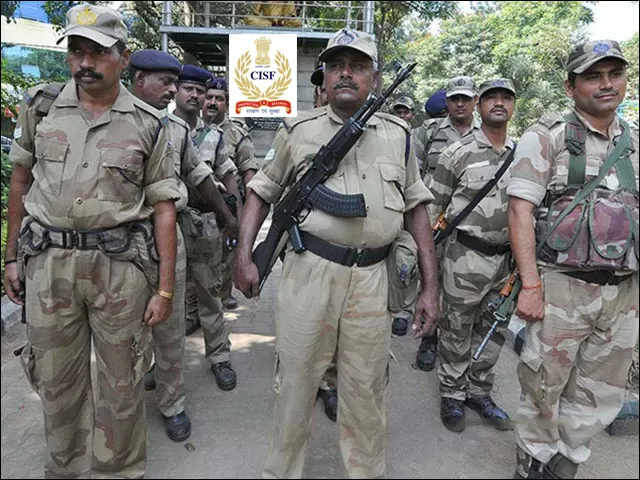
Many young people in India grow up with a dream—to wear the uniform and serve the country. A government job in the security forces not only brings financial stability but also respect and pride. Among the various paramilitary forces in India, the Central Industrial Security Force (CISF) is one of the most respected and fastest-growing forces.
From guarding airports and metro stations to protecting nuclear power plants and government infrastructure, CISF personnel play a crucial role in national security. The good news is that candidates can join this force after completing 10th, 12th, or graduation, depending on the post they apply for.
This detailed guide explains everything about how to join CISF, eligibility criteria, recruitment process, salary structure, job roles, and preparation tips.
What is CISF?
The Central Industrial Security Force is one of India’s central armed police forces. It was established in 1968 with the main objective of protecting important industrial units and public sector undertakings. Over time, its responsibilities expanded significantly.
Today CISF protects many critical installations across India, including:
- Airports
- Delhi Metro and other metro networks
- Nuclear and thermal power plants
- Space research facilities
- Government buildings
- Seaports and industrial establishments
The force operates under the Ministry of Home Affairs, and its personnel are trained to handle high-risk security situations.
In recent years, the demand for CISF personnel has increased because of the rapid growth of infrastructure in India.
Why CISF is a Popular Career Choice
Thousands of young candidates apply for CISF recruitment every year. There are several reasons behind this popularity.
-
Government Job Security
Jobs in CISF offer permanent government employment with stable income and pension benefits.
-
Respect and Pride
Uniformed services command respect in society. CISF personnel contribute directly to national safety.
-
Attractive Salary and Allowances
Apart from basic pay, CISF employees receive allowances like:
- Dearness Allowance
- House Rent Allowance
- Travel Allowance
- Medical facilities
These benefits make CISF jobs financially attractive.
-
Opportunities for Promotion
With experience and performance, personnel can rise through ranks such as constable, head constable, inspector, and officer.
-
Nationwide Posting
CISF personnel get the opportunity to work at different locations across India.
Different Ways to Join CISF
Candidates can join CISF through multiple recruitment pathways depending on their educational qualifications.
The three major entry levels are:
- Constable (after 10th or 12th)
- Sub-Inspector (after graduation)
- Assistant Commandant (officer level)
Let us understand each path in detail.

Joining CISF After 10th
One of the most common ways to join CISF is by applying for the Constable (General Duty) or Constable Tradesman posts.
Educational Qualification
Candidates must have:
- Passed Class 10 from a recognised board.
Age Limit
- Minimum age: 18 years
- Maximum age: 23 years
Age relaxation is provided to reserved categories as per government rules.
Recruitment Exam
Constable recruitment is usually conducted through the Staff Selection Commission exam called SSC GD.
This exam recruits candidates for several paramilitary forces, including CISF.
Job Role of a CISF Constable
Constables are responsible for:
- Security checks at airports
- Monitoring surveillance systems
- Controlling entry at protected installations
- Crowd management
- Emergency response during security threats
They are the backbone of the CISF security system.
Joining CISF After 12th
Candidates who complete Class 12 can apply for several posts in CISF.
Head Constable
One of the common posts available after 12th is Head Constable.
Eligibility
- Must have passed 12th or intermediate education.
- Age limit generally between 18 and 25 years.
Job Responsibilities
Head constables supervise constables and assist officers in administrative duties.
They may also work in specialised departments such as:
- Communication units
- Ministerial or clerical work
- Technical departments
Joining CISF After Graduation
Graduates can apply for higher-level positions in CISF.
Two major posts are available.
Sub-Inspector (SI)
Recruitment for Sub-Inspector posts is conducted through the Staff Selection Commission Central Police Organisation Examination.
Eligibility
Candidates must have:
- A graduate degree from a recognised university
- Age usually between 20 and 25 years
Responsibilities
Sub-Inspectors supervise constables and manage security teams.
They also handle:
- Security planning
- Incident response
- Operational supervision
Assistant Commandant (Officer Rank)
The highest entry-level officer position in CISF is Assistant Commandant.
Recruitment is conducted through the Union Public Service Commission exam known as CAPF (Central Armed Police Forces).
Eligibility
- Graduation in any discipline
- Age usually between 20 and 25 years
Selection Stages
Candidates must pass:
- Written examination
- Physical efficiency tests
- Interview
- Medical examination
Assistant Commandants manage large security units and administrative operations.
Physical Requirements for CISF
Since CISF is a paramilitary force, candidates must meet certain physical standards.
Height Requirement
Typical requirements include:
- Male: 170 cm
- Female: 157 cm
Some relaxation is given to candidates from certain regions or reserved categories.
Chest Measurement (For Male Candidates)
- Normal: 77 cm
- Expansion: 82 cm
Physical Efficiency Test
Candidates may need to complete activities such as:
- Running
- Long jump
- High jump
These tests ensure that candidates have the physical stamina required for security duties.
CISF Recruitment Process
The recruitment process for CISF involves multiple stages to select capable candidates.
-
Written Examination
The written test evaluates knowledge in areas such as:
- General awareness
- Reasoning ability
- Mathematics
- English or Hindi language
-
Physical Standard Test (PST)
This stage checks height, chest measurement, and other physical criteria.
-
Physical Efficiency Test (PET)
Candidates must demonstrate their physical fitness through running and other tasks.
-
Document Verification
Educational certificates and identity documents are verified.
-
Medical Examination
Candidates must meet medical standards required for paramilitary service.
Only those who pass all stages are selected.
CISF Salary Structure
One of the biggest attractions of CISF jobs is the salary and benefits.
The salary depends on the rank.
Constable Salary
- Pay Scale: ₹21,700 – ₹69,100 per month
The initial salary package may reach ₹3–6 lakh per year depending on allowances.
Head Constable Salary
- Pay Scale: ₹25,500 – ₹81,100
Sub-Inspector Salary
- Approx pay: ₹35,400 – ₹1,12,400
Assistant Commandant Salary
- Pay range: ₹56,100 – ₹1,77,500
These salaries follow the 7th Central Pay Commission pay matrix.
Allowances and Benefits
Apart from salary, CISF personnel receive several benefits.
These include:
- Dearness Allowance (DA)
- House Rent Allowance (HRA)
- Transport Allowance
- Medical facilities
- Pension benefits
Dearness allowance helps employees cope with inflation and is revised periodically.
Other benefits include:
- Paid leave
- Government accommodation
- Insurance coverage
Training in CISF
After selection, candidates undergo intensive training.
Training usually includes:
- Physical conditioning
- Weapon handling
- Security operations
- Disaster management
- Crowd control
The aim of training is to prepare recruits for real-life security challenges.
Training duration varies depending on the rank and role.
Duties and Responsibilities of CISF Personnel
CISF personnel are responsible for protecting important infrastructure across India.
Their duties include:
Airport Security
CISF is responsible for security screening at many airports in India.
Industrial Security
They protect factories, refineries, and power plants.
Metro Security
CISF guards metro rail systems in cities like Delhi.
Disaster Response
Personnel are trained to respond to emergencies and accidents.
VIP Security
In some cases, CISF also provides security to important individuals.
Through these roles, CISF helps maintain safety and stability.
Career Growth in CISF
CISF offers excellent opportunities for promotion.
A typical career path may look like this:
Constable → Head Constable → Assistant Sub-Inspector → Sub-Inspector → Inspector → Assistant Commandant → Deputy Commandant → Commandant.
Promotions depend on experience, departmental exams, and performance.
Future Opportunities in CISF
India’s infrastructure is expanding rapidly. New airports, industrial zones, and metro networks require additional security.
Because of this, CISF recruitment is expected to increase.
Reports suggest that the force may recruit tens of thousands of personnel over the coming years to strengthen its security operations.
This means there will be more job opportunities for aspiring candidates.
Preparation Tips for CISF Exams
Candidates planning to join CISF should start preparing early.
Here are some useful tips.
Focus on Physical Fitness
Daily exercise and running improve stamina.
Study General Knowledge
Read newspapers and stay updated with current affairs.
Practice Reasoning and Maths
These subjects are important in written exams.
Solve Previous Year Papers
This helps understand exam patterns.
Maintain Discipline
A disciplined lifestyle improves preparation and confidence.
Common Mistakes Candidates Should Avoid
Many candidates fail because of simple mistakes.
Avoid these common errors:
- Ignoring physical fitness preparation
- Not reading official notifications carefully
- Submitting incomplete applications
- Lack of exam practice
Careful preparation can significantly improve success chances.
Final Thoughts
Joining the Central Industrial Security Force is a dream for many young Indians who want a meaningful career while serving the country.
Whether someone has completed 10th, 12th, or graduation, there are multiple opportunities to join this respected paramilitary force. From constables guarding vital installations to officers leading security operations, every CISF member contributes to the nation’s safety.
The job offers financial stability, career growth, and the honour of wearing the uniform. With dedication, discipline, and consistent preparation, aspirants can turn their dream of joining CISF into reality.
For those ready to take the challenge, CISF provides not just a job—but a lifetime of service, pride, and responsibility.