If you have ever lived in Ulhasnagar, you know this city is more than its broken roads and crowded lanes. It is early-morning shop shutters opening with chai in hand. It is families that built businesses from scratch. It is generations that turned struggle into stability.
Ulhasnagar has heart. What it needs now is healing.
Over the years, civic issues have slowly become part of daily life — potholes that return every monsoon, aging buildings that look like they are holding their breath, water supply worries, traffic jams caused by careless parking, and growing frustration with local governance. People complain, adjust, and move on.
But adjustment should not be the long-term solution.
If we truly want to better the condition of Ulhasnagar, we must look at it honestly — not with anger, but with responsibility and practical action.
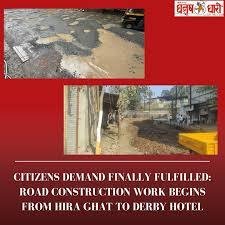
Let’s Start With the Roads — Because Everyone Feels Them
Every resident knows the experience: driving slowly to avoid potholes, sudden traffic near market areas, ambulances struggling to pass through narrow or damaged roads. Roads are not just concrete surfaces. They connect hospitals, schools, offices, and homes.
Better roads would instantly improve daily life.
But fixing roads is not only about laying new cement. It’s about:
- Using quality materials
- Supervising contractors properly
- Conducting independent inspections
- Maintaining roads before they collapse
And most importantly — enforcing rules. When heavy vehicles block new roads or illegal parking takes over main stretches, all that investment goes to waste. Strong enforcement isn’t harsh; it’s necessary.
When roads are smooth and traffic flows better, stress levels drop. Businesses benefit. Emergency response improves. Something as simple as a good road can restore dignity to a neighborhood.
Unsafe Buildings: A Silent Fear Many Families Live With
One of the deepest concerns in Ulhasnagar is old and unsafe structures. Many buildings were constructed decades ago, some without strong regulatory oversight. Today, families live inside walls that may not be structurally sound.
Imagine sleeping every night wondering whether your building can withstand the next heavy rain.
The solution is not sudden demolition without support. The solution is organized redevelopment with empathy.
The city needs:
- Transparent structural audits
- Clear communication with residents
- Time-bound redevelopment plans
- Temporary housing arrangements for affected families
Redevelopment should feel like progress — not displacement. If handled correctly, it can give families safer homes and better living standards while modernizing entire neighborhoods.
Water and Sanitation: Basic Needs, Not Privileges
Reliable water supply is one of the most fundamental requirements of any city. When water timing is irregular, daily life becomes stressful. Families must plan their routines around uncertainty.
Modern cities use better leak detection systems, smart supply management, and upgraded pipelines. Ulhasnagar deserves the same attention.
Cleanliness is another critical issue. Overflowing drains during monsoon, inconsistent waste management, and poor drainage planning create health risks. These are not “small issues.” They affect children, elderly residents, and public health overall.
Improving sanitation does not require futuristic ideas — it requires discipline, monitoring, and consistent follow-through.
Law and Order: People Need to Feel Safe
Safety is not just about reducing crime statistics. It is about how safe people feel walking home at night or parking their vehicles outside.
Increasing night patrols, installing functioning CCTV cameras, and responding quickly to complaints can rebuild trust between residents and authorities.
Community policing can also play a role. When residents and police communicate regularly, problems are identified earlier and handled faster.
A city that feels safe becomes a city that grows confidently.
Reviving Civic Pride: The Power of Participation
Here is something important — government alone cannot transform Ulhasnagar. Citizens are equally responsible.
Illegal parking, ignoring building norms, littering streets — these habits slowly damage the city. It is easy to blame authorities, but sustainable improvement requires shared accountability.
Residents can:
- Use official complaint portals instead of only social media rants
- Participate in ward meetings
- Support local cleanliness drives
- Follow civic rules consistently
Small disciplined actions by thousands of people create massive change over time.
Ulhasnagar’s entrepreneurial community proves that its people are capable of organization and growth. That same energy can uplift civic life.
Strengthening Local Business and Economic Growth
Ulhasnagar has always been known for its markets — garments, furniture, wholesale trading. Business is the backbone of this city.
Better infrastructure directly supports local traders. Smooth roads mean better customer access. Organized parking means less congestion. Cleaner surroundings attract more visitors.
Skill-development programs, easier licensing systems, and transparent regulations can help small businesses expand.
When local businesses grow, employment grows. When employment grows, families stabilize. When families stabilize, cities thrive.
Green Spaces and Public Areas: More Important than we Think
Urban life can become suffocating without open spaces. Parks, walking tracks, playgrounds — these are not luxuries.
They provide:
- Physical health benefits
- Mental relaxation
- Safe areas for children
- Social bonding spaces
Even small neighborhood parks can dramatically improve quality of life. A city that breathes through green spaces feels lighter and healthier.

What Authorities Must Do Differently
For real transformation, municipal leadership must focus on:
- Transparent budgeting
- Time-bound project completion
- Strict contractor accountability
- Public progress reports
- Consistent enforcement of rules
Development is not about announcements. It is about execution.
Trust builds when residents see visible, measurable improvement.
A Future That is Possible
Picture an Ulhasnagar where:
- Roads remain intact even after monsoon
- Redeveloped buildings offer safe, modern housing
- Water supply is predictable
- Markets are organized and thriving
- Streets are clean and well-lit
- Children play safely in parks
This is not an unrealistic dream. Many Indian cities with similar challenges have improved through planning and citizen involvement.
Ulhasnagar has the advantage of location, resilience, and entrepreneurial culture. It has already overcome historical challenges. It can overcome civic ones too.
Final Thoughts: Change Begins With Mindset
Improving the condition of Ulhasnagar is not just a government project. It is a collective mindset shift.
Instead of saying, “Yahan kuch nahi badlega” (Nothing will change here), imagine if more people said, “Let’s fix this.”
Cities transform when people care deeply enough to demand better — and behave better.
Ulhasnagar deserves smooth roads, safe homes, clean water, organized markets, and a strong sense of civic pride. Most importantly, its people deserve a city that reflects their hard work and resilience.
The foundation already exists — community strength, business spirit, and cultural unity. With structured planning and shared responsibility, Ulhasnagar can move from survival mode to progress mode.
And when that happens, the city will not just function better — it will feel better.
—Adya Kumar Mishra, Ulhasnagar, Mumbai