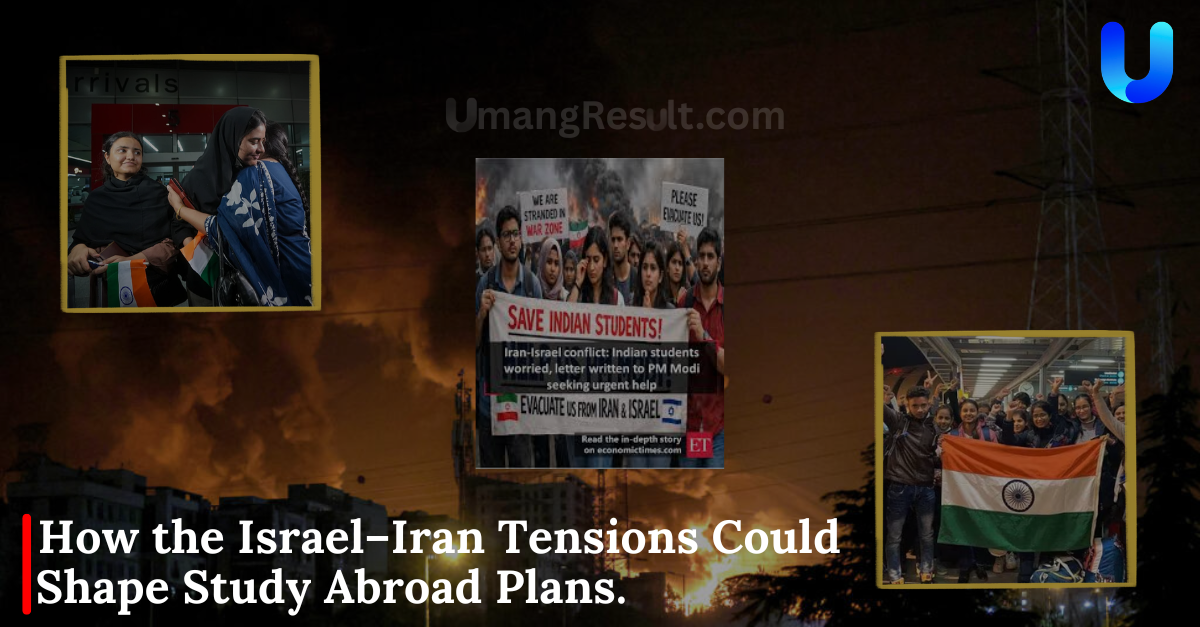
The growing tensions between Israel and Iran aren’t simply making headlines; they have real-world effects that go well beyond the Middle East. For Indian students who want to study abroad, wars like these can make things unclear about visas, travel routes, currency changes, safety issues, and even tuition expenses.
As thousands of Indian students get ready to study abroad in 2026 in places like the US, UK, Canada, Australia, Germany, and parts of the Middle East, many families are asking an essential question:
What effect may the Israel–Iran war have on Indian students studying abroad?
This post lays everything down in a simple, useful, and calm way, concentrating on what kids and parents really need to know.
Understanding the Israel–Iran Conflict in Context
The battle is mostly happening in the Middle East, yet it can also have an effect on other places:
- Prices of oil throughout the world
- Routes for travelling across the world
- How long it takes to process a visa
- Rates of currency exchange
- Moving around as an international student
- Collaborations between universities
The effects on Indian students may not always be immediate, but economic and diplomatic effects might nevertheless change their study intentions.
Let’s look at the places where it could have an effect.
1. Impact on Indian Students in Israel and the Middle East
Indian Students in Israel
Israel is home to many Indian students, especially in:
- Studies in agriculture
- Research programs
- Science and technology programs for graduate students
- Short-term exchanges between schools
If things become worse:
- Universities might have to switch to online classrooms for a while.
- There may be warnings from the embassy.
- Travel restrictions might get stricter.
- If needed, emergency evacuation plans may go into effect.
During times of crisis, the Indian Embassy in Israel usually offers real-time reports and help.
Indian Students in Gulf Countries
A lot of Indian kids also go to school in the
- UAE.
- Qatar
- Saudi Arabia
- Oman
If instability in the region grows, it could:
- Change the aircraft paths in the area
- Make security stronger
- Temporarily throw off university scheduling
But Gulf nations normally stay stable on the inside, even when there are conflicts in the area.
2. Oil Prices and Rising Cost of Studying Abroad
One of the largest repercussions of tensions in the Middle East on the rest of the world is that oil prices are going up.
Could you kindly tell me why this is crucial to students?
Because rising oil prices can affect:
- Cost of airfare
- Costs of living
- Rising prices in host nations
- Changes in currency
Higher Air Travel Costs
Airline ticket rates can go up if the price of oil goes up. Students who are flying to:
People in the USA, UK, Canada, Europe, and Australia may have to pay more to travel.
Increased Living Costs
Inflation generally happens when oil prices go up. This might make things worse:
- Rent
- Costs of food
- Costs of transportation
- Bills for utilities
Even modest price hikes might be important for students who are short on cash.
3. Currency Fluctuations and the Indian Rupee
Currency markets are regularly affected by turmoil throughout the world.
If the Indian rupee is weaker against:
- US Dollar
- British Pound
- Euro
- Canadian Dollar
Then Indian families have to pay more for school and living costs.
For instance:
If the USD gets stronger because of uncertainties throughout the world, students who pay their fees in dollars may have to spend more in INR.
This can have an effect on:
- Loans for school
- Savings for the family
- Planning a budget
Before sending a lot of money for tuition, parents should keep an eye on exchange rates.
4. Visa Processing Delays
When there are geopolitical tensions:

- Embassies may step up security inspections.
- Processing times for administrative tasks may go longer.
- It may take longer to check someone’s background.
This doesn’t imply that visas will be denied, but in some areas, processing times may take longer.
Students that want to apply for:
- F-1 visas for the US
- Visas for students in the UK
- Study permits for Schengen
should apply early to minimise stress at the final minute.
5. Impact on Study Abroad Destinations
The United States, the United Kingdom, Canada, and Australia
Because of problems in the Middle East, these governments are not likely to directly stop academic programs. But:
- There may be further security checks.
- Travel warnings might change.
- There may be a delay in research relationships with institutions in the Middle East.
Europe
If energy supply channels are broken, European nations may have:
- More inflation
- Higher costs of energy
- Pressure from the economy
This might have an indirect effect on the cost of living and the number of part-time jobs available.
6. Indian Students in Conflict Zones
Students who are currently studying in places that are closer to geopolitical hotspots may have to deal with:
- Campus closures for a short time
- Curfews
- Changes in remote learning
- Travel is limited
Indian embassies usually give out:
- Warnings about travel
- Numbers for emergency support
- Instructions for evacuation (if needed)
When studying in sensitive areas, students should constantly check in with the Indian consulate.
7. Impact on Education Loans
If the Indian economy is affected by instability throughout the world:
- The interest rates on bank loans might change.
- The procedure of giving out loans may slow down.
- Charges tied to forex might go up.
Students who need to take out loans for school should:
- Check the timelines for loan disbursement.
- Keep some extra money on hand.
- Don’t make currency transfers at the last minute.
8. Scholarships and Funding

Most of the time, regional conflicts don’t have a direct effect on foreign scholarships. But:
- Exchange initiatives that are paid for by the government may be put on hold.
- Research cooperation between nations that are affected might stall considerably.
- Depending on how things go with diplomacy, international funding may be looked at again.
Students who want to get global fellowships should keep an eye on official announcements.
9. Psychological Impact on Students
In addition to money and logistics, global war may also harm mental health.
Students could feel:
- Worry about safety
- Not sure what will happen in the future
- Stress from news coverage
Colleges and universities commonly offer:
- Counselling services
- Help for international students
- Crisis hotlines
Students need to be calm and only use information that has been checked.
10. Study Abroad Decisions in 2026: Should Students Be Worried?
The quick answer is that you shouldn’t panic; you should stay informed.
Most international education systems are built to keep working even when there are problems between countries.
In the past:
- Regional disputes don’t often cause universities to close for a lengthy time.
- Most of the time, student visa programs keep going.
- International student mobility changes instead of stopping.
Major study places are still open, unless the violence gets a lot worse.
Practical Advice for Indian Students
If you want to study abroad in 2026, here’s what you need to do:
1. Apply Early
Send in your visa and university applications well before the due dates.
2. Monitor Official Sources
- Ministry of External Affairs in India
- News from the Indian embassy
- Official announcements from the university
Don’t believe everything you hear on social media.
3. Budget Smartly
Think about how much more you could have to pay for:
- Cost of flights
- The expense of living
- Rates of currency exchange
Keep money for emergencies.
4. Stay Registered with Embassy
If you are studying abroad, you should always register with the Indian embassy in your home country.
5. Consider Travel Insurance
Comprehensive international insurance might provide you more peace of mind.
Long-Term Impact on Global Education
The crisis between Iran and Israel might speed up changes that are happening all throughout the world, such as:
- Different places to study
- Growth in online and mixed-mode learning
- Better regional education centers in Asia
- More attention is being paid to higher education in India.
Some students may pick places that are seen to be politically stable.
Others could look toward Asian options like:
- Japan
- Malaysia
- Singapore
- South Korea
India is making its own higher education system stronger, which might make it less likely that people would leave the country in the long term.
Is This a Turning Point for Study Abroad Trends?
Students and families are reminded that international education is part of bigger geopolitical systems by conflicts throughout the world.
But history reveals that:
- Students change.
- Colleges change.
- Governments change.
International education has maintained even during times of global crisis.
The most important thing is to be flexible and ready.
Final Thoughts
There is no doubt that the crisis between Israel and Iran is important for world politics. But for Indian students who want to study abroad, the effect will probably be indirect rather than direct.
These are some things that might happen:
- Costs of travel are going up
- Changes in currency
- Delays in processing visas
- Prices going up in various nations
But major education locations are still solid and working.
The best recommendation for students in 2026 is:
Stay up to date.
Make plans ahead of time.
Be careful with your budget.
Don’t panic.
Events throughout the world can affect education, but they seldom halt it.
Even during times of war, education is still one of the best ways for countries to connect with each other.