
Electronic study is increasingly widespread among kids these days because we live in a digital world. Technology is becoming a big part of education. There are online classrooms, educational apps, YouTube videos for learning, smart boards, and digital homework sites. Kids are spending more time in front of screens to study, especially since online learning became popular.
Instead than only using books and notebooks, electronic study implies learning through digital devices including phones, tablets, laptops, and computers. Technology has made learning easier and more fun, but a lot of parents and teachers are worried about how it affects kids’ brains.
So the big question is: how does studying on a computer influence kids’ brains? Is it useful or bad?
The answer is not simple. There are both good and bad consequences of electronic study on kids’ brain growth. Let’s take a closer look at this.
Understanding the Developing Mind of Children
Before we can talk about the effects, we need to remember that a child’s brain is still growing. The brain grows quickly from age 5 to 16. This is when kids build:
- Power of memory
- Paying attention and focusing
- Control of feelings
- Imagination
- Thinking logically
The environments kids are regularly exposed to significantly influence their brain development. Kids learn and digest information differently when they study on a computer.
Positive Effects of Electronic Study on Kids’ Minds
There are some good things about electronic study. When utilised correctly and for a short period, it can make learning more fun and help you think better.
1. Easier to Get Information
Before, kids could only use school books and teachers. But now, kids can use electronic study to get there:
- Courses on the internet
- Videos for learning
- Quizzes that you can take with other people
- Libraries on the internet
This gives them more chances to learn about numerous topics and concepts. They can learn at their own pace and go back to things they have already learned. This helps people understand and remember better.
Kids who are interested can learn about things that aren’t in their schoolwork, which helps them think more broadly.
2. Better learning by seeing
A lot of kids learn better when they can see things. Electronic study includes:
- Moving pictures
- Charts
- Three-dimensional models
- Simulations that you can interact with
A child can view a 3D animated description of the solar system instead of just reading about it. This makes it easier and more fun to learn.
Different regions of the brain work together when you learn visually, which might help you remember things better and make concepts clearer.
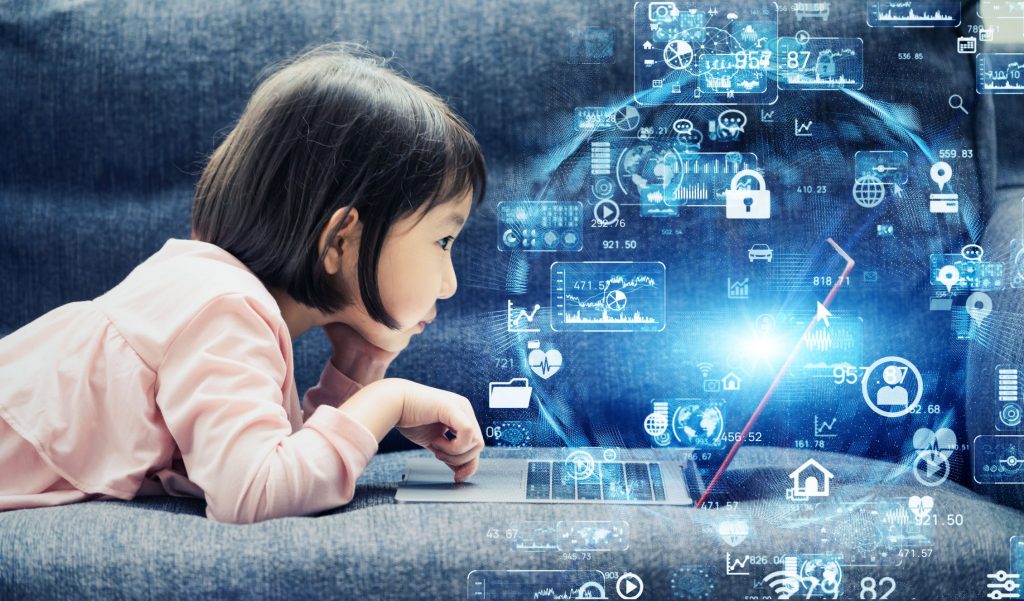
3. Learning Faster and Using Smart Tools
Some of the tools that electronic devices give are:
- Check the spelling
- Dictionaries on the web
- Solving doubts with AI
- Apps for learning
These technologies make it easier for kids to learn. They can rapidly look up explanations if they don’t comprehend something.
This makes learning more independent and less frustrating. Kids get better at using technology, which is vital for their future jobs.
4. Improving Digital Skills
Digital skills are particularly vital in 2026. Kids learn better when they study on a computer:
- Get better at typing
- Learn how to code.
- Use tools on the internet
- Get to know digital communication
You need these skills to work in today’s world. Children can get ready for future tech settings by using digital platforms early on.
Negative Effects of Electronic Study on Kids’ Minds
Electronic study can be helpful, but too much of it or using it without limits can hurt a child’s mental progress.
1. Shorter Attention Span
One of the main concerns is that people can’t focus as well. Digital learning often has:
- Visuals that change quickly
- Alerts
- Pop-ups
- Doing more than one thing at once
The brain gets used to being stimulated all the time. This is why kids could have trouble paying attention when they have to do things that take a long time, like read books or write long answers.
Their ability to pay attention gets shorter over time. They can have trouble studying quietly without help from technology.
This can have an effect on schoolwork over time.
2. Relying on quick answers
Kids can find answers right away when they use modern devices. This is useful, but it might make it harder to think deeply.
Children may not solve problems step by step; instead, they may:
- Look for answers right away.
- Don’t think critically
- Depend too much on technology
This habit makes it harder to think critically. Instead of getting a profound grasp, learning becomes surface-level.
When kids have to work hard and try to solve issues on their own, they get better at thinking.
3. Weakness in memory
Kids might not feel the need to recall things when they can find everything online. They need gadgets for:
- Formulas
- Definitions
- How to spell
- Dates
This makes it harder to exercise your memory. The brain is like a muscle: if you don’t utilise it well, it gets weaker.
Writing notes, going over them again, and memorising essential ideas are all traditional ways to study that assist improve memory. Sometimes, electronic study makes this less common.
4. Tired eyes and tired mind
Studying on a computer increases the amount of time you spend in front of a screen. Long periods of time in front of screens can cause:
- Strain on the eyes
- Headaches
- Tiredness of the mind
- Less focus
When kids look at screens for a long time, their brains get too much digital information. This can make you irritable and change your mood.
Screen study takes more mental work than reading books because of the brightness and visual stimulation.
5. Less Creativity
A lot of the time, electronic platforms include information that is ready to use. Kids might:
- Instead of fantasising, watch explanations.
- Instead than starting from scratch, use digital templates.
- Copy answers from the web.
This makes it harder to use your imagination. Kids’ creativity improves when they sketch, compose stories, or solve issues on their own.
Being too dependent on technology can make it hard to think of new ideas.
6. Changes in feelings and behaviour
Continuous electronic study might also have an impact on emotional growth. Kids might:
- Feel worried because of competition online
- Look at how they compare to others
- Worry about how well you do
Also, not being able to engage with teachers and classmates in person can make social learning less effective. Real discussions and working together, not just screens, help people learn how to be emotionally intelligent.
How it affects social skills
Kids learn a lot from traditional educational settings:
- Improve your ability to talk to others
- Learn how to work with others
- Deal with disagreements
- Boost your confidence
Studying on a computer lessens the need for face-to-face interaction. Kids might feel more at ease chatting to others through screens than in person.
This can lead to:
- Awkwardness in social situations
- Not too confident when speaking in front of others
- Weak expression of feelings
For healthy mental growth, it’s vitally important to engage with other people.
Effect on Sleep and Brain Rest
A lot of kids study online and then use their devices for fun. Too much time in front of a screen, especially before bed, might make it hard to sleep.

Screens’ blue light lowers melatonin production, which governs when you sleep. Bad sleep causes:
- Not being able to focus
- Being irritable
- Low memory strength
- Lowered academic performance
A brain that is expanding needs to rest. Sleep is important for mental growth.
Is Electronic Study Completely Harmful?
No, studying on a computer is not bad for you in every way. The issue is not technology per se; the issue is inequality.
When an electronic study is:
- Not enough time
- Along with studying offline
- Parents are in charge of it.
- Used to really learn
- It can be really helpful.
But when it takes the place of books, playing outside, and talking to others in person, it starts to hurt the child’s mental and emotional maturation.
How to Maintain Healthy Balance
Parents and instructors can take a few easy actions to keep youngsters’ minds safe:
- Set restrictions on how much time you can spend on screens each day.
- Along with digital learning, encourage writing notes by hand.
- Make sure you get outside and move about often.
- Stay away from devices for at least an hour before bed.
- Encourage people to talk and do things together in real life.
Learning in a balanced way improves both your digital and mental skills.
Long-Term Effects on Future Generations
Kids who learn using electronics will be more at ease with technology. This can help you get a job in the future that has to do with AI, data, digital marketing, or coding.
But if things aren’t balanced right, future generations may have trouble with:
- Very focused
- Patience
- Emotional steadiness
- Thinking critically
The secret is to use both old-fashioned study methods and technology technologies.

It is not a good idea for education to go completely digital. It should still be focused on people, using technology as a tool to help.
In conclusion
Electronic study has changed the way people learn nowadays. It makes it easier to learn, see things, and improve your digital skills. It gets kids ready for a future when technology is important.
But too much electronic study might make it harder to pay attention, remember things, be creative, sleep well, and grow emotionally. A growing brain needs balance, real-life interaction, and mental activity that doesn’t involve screens.
Technology should help people learn, not take over. When used correctly and in moderation, electronic study can help a child’s brain grow stronger. But without boundaries, it could cause long-term difficulties with thinking and behaviour.
The idea is not to get rid of technology, but to use it wisely. The best method to make sure that kids in 2026 and beyond have healthy mental development is to use a mix of digital and conventional learning.