Introduction: Is Harvard Really Different?
When people hear the term Ivy League, they imagine eight elite universities wrapped in history, privilege, and prestige. And they’re right.
The Ivy League includes:
- Harvard
- Yale
- Princeton
- Columbia
- Brown
- Dartmouth
- Cornell
- University of Pennsylvania
All eight are globally respected. All eight are highly selective. All eight produce leaders.
But here’s the uncomfortable question many hesitate to ask:
Is Harvard actually on another level — or is it just benefiting from stronger branding?
The Harvard vs Ivy League debate is not about which university is “good.” They are all excellent. The real debate is about influence, research dominance, alumni power, cultural weight, and global recognition.
Let’s unpack this carefully.

Historical Weight: Who Built the Strongest Legacy?
Harvard, founded in 1636, is the oldest university in the United States. That alone carries symbolic power.
Age matters in academia. It allows institutions to:
- Build generational wealth
- Establish deep alumni networks
- Shape national institutions
- Accumulate cultural prestige
While Yale and Princeton are nearly as historic, Harvard often receives the spotlight in global narratives.
In popular culture, political speeches, films, and international media, Harvard appears more frequently as the symbol of American academic excellence.
That narrative advantage reinforces perception.
And perception influences global rankings.
Global Rankings: Does Harvard Lead?
Across most major global ranking systems, Harvard consistently places at or near the top worldwide.
Other Ivy League schools also rank highly — Princeton, Yale, and Columbia frequently compete in the top tier.
But Harvard often leads in:
- Research output
- Citation impact
- Global reputation surveys
- Faculty awards
In terms of sheer academic influence, Harvard’s scale gives it an edge.
That does not mean Yale or Princeton lack excellence. It simply means Harvard operates at a slightly larger global research footprint.
Endowment Power: The Financial Advantage
Money may not buy intelligence — but it funds opportunity.
Harvard possesses one of the largest university endowments in the world, often exceeding $50 billion.
To put that into perspective:
- It allows massive research investment
- It funds generous financial aid
- It supports global partnerships
- It maintains world-class infrastructure
Other Ivy League institutions also have strong endowments, but Harvard’s financial capacity is unmatched within the group.
Financial strength fuels long-term dominance.
Academic Strengths: Who Leads in What?
The Harvard vs Ivy League debate becomes more nuanced when we examine subject strengths.
Harvard
- Medicine
- Law
- Public policy
- Business
- Government
- Biomedical research
Princeton
- Mathematics
- Theoretical physics
- Public policy
- Undergraduate-focused excellence
Yale
- Law
- Drama and arts
- Humanities
University of Pennsylvania
- Business (Wharton School)
- Finance
Columbia
- Journalism
- International affairs
Cornell
- Engineering
- Architecture
- Hospitality
Brown
- Liberal arts flexibility
- Open curriculum
Dartmouth
- Undergraduate focus
- Liberal arts tradition
Each Ivy League institution has a speciality.
Harvard dominates broadly.
Others dominate in specific niches.
So the “best” depends on academic goals.
Undergraduate Experience: Intimate vs Expansive
Princeton and Dartmouth are often praised for intimate undergraduate environments.
Harvard, due to its scale, offers vast academic resources — but sometimes feels larger and more competitive.
Some students prefer:
- Princeton’s tight-knit intellectual focus
- Brown’s open curriculum freedom
- Dartmouth’s community culture
Harvard offers diversity and global exposure.
The question becomes personal:
Do you want focused intimacy or expansive opportunity?
Alumni Influence: Who has the Strongest Network?
Harvard’s alumni list includes:
- U.S. Presidents
- Billionaire entrepreneurs
- Nobel Prize winners
- Supreme Court Justices
- Media icons
But Yale, Princeton, and Penn also boast influential graduates.
What differentiates Harvard is volume.
The sheer number of global leaders connected to Harvard creates network density.
In corporate boardrooms, global diplomacy, venture capital circles, and policy institutions, Harvard alumni appear frequently.
This visibility reinforces prestige.
Cultural Perception: The Branding Question
Let’s address the elephant in the room.
Harvard is a brand.
In many countries, people unfamiliar with American academia know Harvard — but may not immediately recognise Dartmouth or Brown.
Global perception often simplifies Ivy League identity into one name: Harvard.
That cultural dominance strengthens Harvard’s symbolic position.
But symbol and substance are not identical.
Other Ivy League schools often rival Harvard academically — sometimes surpassing it in specific departments.
Yet perception drives aspiration.
And aspiration drives application volume.
Acceptance Rates: Is Harvard the Hardest?
All Ivy League schools are extremely selective.
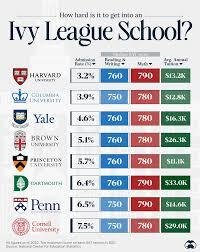
Harvard’s acceptance rate typically hovers around 3–4%.
Princeton, Yale, and Columbia report similarly low figures.
The difference in selectivity margins is often minimal.
However, Harvard receives enormous application volume.
That amplifies perceived competitiveness.
In reality, admission difficulty across top Ivy institutions is comparably intense.
Research Output: Scale vs Specialisation
Harvard’s research output is massive.
Its medical, scientific, and policy research centres operate at extraordinary scale.
Princeton, by contrast, focuses more heavily on undergraduate teaching and theoretical excellence.
Cornell excels in applied sciences.
Columbia has strong urban research integration.
Harvard’s advantage lies in breadth and scale.
Others shine in targeted excellence.
Campus Culture and Atmosphere
Campus culture often differentiates Ivy schools more than rankings.
Harvard can feel ambitious, fast-paced, and globally oriented.
Brown promotes flexibility and intellectual freedom.
Dartmouth emphasises community bonding.
Yale celebrates artistic and literary culture.
Princeton fosters intense academic focus.
The Harvard vs Ivy League debate ultimately becomes about personality alignment.
Where do you see yourself thriving?
Is Harvard Worth More than Other Ivies?
Here’s the grounded answer:
Academically? Not universally.
Symbolically? Often yes.
Globally recognised? Absolutely.
Always the best choice? Not necessarily.
If you want:
- Massive research exposure
- Global networking
- Broad academic dominance
Harvard may be ideal.
If you want:
- A tight undergraduate experience
- Specific program strength
- Distinct campus culture
Another Ivy League university may suit you better.
Prestige overlaps across the Ivy League.
Fit determines success.
Final Reflection: Beyond the Comparison
The Harvard vs Ivy League debate is less about superiority and more about identity.
Harvard stands as the most globally recognised Ivy League institution.
But recognition is not the same as universal superiority.
All Ivy League universities produce leaders, innovators, and changemakers.
Choosing between them requires self-awareness, not blind admiration.
In the end, your ambition, discipline, and intellectual curiosity matter more than the logo on your degree.
Harvard may lead in scale and global symbolism.
But excellence lives across the entire Ivy League.