Introduction: The Price Tag that Scares Everyone
Say the word Harvard, and two thoughts usually appear.
Prestige.
And price.
For many families, the idea of studying at Harvard feels financially impossible. Tuition numbers circulate online. Social media posts exaggerate expenses. Rumours grow faster than facts.
But here’s the surprising truth: Harvard is expensive — yet often more affordable than people assume.
The Harvard cost and financial aid system is structured in a way that reshapes how elite education is funded. For thousands of students, especially those from middle- and low-income families, Harvard can cost less than local private universities.
Let’s examine the real numbers, the policies, and the hidden realities.
Understanding the Real Cost of Harvard
First, let’s break down the estimated annual cost for undergraduate students.
A typical yearly expense includes:
- Tuition
- Housing
- Meals
- Health insurance
- Books and personal expenses
The total annual cost can exceed $80,000 USD when combining all components.
That number sounds overwhelming.
But focusing only on the sticker price creates a distorted picture.
Very few students pay the full amount.
The Difference Between Sticker Price and Net Cost
The sticker price is the published total cost.
The net cost is what families actually pay after financial aid.
Harvard’s financial aid model is primarily need-based, not merit-based.
This means:
- Aid depends on family income and financial circumstances.
- It does not depend on being “top rank” or “gold medal winner.”
If a family earns below a certain income threshold, the contribution expected can be dramatically reduced — sometimes to zero.
For many families earning below middle-income levels, Harvard tuition can effectively be free.
That is where Harvard cost and financial aid become genuinely transformative.

Harvard’s Need-Blind Admission Policy
One of Harvard’s strongest financial commitments is its need-blind admission policy for many applicants.
This means:
- Admission decisions are made without considering the student’s ability to pay.
- Financial need does not reduce acceptance chances.
After admission, Harvard commits to meeting 100% of demonstrated financial need.
This approach removes a significant barrier for talented students from modest backgrounds.
However, policies can vary slightly for international applicants depending on updated guidelines, so careful verification is always necessary.
What Families Actually Pay
Harvard uses a sliding scale system.
Generally:
- Families earning below approximately $75,000 per year often pay nothing toward tuition.
- Families earning between moderate income levels contribute a percentage based on financial review.
- Higher-income families may pay more substantial amounts.
The structure ensures that students are not burdened with unrealistic debt simply because of tuition.
Harvard’s endowment strength allows this generosity.
Scholarships vs Financial Aid: Understanding the Difference
Many people search for “Harvard scholarships.”
Technically, Harvard does not offer traditional merit scholarships in the way some universities do.
Instead, financial support is entirely need-based.
This means:
- You are not competing for “top scorer” awards.
- Aid is based on financial documentation.
In effect, this model can be more equitable.
It focuses on access rather than rewarding only academic perfection.
International Students: Is Harvard Affordable?
For international students, the question feels heavier.
Studying abroad involves:
- Currency exchange challenges
- Visa expenses
- Travel costs
- Living adaptation
The good news is that Harvard extends substantial financial aid to international students as well.
Many international students receive generous packages that significantly reduce total cost.
However, the process requires:
- Detailed financial documentation
- Transparent disclosure of income
- Careful application planning
Harvard’s commitment to global diversity includes financial accessibility — but preparation matters.
Student Loans: Are they Necessary?
One common fear is lifelong debt.
Harvard’s financial aid packages aim to minimise reliance on loans.
In many cases:
- Grants replace loans entirely.
- Work-study opportunities are included modestly.
- Families are not forced into extreme borrowing.
This differs from many universities where loans form a significant portion of aid.
Graduating without heavy debt creates long-term financial freedom.
That long-term advantage often outweighs the intimidating sticker price.

Work-Study and Campus Employment
Harvard also encourages students to participate in part-time campus employment.
Work-study options may include:
- Library assistance
- Research support
- Administrative roles
- Campus service jobs
These roles:
- Provide modest income
- Develop responsibility
- Enhance campus integration
However, they are not structured to burden academic performance.
Balance remains central.
Hidden Costs to Consider
Even with financial aid, some costs require planning.
Students should budget for:
- Personal travel
- Seasonal clothing
- Social activities
- Study materials beyond standard coverage
Financial literacy becomes important.
Harvard provides guidance and counselling to help students manage budgeting effectively.
Preparation reduces stress.
Is Harvard Worth the Cost?
The deeper question is not just affordability.
It is value.
Harvard offers:
- Global alumni networks
- Research opportunities
- Leadership exposure
- Brand recognition
- Career placement strength
Graduates often access high-paying careers and influential roles.
But value is personal.
If a student attends Harvard purely for prestige without clear direction, financial investment may feel heavy.
If a student uses the ecosystem strategically, the long-term return can be substantial.
The Psychological Barrier of Cost
Interestingly, the biggest obstacle is often perception.
Many students from modest backgrounds never apply because they assume Harvard is unaffordable.
This self-elimination reduces opportunity before evaluation even begins.
Harvard’s financial aid philosophy attempts to remove that psychological barrier.
Yet awareness remains uneven globally.
The reality is simple:
The cost looks terrifying.
The net cost is often manageable.
And sometimes, it is lower than expected.
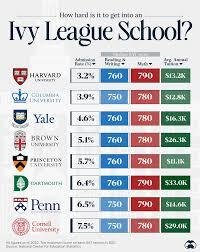
Comparing Harvard Cost to Other Ivy League Schools
Most Ivy League institutions offer strong financial aid.
However, Harvard’s endowment allows particularly robust support.
In comparison to other elite private universities outside the Ivy League, Harvard’s net cost can often be competitive or even lower for qualifying families.
The conversation shifts from “Can I afford Harvard?” to “Should I apply and explore my options?”
Application itself costs little compared to lost opportunity.
Final Reflection: Beyond the Price Tag
Harvard cost and financial aid is a paradox.
It is one of the most expensive universities in the world.
Yet for many students, it becomes one of the most affordable elite options.
The key lies in understanding:
- Need-based aid
- Transparent documentation
- Real net cost calculations
- Long-term value perspective
The name Harvard carries weight.
But the financial model carries possibility.
Before dismissing the dream because of the price, examine the structure.
Sometimes the number that scares you most is not the number you actually pay.