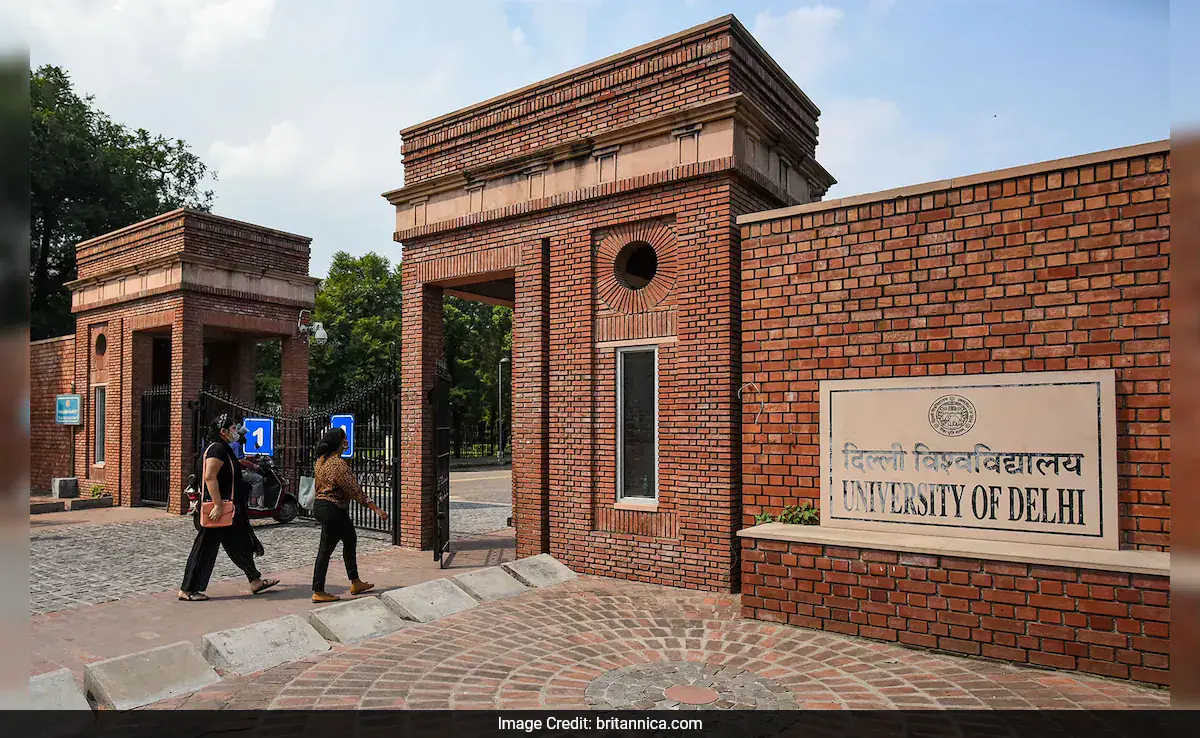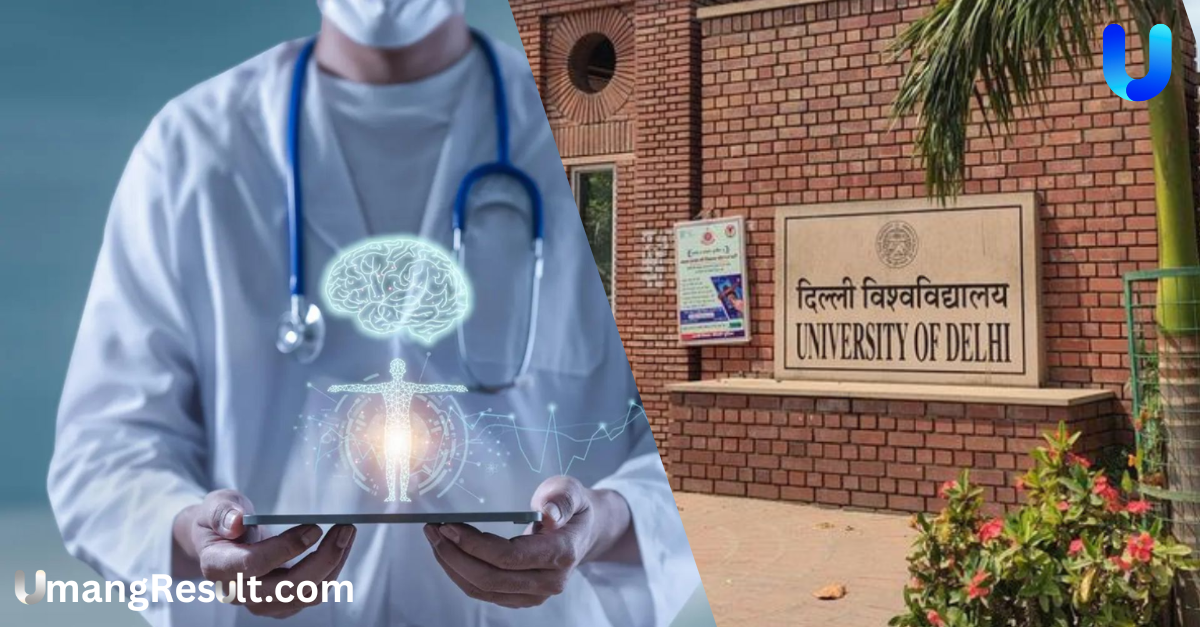
For decades, medicine in India followed a familiar rhythm — textbooks, dissections, ward rounds, and handwritten case sheets. But something is changing quietly inside hospitals and classrooms. Machines are beginning to assist doctors in diagnosis, prediction, and decision-making. Recognising this shift, Delhi University has introduced a certificate course in Artificial Intelligence for Health Sciences, marking a significant moment in Indian medical education.
This is not just another add-on course. It reflects how healthcare is preparing itself for a future where data and diagnosis walk hand in hand.
Why AI Is Becoming Essential in Healthcare
Healthcare today generates massive amounts of data — patient histories, scans, lab reports, genetic information. Managing and interpreting this data manually is no longer practical.
Artificial Intelligence helps by:
- Detecting diseases early through imaging
- Predicting patient outcomes
- Assisting in treatment planning
- Reducing human error
From cancer detection to robotic surgeries, AI is already reshaping global healthcare systems. India, with its population and healthcare load, stands to benefit immensely.
About Delhi University’s AI in Health Sciences Course
Delhi University’s newly launched course is designed to introduce healthcare students and professionals to the practical application of AI in medicine.
The programme focuses on:
- Basics of Artificial Intelligence
- Machine learning concepts
- Medical data analysis
- AI-based diagnostics
- Ethical challenges in AI-driven healthcare
The course is structured in a way that does not demand deep technical knowledge, making it accessible to medical and life science students.
Who Can Enrol in This Course
The course is suitable for:
- Medical students
- Allied healthcare students
- Life science graduates
- Healthcare professionals
- Researchers interested in medical technology
It is especially beneficial for students who wish to stand out in an increasingly competitive medical ecosystem.
What Students Will Learn
The curriculum bridges the gap between theory and application.
Understanding AI Basics
Students are introduced to how AI systems function, without overwhelming them with complex coding.
AI in Diagnostics
Real-world examples of how AI analyses X-rays, MRIs and CT scans to detect abnormalities.
Data-Driven Healthcare
How patient data is collected, cleaned and used for predictive analysis.
Ethics and Responsibility
AI raises concerns about data privacy, bias and accountability — all of which are addressed in the course.
Career Opportunities After Learning AI in Healthcare
This course does not replace traditional medical education — it enhances it.
Career possibilities include:
- Clinical research roles
- Healthcare analytics
- Hospital technology management
- Medical AI consulting
- Health-tech startups
Doctors with AI knowledge are increasingly valued for leadership and administrative roles.
Why This Course Matters for Indian Students
India faces unique healthcare challenges — overcrowded hospitals, shortage of doctors, uneven access to care.
AI offers scalable solutions:
- Faster diagnosis in rural areas
- Reduced workload for doctors
- Better patient management
By introducing such courses early, universities like Delhi University are preparing students not just for exams, but for real-world problems.
Changing the Definition of a ‘Good Doctor’
The future doctor will not be defined only by memory and manual skills. Adaptability, technological awareness and ethical judgement will matter just as much.
This course sends a strong message: medicine is evolving, and those who evolve with it will lead.
Final Thoughts
Delhi University’s AI in Health Sciences course represents a forward-looking step — one that recognises the reality of modern healthcare.
For students standing at the crossroads of medicine and technology, this programme offers clarity and confidence. It is not about replacing human judgement, but strengthening it with intelligent tools.
In a world where diseases are becoming complex and resources limited, smart healthcare is no longer optional.