Opening Update
Darbhanga district in Bihar has received approval for its third Kendriya Vidyalaya, strengthening access to central school education in the region. The new Kendriya Vidyalaya will operate from the AIIMS Darbhanga campus in its initial phase. Official confirmation indicates that the Kendriya Vidyalaya Sangathan has cleared the proposal following administrative review. The decision addresses rising demand for central schools in Darbhanga, where existing Kendriya Vidyalayas face high application pressure.
Data from recent admission cycles shows that the number of applicants for Class 1 seats in Kendriya Vidyalayas often exceeds available seats by multiple times. The addition of a third Kendriya Vidyalaya is expected to expand capacity and reduce admission constraints in the district.
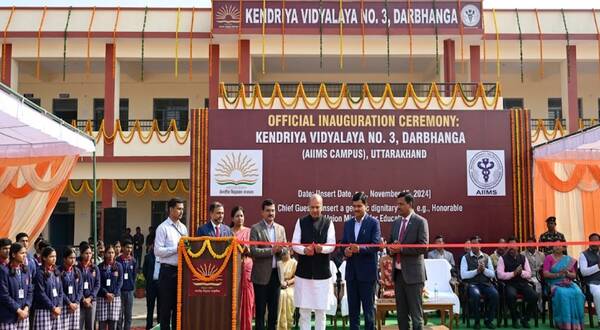
Darbhanga Gets Third KV at AIIMS
The approval of the Darbhanga Third Kendriya Vidyalaya marks a significant institutional development in Bihar’s school education system. The new Kendriya Vidyalaya will begin operations from the AIIMS Darbhanga premises, ensuring early commencement without waiting for permanent infrastructure completion.
Kendriya Vidyalayas operate under the Kendriya Vidyalaya Sangathan and follow the Central Board of Secondary Education curriculum. These schools maintain standardised admission processes, structured academic frameworks, and uniform fee policies across India.
Darbhanga currently has two Kendriya Vidyalayas, both witnessing high demand during admission cycles. With domestic fee structures remaining stable and limited seat expansion in existing schools, the approval of a third Kendriya Vidyalaya directly responds to increasing enrolment pressure.
The development aligns with the central government’s objective of expanding access to quality school education, particularly in districts with high population density and limited central school infrastructure.
Darbhanga Third Kendriya Vidyalaya: Institutional Details
The Darbhanga Third Kendriya Vidyalaya will operate under Kendriya Vidyalaya Sangathan guidelines and administrative structure. Initial operations will take place within the AIIMS Darbhanga campus.
Key Institutional Details
- Location: AIIMS Darbhanga campus
- Managing Authority: Kendriya Vidyalaya Sangathan
- Curriculum: CBSE
- Initial Setup: Temporary campus within AIIMS premises
- Permanent Campus: Planned in future phase
The use of AIIMS infrastructure allows early academic operations without delay. Similar models have been adopted in other districts where Kendriya Vidyalayas began functioning in temporary government premises before shifting to permanent campuses.
Capacity and Expected Intake
- Average KV school capacity: 800 to 1200 students
- Class 1 intake per section: 40 students
- Sections per class: 2 to 3 in initial phase
- Estimated initial intake: 80 to 120 students in Class 1
This expansion increases the total Kendriya Vidyalaya capacity in Darbhanga by approximately 30 to 40 percent based on current infrastructure levels.
Admission Process and Eligibility Criteria
Kendriya Vidyalaya admissions follow a centralised online system managed by Kendriya Vidyalaya Sangathan. The Darbhanga Third Kendriya Vidyalaya will adopt the same admission framework.
Eligibility Criteria
- Minimum age for Class 1: 6 years
- Maximum age for Class 1: 8 years
- Priority categories:
- Central government employees’ children
- State government employees’ children
- Private sector and general category applicants
Admission Process
- Online registration through KV admission portal
- Submission of required documents
- Category-wise seat allocation
- Lottery system for Class 1 admissions
- Publication of merit list
- Final admission confirmation
Required Documents
- Birth certificate
- Residence proof
- Service certificate for government employees
- Passport-size photographs
Admission Data Trends
- Application to seat ratio: Often exceeds 10:1 in urban districts
- Class 1 seats per KV: Around 80 to 120
- Total KV schools in India: Over 1200
- Annual applicants nationwide: More than 1 million
- Selection method: Lottery for entry-level classes
These figures indicate strong demand for Kendriya Vidyalaya admissions across the country.
Infrastructure and Academic Framework
The Darbhanga Third Kendriya Vidyalaya will follow standard KV infrastructure norms once the permanent campus is constructed.
Academic Features
- CBSE-based curriculum
- Continuous and comprehensive evaluation
- Co-curricular activities including sports and arts
- Language options under three-language formula
Infrastructure Plan
- Classrooms with digital learning support
- Science and computer laboratories
- Library facilities
- Sports grounds and activity areas
AIIMS Campus Advantage
Operating within AIIMS premises provides:
- Secure environment
- Basic infrastructure readiness
- Administrative support in early phase
The permanent campus will include full-scale facilities as per Kendriya Vidyalaya Sangathan norms.
Demand for Kendriya Vidyalayas in Darbhanga
Darbhanga has experienced consistent demand for central schools due to population growth and academic preference for CBSE institutions.
Existing Scenario
- Number of existing KVs: 2
- Average applications per KV: 1500 to 3000 annually
- Available seats in Class 1: 80 to 120 per school
Key Demand Indicators
- Application growth rate: Around 10 to 15 percent annually
- Limited seat expansion in existing schools
- High rejection rates due to lottery system
The approval of the third Kendriya Vidyalaya addresses these demand pressures and improves access to central education in the district.
Government Policy and Expansion Strategy
The establishment of new Kendriya Vidyalayas follows central government approval based on feasibility and demand assessment.
Policy Framework
- Proposal submission by local authorities
- Land or temporary campus identification
- Approval by Kendriya Vidyalaya Sangathan
- Budget allocation and infrastructure planning
National Expansion Data
- Total Kendriya Vidyalayas in India: 1200 plus
- Schools added in last decade: Over 100
- Focus regions: Tier 2 and Tier 3 cities
- Objective: Uniform quality education across regions
The Darbhanga Third Kendriya Vidyalaya aligns with this expansion model, targeting districts with rising enrolment demand.
Previous Trends and Comparative Data
Historical data shows steady growth in Kendriya Vidyalaya admissions and infrastructure expansion.
Past Trends
- 2017 to 2023: Consistent increase in student enrolment
- Fee structure unchanged for several years
- Increased reliance on digital learning after 2020
Admission Pressure
- Average rejection rate in KV admissions: Above 80 percent in high-demand areas
- Lottery-based admissions introduced to ensure transparency
- Seat availability remains limited relative to applications
The addition of a new Kendriya Vidyalaya in Darbhanga reflects continuation of this expansion trend to manage demand.

Frequently Asked Questions (FAQs)
- Where will the Darbhanga Third Kendriya Vidyalaya operate initially?
The Darbhanga Third Kendriya Vidyalaya will begin operations from the AIIMS Darbhanga campus. This arrangement allows the school to start academic sessions without waiting for the construction of a permanent building. Temporary campuses are commonly used by Kendriya Vidyalayas in early stages. Once land allocation and infrastructure development are completed, the school will shift to a dedicated permanent campus with full facilities as per Kendriya Vidyalaya Sangathan standards.
- What is the admission process for the new Kendriya Vidyalaya?
Admissions will follow the standard Kendriya Vidyalaya Sangathan procedure. Candidates must complete online registration through the official KV admission portal. After document verification, seats are allocated based on category priority. For Class 1, selection is conducted through a lottery system due to high application volume. Merit lists are published online, followed by document verification and final admission confirmation. The same process applies to all Kendriya Vidyalayas across India.
- Who is eligible to apply for admission?
Children aged between 6 and 8 years are eligible for Class 1 admission. Priority is given to children of central government employees, followed by state government employees and other categories. Reserved categories receive seat allocation as per government norms. Applicants must provide valid documents such as birth certificate, residence proof, and service certificate where applicable. Eligibility rules are standardised across all Kendriya Vidyalayas and strictly implemented.
- Why was a third Kendriya Vidyalaya needed in Darbhanga?
Existing Kendriya Vidyalayas in Darbhanga receive significantly higher applications compared to available seats. Data indicates that applications exceed seats by more than ten times in some admission cycles. This leads to high rejection rates under the lottery system. The third Kendriya Vidyalaya increases total seat availability and reduces pressure on existing schools. The expansion supports growing population needs and demand for CBSE-based education in the district.
- What facilities will the new school provide?
The new Kendriya Vidyalaya will offer CBSE curriculum-based education with standard facilities such as classrooms, laboratories, library, and sports infrastructure once the permanent campus is developed. During the initial phase at AIIMS campus, basic infrastructure will support academic activities. Over time, the school will include digital classrooms, science labs, computer labs, and co-curricular activity spaces, matching the infrastructure standards of other Kendriya Vidyalayas in India.
Conclusion
The approval of the Darbhanga Third Kendriya Vidyalaya strengthens school education infrastructure in Bihar. The institution will operate from AIIMS Darbhanga in its initial phase, ensuring early access for students. Rising demand for Kendriya Vidyalaya admissions in the district has made capacity expansion necessary.
With structured admission processes, standardised curriculum, and central governance, the new school will add significant value to the region’s education system. The Darbhanga Third Kendriya Vidyalaya represents a targeted institutional response to increasing enrolment demand and aligns with national education expansion policies.