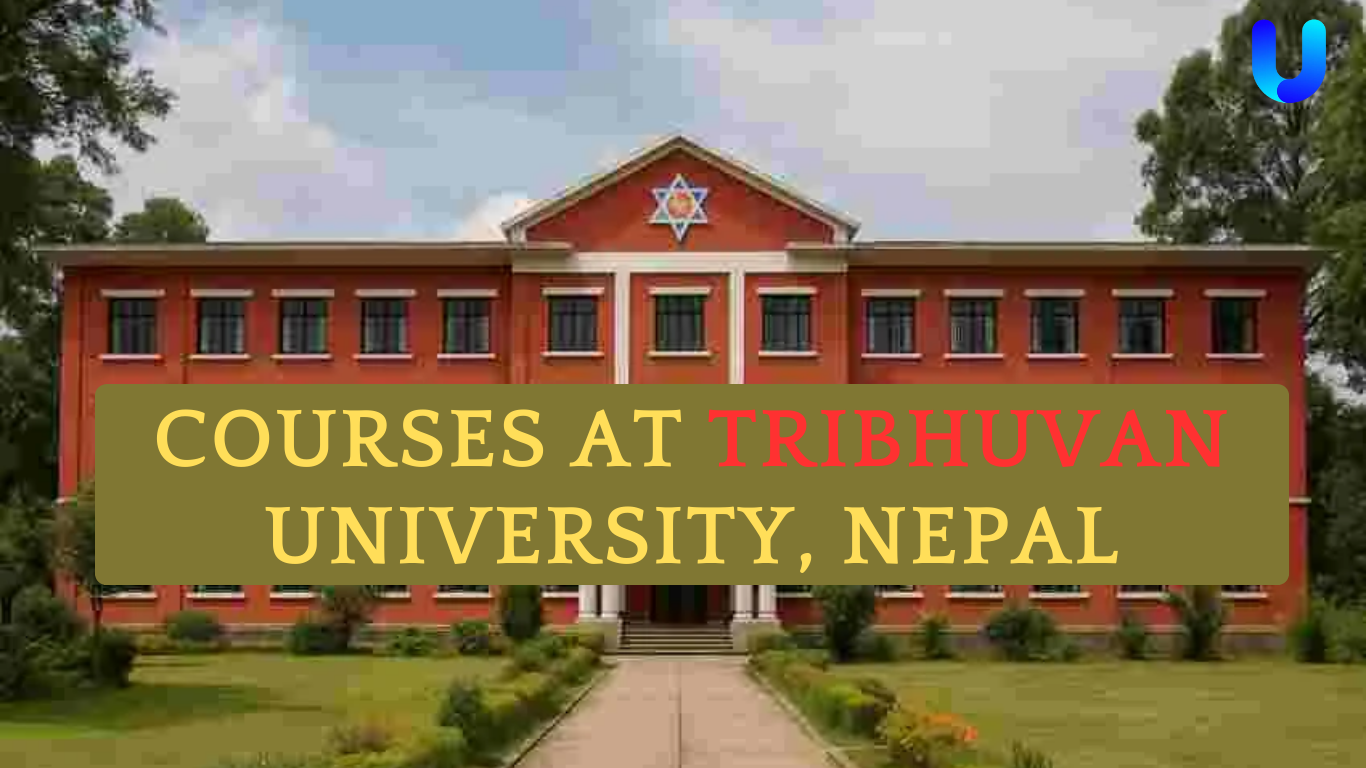
When students talk about Tribhuvan University, they rarely talk in formal language. They say things like,
“TU is everywhere,” or
“My cousin studied there,” or
“It’s tough, but it works.”
And honestly, that’s a fair way to describe it.
Tribhuvan University is not a fancy concept. It is real, old, sometimes frustrating, sometimes comforting — and for thousands of Nepali students, it is the place where adulthood quietly begins.
Choosing a course at TU is not just about marksheets or degrees. It’s about deciding how the next few years of life will look.
A University That Feels Like a Small Country
TU doesn’t feel like one university. It feels like many worlds living under one name.
Some campuses are crowded and noisy. Some are calm and slow. Some students travel hours every day. Others live nearby and come on foot. You’ll find serious toppers, average learners, and students who are still figuring themselves out — all in the same classroom.

That’s why the courses at TU don’t follow just one kind of student. They leave room for many types.
Engineering: For Those Who Like Pressure and Purpose
Engineering at TU is not romantic. It is demanding. There are long classes, heavy syllabi, and moments when students seriously question their choices.
But those who stay usually do so for a reason.
Engineering students here learn to sit with problems — not just solve them quickly. Civil engineering students deal with drawings and structures that resemble real Nepal. Computer engineering students struggle, debug, and slowly gain confidence. Electrical and mechanical students learn patience through calculations that don’t always behave.
It’s not glamorous, but it builds discipline. Many engineers look back and say, “It was hard — but it shaped me.”
Science: Quiet Curiosity, Slow Confidence
Science students at TU are often not the loudest in the room. They observe more. They think more.
Whether it’s physics, chemistry, biology, mathematics, or computer science, these courses demand consistency. There are labs that don’t work properly. There are theories that don’t make sense at first. There are semesters that feel long.
But science at TU teaches something valuable — how to stay curious even when answers don’t come immediately.
Many science students later move into teaching, research, IT, data work, or further studies. Some don’t even know where they’re going at first — and that’s okay.
Humanities: For Thinkers Who Ask “Why”
Humanities is where many students finally feel heard.
In English, sociology, psychology, political science, history, or economics classes, discussions matter. Opinions matter. Reading slowly and thinking deeply matters.
These students often observe society closely. They question systems. They talk about people, power, culture, and identity.
Humanities does not promise instant jobs. But it builds perspective. And perspective stays with you for life — in journalism, education, civil service, NGOs, or even completely unexpected paths.
Management: Practical, Popular, and Pressure-Filled
Management courses are chosen by many because they feel “safe.” Business sounds practical. Management sounds employable.
At TU, courses like BBS, BBA, MBA, hotel management, and tourism studies mix theory with real-world ideas. Students learn about money, people, systems, and decisions.
Some discover leadership skills. Others realise they prefer structure over creativity — or the other way around. Either way, management students often graduate with confidence in communication, which matters more than people admit.
Law: Not Just About Courtrooms
Law students at TU don’t start by arguing cases. They start by reading. A lot.
They read about rights, systems, responsibilities, and justice. Slowly, their thinking changes. They begin to see everyday life differently — contracts, rules, power, fairness.
Some become advocates. Some join public service. Some move into policy or teaching. Law teaches one thing very clearly: words matter.
Education: The Quiet Backbone
Education students are often underestimated. But they carry one of the biggest responsibilities — shaping minds.
TU’s education courses prepare future teachers who will stand in classrooms across Nepal. These students learn not only subjects, but how people learn.
Teaching is not an easy choice. But those who choose it usually do so with purpose.
Agriculture, Forestry, Environment: Close to the Land
Some students feel more connected to soil than screens.
Agriculture, forestry, animal science, and environmental studies attract those who want to work with land, food, forests, and sustainability. These courses feel grounded. Practical. Necessary.
They also connect education to villages, farmers, conservation, and development — areas where Nepal’s future truly lies.
Medicine and Health: Commitment Over Comfort
Medical and health-related courses under TU require sacrifice. Long hours. Long years. High pressure.
But they also bring deep meaning. Students here choose service over ease. Many go on to work in hospitals, communities, and public health roles that directly touch lives.
What TU Courses Really Teach (Beyond Syllabus)
Here’s something students rarely hear officially:
TU teaches patience.
Schedules change. Systems move slowly. Resources are sometimes limited. But students learn to adapt. They learn to wait without giving up. They learn resilience.
That resilience often becomes their real qualification.
Choosing a Course Without Regret
If there’s one honest advice, it’s this:

Don’t choose a course just because it sounds impressive.
Choose something you can sit with — even on hard days.
Marks matter. Careers matter. But so does peace of mind.
Final Words
Tribhuvan University is not perfect. Neither are its courses.
But for decades, it has given students a place to begin — sometimes uncertain, sometimes confused, but always learning.
And for many, that beginning becomes a story they carry for life.