Introduction
For most students, board exams are more than just tests—they are milestones. They decide college admissions, shape career paths, and often define years of hard work.
Now imagine preparing for months, even years, only to hear that your exams have been cancelled midway.
This is the reality for more than 50,000 CBSE students in West Asia in 2026. What began as uncertainty due to regional tensions has now turned into a full-blown academic disruption. And while safety comes first, the emotional and academic impact on students is undeniable.
This is not just an education story. It is a story of anxiety, resilience, and a system trying to adapt under pressure.
What Exactly Happened?
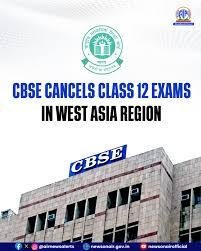
In a significant decision, the Central Board of Secondary Education (CBSE) cancelled Class 10 and Class 12 board exams across seven West Asian countries, including the UAE, Saudi Arabia, Kuwait, Qatar, Oman, Bahrain, and Iran.
This decision impacted:
- Over 50,000 students across the region
- Around 29,000 Class 10 students and 23,000 Class 12 students
- More than 150 CBSE-affiliated schools
Initially, exams were postponed. But as the situation worsened due to regional instability, the board decided to cancel them entirely.
For many students, this came right in the middle of their exam schedule—some had already appeared for a few papers, while others were still preparing.
Why Were the Exams Cancelled?
The primary reason behind this unprecedented move was ongoing geopolitical tension in West Asia, which raised serious safety concerns.
CBSE reviewed:
- Inputs from schools and local authorities
- Security conditions in the region
- Feasibility of conducting exams safely
After multiple postponements and assessments, the board concluded that continuing exams was not practical or safe.
In such situations, the priority shifts from academic schedules to student well-being.
The Emotional Impact: Anxiety, Confusion, and Uncertainty
For students, the biggest challenge right now is not just the cancellation—it is the uncertainty that follows.
Many students had already completed a part of their exams. Others were counting on upcoming papers to improve their scores. Now, everything feels incomplete.
Students and schools have openly expressed concerns:
- How will marks be calculated?
- Will pre-board scores be considered?
- Will it affect university admissions?
One student shared that while some were relieved, others were disappointed because they were well-prepared and wanted to perform better.
This mixed emotional response highlights the complexity of the situation.

A Crucial Year at Stake
For Class 12 students, this is not just another academic year—it is a turning point.
Board results influence:
- College admissions in India and abroad
- Scholarship opportunities
- Competitive exam preparation timelines
Students are particularly worried because university application deadlines do not wait.
As one school official pointed out, this uncertainty is directly affecting how students plan their next steps, especially those aiming for global universities.
In simple words, it is not just about marks—it is about momentum.
What About the Results?
This is the biggest unanswered question.
CBSE has confirmed that:
- A new evaluation method will be announced
- Results will be declared using an alternative assessment system
However, the exact formula is still awaited.
Looking at past examples can offer some clues.
Lessons from the COVID-19 Disruption
This is not the first time CBSE has faced such a challenge.
During the COVID-19 pandemic:
- In 2020, marks were calculated based on exams already conducted
- In 2021, results were based on internal assessments, including Class 10, Class 11, and pre-board scores
A similar hybrid model could be used this time as well.
But there is a key difference.
During COVID, the disruption was global. This time, students in India have completed their exams, while students in West Asia have not.
This creates a unique fairness challenge.
Schools Caught in the Middle
Schools are playing a critical role in managing this transition.
Principals and teachers are:
- Reassuring students
- Communicating with CBSE
- Preparing internal assessment records
Many schools had already conducted multiple pre-board exams, which could now become crucial for final evaluation.
However, even schools are waiting for clarity.
Until CBSE releases official guidelines, everyone remains in a holding pattern.
The Bigger Issue: Unequal Academic Experiences
One of the most sensitive aspects of this situation is the difference between students in India and those abroad.
- Students in India completed their exams
- Students in West Asia could not
This raises important questions:
- Will the evaluation be equally fair?
- Will universities treat both groups the same way?
CBSE has assured that certificates issued will hold equal value.
But perception and confidence matter just as much as policy.
Impact on Future Planning
This disruption has a ripple effect.
Students now have to rethink:
- Entrance exam preparation
- Study schedules
- College application timelines
Some may even feel mentally drained after months of preparation without closure.
The return to online classes for the next academic session, as seen in some regions, adds another layer of uncertainty.
For many, it feels like pressing pause at the most critical moment.
What Can Students Do Right Now?
In times like these, clarity may take time—but preparation should not stop.
Students can:
- Stay updated through official CBSE notifications
- Continue preparing for entrance exams
- Keep academic documents and records ready
- Focus on mental well-being
Uncertainty is difficult, but adaptability becomes the strongest skill in such situations.
A Test Beyond Exams
Ironically, while board exams are cancelled, students are facing a different kind of test—a test of patience, resilience, and adaptability.
Situations like these reveal something important:
Education is not just about exams. It is also about how one responds when plans fall apart.
Conclusion
The cancellation of CBSE board exams in West Asia is a rare and complex situation—one that affects not just academic schedules, but the emotional and future planning of thousands of students.
More than 50,000 young lives are currently in a phase of waiting—waiting for clarity, fairness, and direction.
The coming days will be crucial. The evaluation method CBSE chooses will not just decide marks—it will decide trust.
And perhaps, this moment will also reshape how we think about exams, assessment, and what truly defines a student’s potential.
Because sometimes, the biggest lessons come not from the exam hall—but from the uncertainty outside it.