
Introduction
Anyone who has ever stepped into an Indian courtroom knows the feeling — the files are thick, the corridors are crowded, and the wait often feels endless. For many citizens, justice is not denied, but delayed long enough to become exhausting. Judges, too, are working under immense pressure, trying to clear an ever-growing mountain of cases. In this atmosphere, the idea of using artificial intelligence in the judiciary has started sounding less like a tech fantasy and more like a practical necessity. Still, between promise and reality lies a long, careful road that India must walk wisely.
The Backlog is Not Just a Number
When we talk about pending cases, it is easy to think in statistics. But on the ground, every file represents someone’s worry — a family dispute dragging for years, a land matter stuck between hearings, a business waiting for closure.
The system is carrying more weight than it was designed for. New cases keep entering the pipeline, while old ones move forward slowly. Judges are not idle; they are overstretched. Court staff are not inefficient; they are overwhelmed.
This is the space where artificial intelligence has entered the conversation — quietly at first, and now with growing seriousness.
Why AI Sounds Like a Breath of Fresh Air
The attraction is easy to understand. Machines do not get tired. They do not lose track of files. They can scan thousands of pages in moments and organise information far faster than any human desk.
For a judiciary struggling with volume, this feels like relief waiting to happen.
Many believe that if routine tasks become faster, judges will finally get more breathing room to focus on what truly matters — hearing cases and delivering judgments.
But there is a subtle truth here: speeding up paperwork is one thing; delivering justice is something far more delicate.
Where AI Can Honestly Help Today
If expectations remain realistic, artificial intelligence can already make meaningful improvements — mostly behind the scenes.
Cleaning Up Case Management
A surprising amount of court delay comes from simple administrative overload. Listing cases, tagging urgency, tracking movement — these are repetitive but essential tasks. AI systems can handle such work efficiently and quietly reduce bottlenecks.
Cutting Down Research Time
Judges and lawyers often spend long hours searching past judgments. AI tools can surface relevant precedents quickly, saving time without interfering in judicial thinking.
Speeding Up Transcription
Courtrooms generate endless spoken records. Converting speech to text manually takes time. AI-based transcription can help courts create accurate records much faster, especially in multilingual environments like India.
Improving Scheduling
Sometimes delays happen simply because hearings are not optimally scheduled. Intelligent systems can help courts manage calendars more smoothly.
These are practical, low-risk areas where technology can genuinely lighten the load.
The Moment Caution Becomes Necessary
The conversation becomes sensitive when AI is imagined as more than an assistant.
Justice is not a factory process. A courtroom is not just about matching facts with rules. Every case carries human complexity — intention, circumstance, social background, and sometimes sheer emotional weight.
Critics worry about three major risks.
First, algorithms learn from past data. If historical data contains bias, the machine may quietly repeat it.
Second, many AI systems operate like black boxes. If even experts cannot fully explain how a conclusion was reached, public trust may suffer.
Third, accountability becomes murky. If a machine-assisted outcome goes wrong, who answers for it?
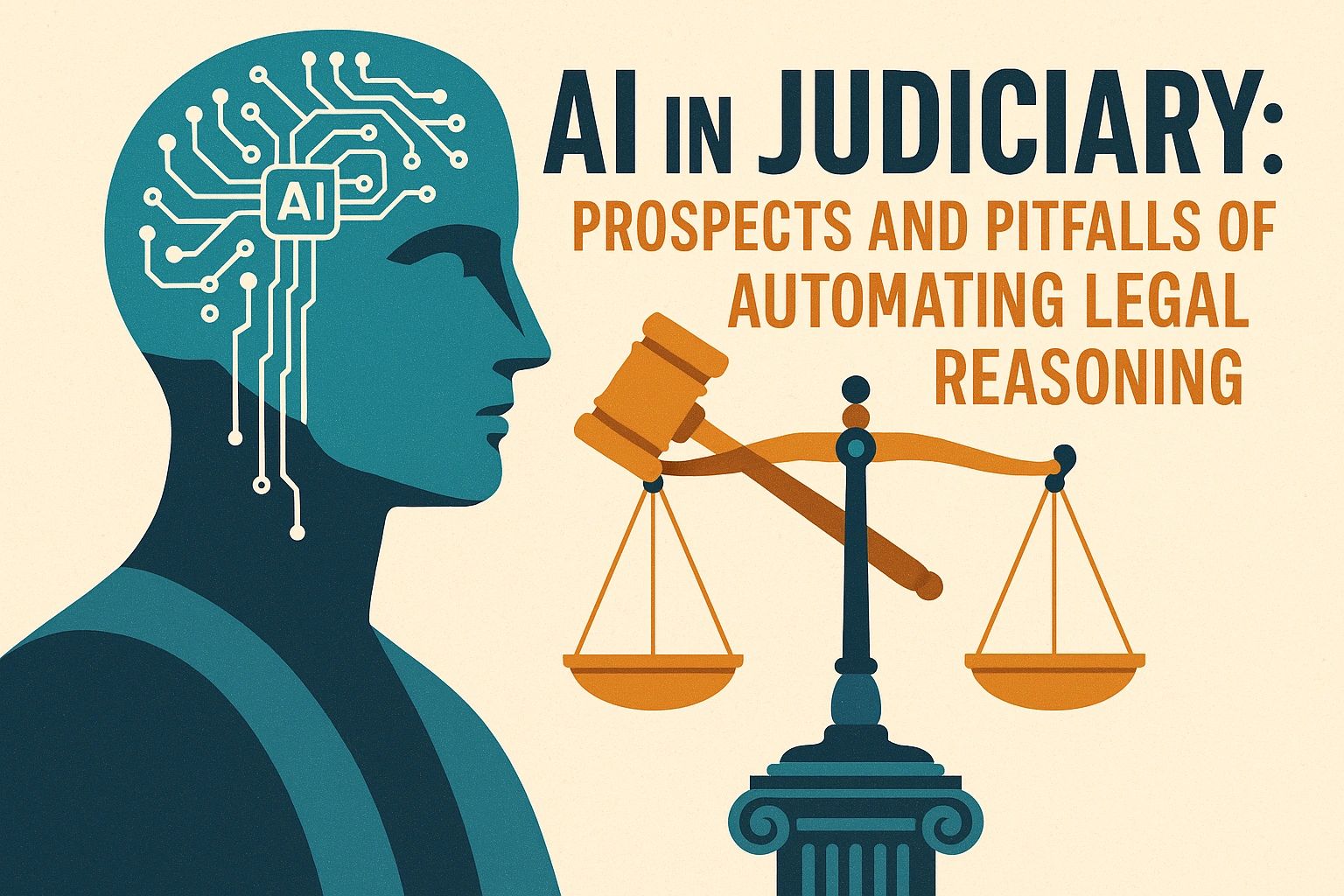
Because of these concerns, most serious legal voices agree on one boundary: AI may assist the judge, but it must never replace the judge.
India’s Progress — Encouraging but Uneven
To be fair, India’s judiciary has already taken meaningful digital steps. E-filing, virtual hearings, and online case tracking have expanded significantly in recent years. This shows openness to change.
But intelligent automation demands a stronger foundation.
Many district courts still face patchy internet, limited technical manpower, and legal records spread across multiple languages and formats. AI systems depend heavily on clean, structured data — something the system is still building.
In such a landscape, expecting overnight transformation would be unrealistic.
Why the Human Touch Still Matters
At the heart of every courtroom lies human judgment. Laws may be written in precise language, but justice often lives in interpretation.
A good judge reads more than documents. They observe tone, context, credibility, and the social realities surrounding a dispute. They sense when something is technically correct but morally troubling.
Machines, despite their speed, are still learning this kind of nuance.
This is why the most sensible future is not about replacing human wisdom but quietly strengthening it with better tools.
What the Future May Actually Look Like
If AI enters India’s judiciary sensibly, the change will probably be gradual and almost invisible to ordinary citizens.
We may see judges using smarter dashboards. Case searches may become quicker. Hearing schedules may run more smoothly. Long-pending matters may get flagged automatically.
No dramatic robot judges. No science-fiction courtrooms.
Just a system that moves a little more smoothly than before.
And sometimes, that is exactly what reform looks like.
Walking the Tightrope Carefully
India does need faster justice. There is no denying that. Citizens deserve decisions within reasonable timeframes, not after exhausting delays.
But speed without fairness would be a dangerous bargain.
The real challenge is balance — adopting technology confidently but cautiously, improving efficiency without weakening trust.
If handled thoughtfully, AI can become a quiet ally of the judiciary.
If rushed blindly, it could create new problems in a system that can least afford them.
Conclusion
Artificial intelligence is not a magic solution for India’s judicial backlog, but it is certainly a tool worth using wisely. It can help courts manage files better, search faster, and organise work more efficiently. What it cannot — and should not — do is replace the human conscience at the centre of justice.
The smarter path forward is patient and practical: strengthen infrastructure, adopt AI step by step, and keep judges firmly in control.
Because in the end, people do not go to court looking for speed alone. They go looking for fairness they can trust. And for now, that trust still rests most securely in human hands.