India’s leading business schools have reported complete placement cycles in 2026, signalling a strong hiring environment for management graduates. Top institutions such as IIM Calcutta and IIM Ahmedabad recorded 100 percent placements, with hundreds of offers from global recruiters across consulting, finance, and technology sectors.
At the same time, recruiters have revised hiring benchmarks, prioritising skill-based evaluation over traditional degree credentials. Reports indicate that employers now assess candidates on applied business capability, digital proficiency, and decision-making skills. The hiring framework has expanded to include nearly 20 critical skill areas, reflecting a structural shift in MBA recruitment patterns in 2026.
MBA hiring trends 2026 indicate a transition from qualification-driven recruitment to skill-based selection across industries. Business schools and employers have aligned placement processes with evolving market demands, where companies seek professionals capable of delivering immediate business impact.
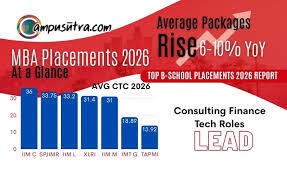
The shift has emerged alongside strong placement outcomes in premier institutions. For instance, IIM Calcutta reported 458 students securing 542 offers from 202 recruiters, including 61 new companies. The average salary reached ₹36 lakh per annum, compared to ₹34.2 lakh in the previous year.
Simultaneously, organisations have redefined hiring expectations by identifying specific skill clusters. Employers now focus on hybrid capabilities that combine analytics, strategic thinking, and execution. This change reflects broader economic and technological transformations, where companies prioritise adaptability, data interpretation, and real-world problem-solving in MBA graduates.
MBA Hiring Trends 2026: Placement Data and Key Statistics
MBA hiring trends 2026 demonstrate strong placement performance across top-tier institutions, supported by consistent recruiter participation and rising compensation packages.
Placement Performance Across Institutions
- IIM Calcutta achieved 100 percent placements for its MBA batch
- 458 students received 542 offers from 202 recruiters
- 61 companies participated as first-time recruiters
- Average salary increased to ₹36 LPA from ₹34.2 LPA
- Median salary stood at ₹35 LPA
IIM Ahmedabad also reported complete placement for its Post Graduate Programme batch, with consulting firms leading recruitment activity.
Sector-Wise Hiring Distribution
- Consulting sector accounted for 206 offers at IIM Calcutta
- Finance sector contributed nearly 100 offers
- Marketing and general management recorded 161 offers
- Technology sector added 72 offers
These figures highlight sustained demand across core MBA domains, with consulting and finance continuing to dominate hiring.
Salary Trends
- Top packages reached ₹1.5 crore per annum domestically
- International offers touched ₹1.1 crore
- Average salaries in top institutes ranged between ₹30–36 LPA
The data confirms that MBA placements in 2026 remain stable, with consistent growth in both recruiter participation and compensation levels.
20 Key Skills Driving MBA Hiring in 2026
MBA hiring trends 2026 show a clear shift towards skill-based recruitment, with employers identifying a broad set of competencies required for management roles.
Core Skill Categories
Employers now prioritise the following skill clusters:
Analytical and Technical Skills
- Data analytics and interpretation
- Financial modelling
- AI and digital tools understanding
- Business intelligence
Business and Strategic Skills
- Decision-making under uncertainty
- Market analysis
- Strategy formulation
- Risk assessment
Execution and Operational Skills
- Project management
- Process optimisation
- Operational efficiency
Behavioural and Leadership Skills
- Communication and stakeholder management
- Team collaboration
- Leadership and ownership
- Adaptability
Rise of Hybrid Skill Profiles
Recruiters no longer prefer generalists or narrow specialists. Organisations demand professionals who combine analytical ability with business understanding and execution capability.
Candidates must demonstrate the ability to convert data into actionable insights, manage ambiguity, and deliver measurable outcomes in real-world scenarios.
Application and Recruitment Process Changes in 2026
MBA hiring trends 2026 also reflect changes in recruitment processes, with companies adopting structured and technology-driven selection mechanisms.
Key Recruitment Stages
- Pre-placement talks and company briefings
- Shortlisting based on skill assessment and academic profile
- Case study evaluations and business simulations
- Personal interviews focusing on problem-solving ability
- Final offer allocation through structured placement systems

Increased Role of Technology
- AI-based screening tools evaluate candidate profiles
- Data-driven assessments measure performance and fit
- Digital platforms enable remote interviews and hybrid hiring
Recruiters focus on practical exposure, including internships, live projects, and industry collaborations, rather than theoretical knowledge.
Sector Trends and Industry Demand
MBA hiring trends 2026 highlight sector-specific demand patterns, with certain industries leading recruitment.
High-Demand Sectors
- Consulting
- Technology and analytics
- Banking and financial services
- E-commerce and retail
- Healthcare and pharmaceuticals
Emerging Areas
- Sustainability and ESG roles
- Fintech and digital finance
- Product management and growth analytics
The demand for digitally skilled managers continues to rise, aligning with broader trends where companies prioritise data, cybersecurity, and technology expertise in hiring decisions.
Historical Comparison: MBA Hiring Shift Over Time
MBA hiring trends 2026 show a clear departure from earlier recruitment models.
Earlier Trends
- Focus on academic credentials and institutional brand
- Preference for general management roles
- Limited emphasis on technical skills
Current Trends
- Skills-based hiring model
- Demand for specialised and hybrid profiles
- Integration of technology in recruitment
Global data indicates a 6 percent decline in MBA enrolments, as students increasingly opt for specialised, skill-focused programmes aligned with industry requirements.
This shift reflects changing employer expectations and evolving career pathways in management education.
Frequently Asked Questions
What defines MBA hiring trends 2026?
MBA hiring trends 2026 reflect a shift towards skill-based recruitment, where employers prioritise practical capabilities over academic credentials. Companies evaluate candidates based on analytical ability, decision-making, and real-world problem-solving. Placement data from top institutions shows strong recruiter participation and rising salaries. Hiring processes now include case studies, simulations, and structured interviews, indicating a move towards assessing applied skills rather than theoretical knowledge.
Which sectors are leading MBA recruitment in 2026?
Consulting, finance, and technology sectors continue to dominate MBA hiring in 2026. Consulting firms accounted for over 200 offers in leading institutions, while finance and marketing sectors also contributed significantly. Technology roles, including analytics and product management, have expanded due to digital transformation. Emerging sectors such as sustainability, fintech, and healthcare are also increasing their recruitment share.
What are the average salary trends for MBA graduates in 2026?
Average salaries in top MBA institutions range between ₹30 lakh and ₹36 lakh per annum. The highest domestic packages have reached ₹1.5 crore, while international offers have crossed ₹1.1 crore. Median salaries remain close to ₹35 lakh in leading institutes. Salary growth reflects strong demand for skilled management professionals and consistent recruiter participation.
How has the MBA recruitment process changed?
The MBA recruitment process in 2026 has become more structured and technology-driven. Companies use AI-based tools for screening and shortlisting candidates. Selection stages include case studies, business simulations, and interviews focused on analytical thinking. Employers also emphasise practical experience, internships, and project work, reducing reliance on academic scores alone.
Why are skills more important than degrees in MBA hiring?
Employers now operate in fast-changing business environments where immediate impact matters. Skills such as data analysis, strategic thinking, and adaptability enable candidates to contribute effectively from the start. Reports show that recruiters prefer candidates who can apply knowledge in real situations rather than those with only theoretical understanding. This has led to the identification of multiple skill categories guiding hiring decisions.
The Major Takeaway
MBA hiring trends 2026 reflect a structural transformation in management recruitment, driven by skill-based evaluation and strong placement outcomes. Top institutions have achieved full placement cycles, supported by increased recruiter participation and competitive salary packages.
Employers have expanded hiring frameworks to include multiple skill categories, emphasising analytical ability, business understanding, and execution capability. The integration of technology and structured recruitment processes further highlights the evolving nature of MBA hiring.
These developments confirm that MBA hiring trends 2026 are aligned with industry requirements, where practical skills and adaptability define employability.
Image Alt Text Suggestions:
- MBA placements 2026 IIM campus recruitment drive
- MBA students attending placement interviews India
- MBA hiring trends data analytics recruitment
- Consulting firms recruiting MBA graduates 2026
- Business school placement statistics chart 2026