Introduction
“It is not the evidence that creates belief; it is belief that calls forth the evidence.” Some lives feel almost unreal—too extraordinary to belong to ordinary history. The life of Vashishtha Narayan Singh is one such story.
Born in a small village in Bihar, he rose to stand among the world’s finest mathematical minds. His journey took him to global institutions, including NASA, where his brilliance became the subject of awe. Yet, the same man spent years in isolation, battling mental illness, forgotten by the very system that should have protected him.
This is not just a story of genius. It is a story of rise, brilliance, collapse, and a nation’s delayed awakening.
A Beginning Rooted in Simplicity
On 2 April 1942, in Basantpur village of Bihar’s Bhojpur district, a child was born into a modest Rajput family. His father worked as a police constable, and resources were limited. But sometimes, nature quietly plants brilliance in the most unlikely places.
From early childhood, Vashishtha displayed an unusual relationship with numbers. Where others saw arithmetic, he saw patterns. Where others struggled, he found simplicity. Teachers quickly realised that this was not ordinary intelligence—it was something rare, something almost God-gifted.
At Netarhat School, known for nurturing some of the brightest minds in eastern India, he proved his excellence by topping the matriculation examination across the then undivided Bihar.
That was the first public sign of a genius in the making.
When Talent Forced the System to Adapt
At Patna Science College, his brilliance became impossible to ignore. Stories from that time suggest that his professors and administrators were so astonished by his mathematical ability that Patna University altered its academic rules to allow him to appear directly for higher-level examinations.
This was not a privilege—it was a necessity. Because sometimes, the system must evolve to keep pace with extraordinary minds.
The Leap to the Global Stage
His brilliance crossed oceans when Professor John L. Kelley recognised his potential and invited him to the University of California, Berkeley. In 1969, he completed his PhD in Mathematics—an achievement that placed him firmly among the world’s intellectual elite. His research in cyclic vector spaces earned him global recognition. But beyond academic credentials, it was his intuitive command over mathematics that left people stunned.
There are accounts—almost legendary in nature—of his time at NASA. During an Apollo mission, when multiple computers reportedly failed, his manual calculations were said to match computer outputs precisely. Whether taken literally or symbolically, these stories underline a simple truth: He was seen as a mind operating at an entirely different level.
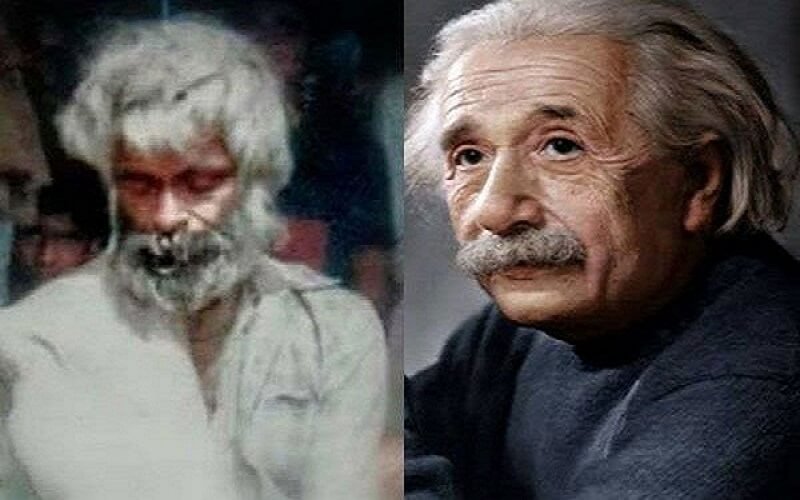
He also engaged with advanced ideas related to the Theory of Relativity proposed by Albert Einstein, further cementing his place in global intellectual discourse.
A Conscious Return to India
At the peak of his international exposure, Dr Singh made a decision that defined his character—he returned to India in 1971. This was not a forced return. It was a choice.
He chose to contribute to his homeland, to teach, to build, and to inspire. He worked with premier institutions such as:
- Indian Institute of Technology Kanpur
- Indian Institute of Technology Bombay
- Indian Statistical Institute
At this point, everything seemed aligned. India had a genius in its midst, ready to shape future generations. But life rarely follows linear paths.
The Unseen Collapse: Schizophrenia
In the early 1970s, Dr Singh began showing symptoms of Schizophrenia. At first, it appeared as eccentric behaviour—long hours of isolation, erratic routines, emotional volatility. But gradually, it deepened into a severe mental condition that disrupted his life completely.
His marriage to Vandana Rani Singh could not withstand the strain and ended in separation. His academic journey slowed, then fractured. For someone whose mind once decoded complex mathematical realities, losing control over that very mind was perhaps the cruelest fate. Schizophrenia is not just an illness—it is an isolation that distances a person from reality itself.
And for Dr Singh, this isolation became his new world.
Disappearance and Years of Silence
In 1989, while being taken for treatment, he disappeared from a train at Khandwa station. No national search followed. No urgent response. No collective concern.
For years, he remained missing. When he was eventually found, he was living in obscurity—far removed from the global recognition he once enjoyed. This was not just a personal tragedy. It was a societal failure.
Neglect that Still Raises Questions
How does a country treat its brightest minds when they are no longer productive? Dr Singh’s later years force us to confront this uncomfortable question. Despite his immense contributions, he struggled for basic medical care. There were times when even an ambulance was not available to him. Institutional support came late and inconsistently.
Yes, there were interventions. Treatment at specialised institutes like NIMHANS and IHBAS was arranged. Public figures such as Shatrughan Sinha stepped in to help. But these efforts came after years of neglect.
A nation that celebrates brilliance must also protect it in times of vulnerability.
Awards, Honours, and Recognition: A Delayed Gratitude
Recognition did come—but largely after his prime had passed.
Padma Shri (Posthumous Honour)
Dr Vashishtha Narayan Singh was awarded the Padma Shri after his death in 2019. This is one of India’s highest civilian honours and acknowledged his immense contribution to mathematics.
Yet, it also reflected a bittersweet truth—recognition often comes when it can no longer be experienced.
Academic Achievements as Living Awards
- PhD from University of California, Berkeley (1969)
- Associate Professor at Washington University
- Globally recognised research in cyclic vector spaces
In the academic world, such milestones are not just achievements—they are honours in themselves.
Institutional Respect in India
His association with premier institutions like IIT Kanpur, IIT Bombay, and ISI Kolkata reflects the deep respect he commanded among scholars.
Cultural and Public Recognition
Over time, he came to be known as:
- “Bihar ka Laal”
- “Scientific Babu”
His life story is now shared widely, inspiring generations and reminding society of both its pride and its failures.
Final Years: A Quiet Ending
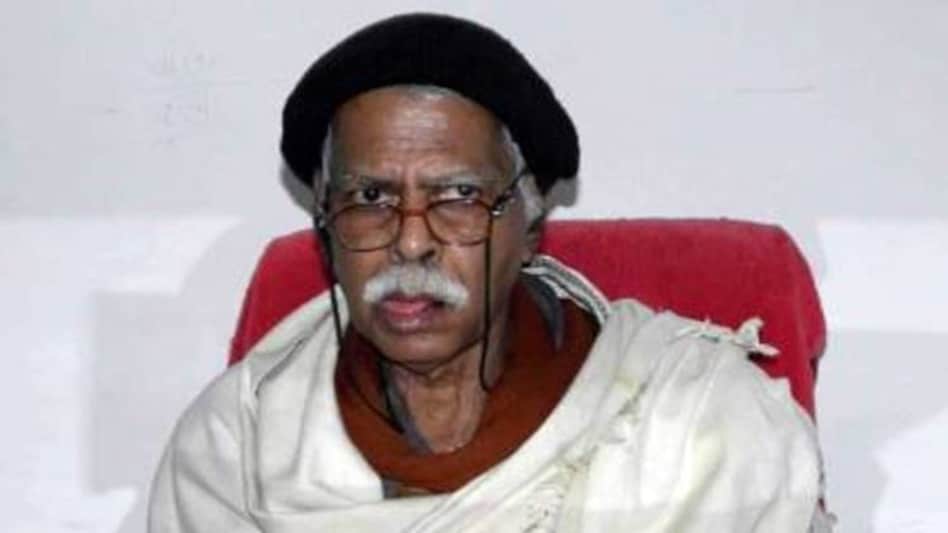
Dr Singh spent his later years in his village, living a largely isolated life.
On 14 November 2019, he passed away in Patna. His death brought national attention, with leaders and citizens expressing grief.
But behind the tributes lay a deeper emotion—regret.
Legacy: More than Mathematics
Dr Vashishtha Narayan Singh’s legacy extends far beyond equations.
He represents:
- The power of raw talent
- The fragility of human life
- The importance of mental health awareness
- The need for systemic responsibility
Bihar, a land that once housed the ancient Nalanda University, continues to produce brilliant minds. Dr Singh was one such light—one that shone brightly, flickered painfully, and left behind a lasting glow.
Conclusion
Dr Vashishtha Narayan Singh was not just a mathematician. He was a phenomenon. A man who challenged intellectual boundaries, yet could not escape personal battles. A genius who made the world notice him, yet was forgotten when he needed it most.
His story is not just to be remembered—it is to be understood. Because the true tribute to a genius is not in awards or words, but in ensuring that no such mind is ever neglected again.