Introduction: The Silent Crisis Inside Every School Bag
Every year, as April marks the beginning of a new academic session in India, millions of families step into a familiar cycle of hope mixed with anxiety. Parents prepare to invest in their children’s future, believing education will open doors to opportunity, stability, and growth. However, this noble aspiration is increasingly being overshadowed by a growing financial burden that begins with something as basic as textbooks. The Private School Book Scam in India has quietly become a nationwide concern, affecting nearly every middle-class household with children in private institutions. What appears to be a routine purchase of school books often turns into a shocking expense, leaving parents questioning the fairness of the system.
A simple comparison reveals the extent of the issue, where an NCERT book priced at ₹65 is replaced by a private publisher’s version costing ₹600 or more. The content remains largely identical, the syllabus unchanged, yet the price difference is staggering and difficult to justify. This situation is not an isolated incident but a systemic pattern that repeats across cities and towns. Parents are not merely spending more; they are being compelled to do so without alternatives. The emotional stress, combined with financial pressure, transforms what should be a joyful academic beginning into a challenging ordeal. This blog explores the depth of this issue, uncovering how education is being commercialised and what it means for the future of millions of children.
The Ground Reality: What Parents Experience Every April
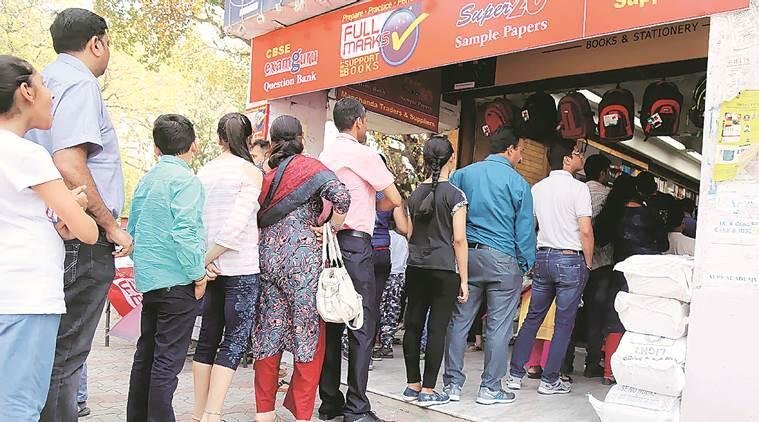
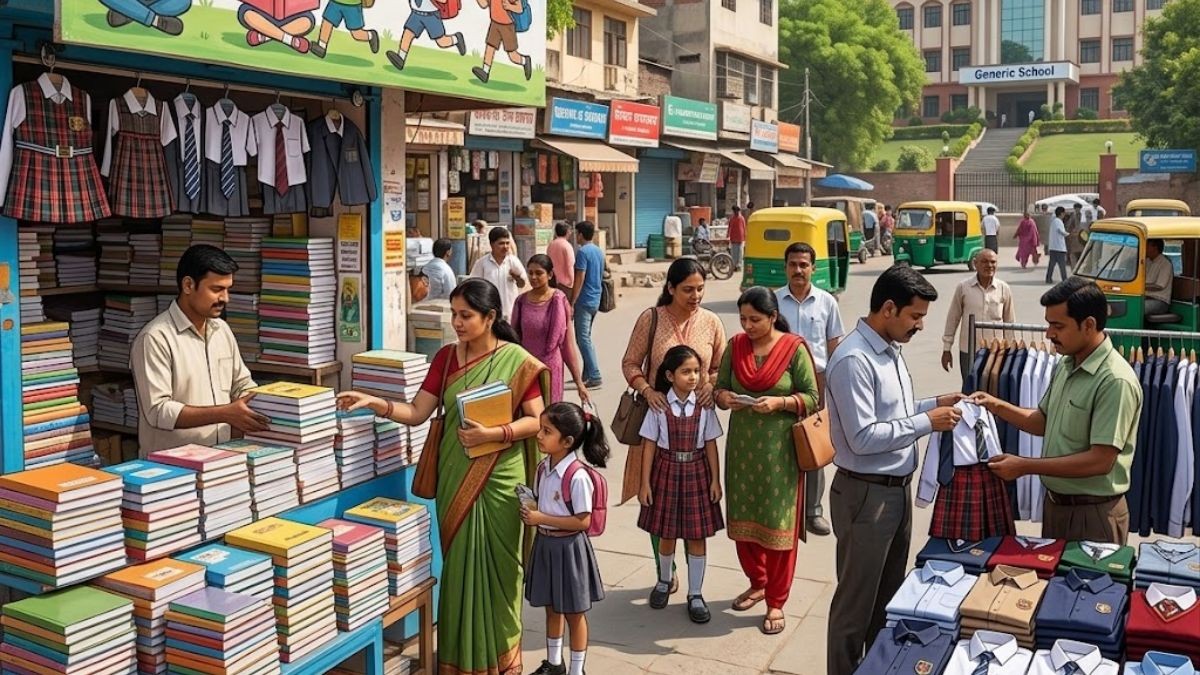
The reality of this issue becomes most visible during the first few weeks of the academic session when parents visit designated bookstores or school campuses to purchase textbooks. What they encounter is often a rigid system where a pre-defined set of books is handed over, leaving no room for negotiation or substitution. Many parents report that even asking for alternatives is discouraged, as schools insist on specific editions from selected private publishers. The cost of these book sets frequently ranges between ₹6,000 to ₹15,000 per child, depending on the class and institution. For families with more than one child, this expense multiplies rapidly, creating a significant financial strain within a short span of time. The burden is not limited to books alone, as it coincides with other expenses such as uniforms, admission fees, and transportation charges.
Parents often describe April as the most financially demanding month of the year due to these overlapping costs. Despite recognising the excessive pricing, most parents feel powerless because refusing to comply could directly impact their child’s academic experience. The emotional dilemma is intense, as no parent wants their child to feel left out or disadvantaged in class. This compulsion transforms a basic necessity into an unavoidable expense. Over time, this recurring pattern has normalised high costs, even though dissatisfaction continues to grow silently among families. The situation reflects not just an economic issue but also a deeper imbalance between institutions and the communities they serve.
NCERT vs Private Publishers: Understanding the Price Disparity
A closer look at the pricing structure reveals a striking disparity between NCERT textbooks and those produced by private publishers. NCERT books are developed under a government-backed framework, ensuring affordability, accessibility, and academic consistency across the country. These books are written by panels of subject experts, researchers, and educators who aim to provide high-quality content at minimal cost. In contrast, private publishers produce books that often mirror the same syllabus but are priced significantly higher without offering substantial additional value. For instance, a Class 7 Science book from NCERT may cost around ₹65, while a similar book from a private publisher can cost ₹600 or more. The difference in pricing does not reflect a proportional difference in content quality or depth. In many cases, the private versions simply repackage existing concepts with colourful layouts and additional pages that do not necessarily enhance understanding.
Despite this, schools continue to promote these expensive alternatives, making them mandatory for students. This raises serious concerns about the motivations behind such decisions and whether they prioritise educational value or financial gain. The absence of clear justification for these price differences further strengthens the argument that the system is driven more by profit than pedagogy. Over time, this disparity has created a parallel market where affordability is sacrificed for commercial interests. The result is a widening gap between what education should cost and what it actually does in practice.
The Hidden Mechanism: How the System Operates
The functioning of this system is not accidental but rather the result of a structured arrangement between private schools and publishers. In many cases, schools collaborate with specific publishers to design customised versions of textbooks aligned with their teaching approach. While this may appear beneficial on the surface, it often leads to exclusivity, where only certain books are accepted within the classroom. Parents are then directed to purchase these books from authorised vendors, eliminating the possibility of price comparison or alternative sourcing. This closed-loop system ensures consistent demand for selected publishers, creating a steady revenue stream for all parties involved. The role of commissions is often discussed in this context, as schools may receive a percentage of the sales generated through these book purchases. Although such arrangements are rarely disclosed openly, they are widely acknowledged by parents and industry observers.
The lack of transparency makes it difficult to hold institutions accountable or challenge their practices effectively. Additionally, frequent changes in book editions prevent the reuse of materials, further increasing costs for families each year. Even minor updates are used as justification for replacing entire sets of books, rendering older versions obsolete. This approach not only impacts finances but also contributes to unnecessary waste. The system thrives on compulsion, ensuring that demand remains constant regardless of cost. As a result, parents are left navigating a market where choice is limited and prices are artificially inflated.
Quality Concerns: When Expensive Does Not Mean Better
One of the most surprising aspects of this issue is that higher-priced books do not necessarily guarantee better quality. In fact, several instances have highlighted errors in private publisher textbooks, particularly at the primary and nursery levels. Examples include incorrect counting illustrations, grammatical mistakes, and misleading visual representations that can confuse young learners. These errors are especially concerning because early education forms the foundation of a child’s cognitive development. When basic concepts are presented inaccurately, they can hinder understanding and create long-term learning challenges. Despite these shortcomings, such books continue to be prescribed without rigorous quality checks or accountability.
In contrast, NCERT textbooks undergo multiple layers of review and validation before publication, ensuring a higher standard of accuracy and reliability. The presence of errors in expensive books raises important questions about the priorities of publishers and the oversight mechanisms in place. It also challenges the perception that higher cost equates to superior quality. Parents, who invest significant amounts in these materials, expect value and accuracy in return. However, the reality often falls short of these expectations, leading to frustration and concern. This disconnect between price and quality highlights the need for stricter evaluation and regulation within the publishing ecosystem. Ultimately, education should be guided by accuracy and clarity, not by commercial appeal.
Economic Impact: The Burden on Indian Families
The financial implications of this system extend far beyond the cost of books, affecting the overall economic stability of many households. For an average Indian family with an annual income of around ₹5 lakh, education expenses can consume a substantial portion of their earnings. When book costs alone reach several thousand rupees per child, the cumulative impact becomes significant, especially for families with multiple children. This expenditure is further compounded by rising school fees, transportation charges, and additional academic requirements. In many cases, parents are forced to adjust their budgets, cut down on essential expenses, or rely on savings to meet these demands. The pressure is particularly intense for middle-class families, who strive to provide quality education while managing limited resources.
Over time, this financial strain can affect long-term planning, including savings for higher education or other life goals. The disparity between income growth and education costs further exacerbates the issue, as school expenses often increase at a faster rate than earnings. This creates a widening gap that becomes increasingly difficult to bridge. The emotional toll of this burden is equally significant, as parents navigate the constant challenge of balancing aspirations with affordability. Education, which should be an empowering force, becomes a source of stress and uncertainty. Addressing this imbalance is essential to ensure that access to quality education remains equitable and sustainable.
Legal and Policy Framework: What the Rules Say
India does have certain guidelines and regulations aimed at controlling the cost of education and preventing unfair practices. The Central Board of Secondary Education (CBSE) has issued directives encouraging schools to follow NCERT textbooks and avoid unnecessary prescriptions of additional materials. Similarly, some state governments have introduced policies to regulate book sales and prevent schools from mandating purchases from specific vendors. Despite these measures, enforcement remains inconsistent, allowing many institutions to continue their existing practices. The lack of strict monitoring and penalties reduces the effectiveness of these regulations. Parents often find it difficult to challenge schools due to fear of repercussions or lack of awareness about their rights. Legal recourse is available, but it can be time-consuming and complex, discouraging many from pursuing it. Consumer protection laws can also apply in cases of unfair trade practices, but awareness and accessibility remain limited.
There is a growing need for stronger implementation of existing rules, along with the introduction of clearer guidelines that leave no room for ambiguity. Transparency in pricing and procurement processes should be made mandatory, ensuring accountability at every level. Additionally, independent audits and grievance redressal mechanisms can help address concerns more effectively. A robust legal framework, combined with active enforcement, is essential to bring meaningful change. Without it, the gap between policy and practice will continue to persist.
The Bigger Picture: Commercialisation of Education
At its core, the issue of overpriced textbooks reflects a broader trend of commercialisation within the education sector. Over the years, private schooling has evolved into a competitive industry, with institutions focusing on infrastructure, branding, and revenue generation. While growth and innovation are important, they should not come at the cost of accessibility and fairness. The emphasis on profit has led to practices that prioritise financial gain over educational value. This shift is evident not only in textbook pricing but also in fee structures, extracurricular charges, and other mandatory expenses. The transformation of education into a business model raises important ethical questions about its purpose and direction.
Education is meant to nurture knowledge, creativity, and critical thinking, not to function as a profit-driven enterprise. When financial considerations overshadow academic priorities, the integrity of the system is compromised. This trend also widens the gap between different socio-economic groups, limiting access to quality education for many families. Addressing this issue requires a collective effort from policymakers, educators, and society as a whole. It is essential to redefine the role of education and ensure that it remains aligned with its मूल उद्देश्य—empowerment and development. Only then can the system regain its balance and serve its intended purpose effectively.

Solutions and the Way Forward
The path to resolving this issue lies in a combination of policy reform, awareness, and collective action. One of the most effective measures would be the strict enforcement of NCERT-based curricula in CBSE-affiliated schools, ensuring uniformity and affordability. Schools should be required to justify any deviation from standard textbooks, providing clear explanations for their choices. Transparency in pricing and procurement processes must be prioritised, allowing parents to make informed decisions.
Additionally, regulations should prevent schools from mandating purchases from specific vendors, promoting fair competition and reducing costs. Awareness campaigns can play a crucial role in empowering parents with knowledge about their rights and available options. Digital platforms and online resources can also help bridge gaps, providing access to affordable educational materials. Collaboration between government bodies, educational institutions, and civil society organisations can drive meaningful change.
Monitoring mechanisms should be strengthened to ensure compliance with existing rules and identify violations promptly. Over time, these efforts can create a more balanced and equitable system that prioritises learning over profit. The goal is not to eliminate private education but to ensure that it operates within a framework of fairness and accountability. By addressing the root causes of the problem, it is possible to restore trust and confidence in the system.
Conclusion: Reimagining Education for the Future
The Private School Book Scam in India is more than just a financial issue; it is a reflection of deeper structural challenges within the education system. It highlights the need for a renewed focus on values, transparency, and accountability in shaping the future of learning. Parents, educators, and policymakers must work together to ensure that education remains accessible, affordable, and meaningful. The current system, while widespread, is not irreversible, and change is possible through collective effort and sustained commitment. By addressing the root causes of this issue, it is possible to create an environment where education is driven by purpose rather than profit.
Children deserve access to accurate, high-quality learning materials without imposing undue financial strain on their families. The journey towards reform may be gradual, but every step taken in the right direction brings us closer to a more equitable system. Ultimately, education should empower individuals and strengthen society, not become a source of stress and inequality. Reimagining this vision is essential for building a future where knowledge is truly accessible to all.
FAQs: Private School Book Scam in India
- Why are private school books so expensive in India?
Private school books are often expensive due to exclusive tie-ups between schools and publishers, along with built-in profit margins and lack of price regulation.
- Are NCERT books enough for CBSE students?
Yes, NCERT books are designed by experts and are fully aligned with the CBSE curriculum, making them sufficient for academic learning.
- Can schools legally force parents to buy specific books?
No, schools are generally discouraged from forcing purchases from specific vendors, but enforcement of rules is often weak.
- Why do schools prefer private publishers over NCERT?
The preference is often driven by financial incentives, customised content, and existing partnerships with publishers.
- How can parents avoid overpaying for books?
Parents can explore alternative sellers, collaborate with other parents for book sharing, and raise concerns collectively with school authorities.
- Are expensive books better in quality?
Not necessarily, as many expensive books have been found to contain errors and offer no significant advantage over NCERT textbooks.
- What action can be taken against unfair school practices?
Parents can file complaints with education boards, consumer courts, or local authorities to address unfair practices.