Introduction
There are kings remembered for their power, and then there are kings remembered for their generosity. The story of Darbhanga Maharaj belongs to the second kind—a legacy that feels almost unreal in today’s world. At a time when wealth meant dominance, the rulers of Darbhanga chose a different path: they gave, built, supported, and uplifted. Their contributions were not just acts of charity; they were investments in the future of India. From universities and temples to war efforts and cultural preservation, their influence quietly shaped the nation. This is not just history—it is a powerful reminder of what true leadership looks like.
The Origins of Darbhanga Raj – A Foundation Built on Vision
The story of Darbhanga Raj begins centuries ago, in the culturally rich region of Mithila, where tradition, scholarship, and spirituality were deeply intertwined with daily life. Unlike many royal dynasties that rose through conquest or military expansion, the Darbhanga lineage emerged through intellectual and administrative excellence. Established in the 16th century, the Raj was founded by Maithil Brahmins who were entrusted with governance responsibilities due to their knowledge, discipline, and loyalty. Over time, this administrative authority transformed into a powerful zamindari system, eventually becoming one of the largest and most influential estates in India.
What makes this origin story remarkable is the mindset that shaped it. From the very beginning, the rulers of Darbhanga were not merely landowners; they were custodians of a cultural and intellectual legacy. They governed not just through authority but through responsibility. Their rule extended across thousands of villages, yet their focus remained deeply rooted in the welfare of the people. This early foundation of service over dominance became the defining character of the Darbhanga Maharaj, setting them apart from many other royal houses of the time.
The Expansion of Power – Wealth Beyond Imagination
As centuries passed, Darbhanga Raj grew into one of the largest zamindaris in British India, covering nearly 6200 square kilometres across Bihar and Bengal. The sheer scale of the estate was staggering. Thousands of villages, vast agricultural lands, forests, and revenue streams made the Darbhanga Maharaj among the wealthiest individuals in the country. Their annual income, when adjusted for today’s value, would place them among the richest elites globally.
But what truly distinguished their wealth was not its size—it was how it was used. While many royal families across the world became symbols of extravagance and isolation, the Darbhanga Maharaj chose a path that balanced luxury with responsibility. Yes, they lived in grand palaces, owned private railways, and even had access to aircraft, but their wealth was never detached from purpose. It was constantly reinvested into society—into education, infrastructure, religion, and culture. Their financial power became a tool for nation-building long before the concept itself became popular.
Maharaja Rameshwar Singh – The Philosopher King
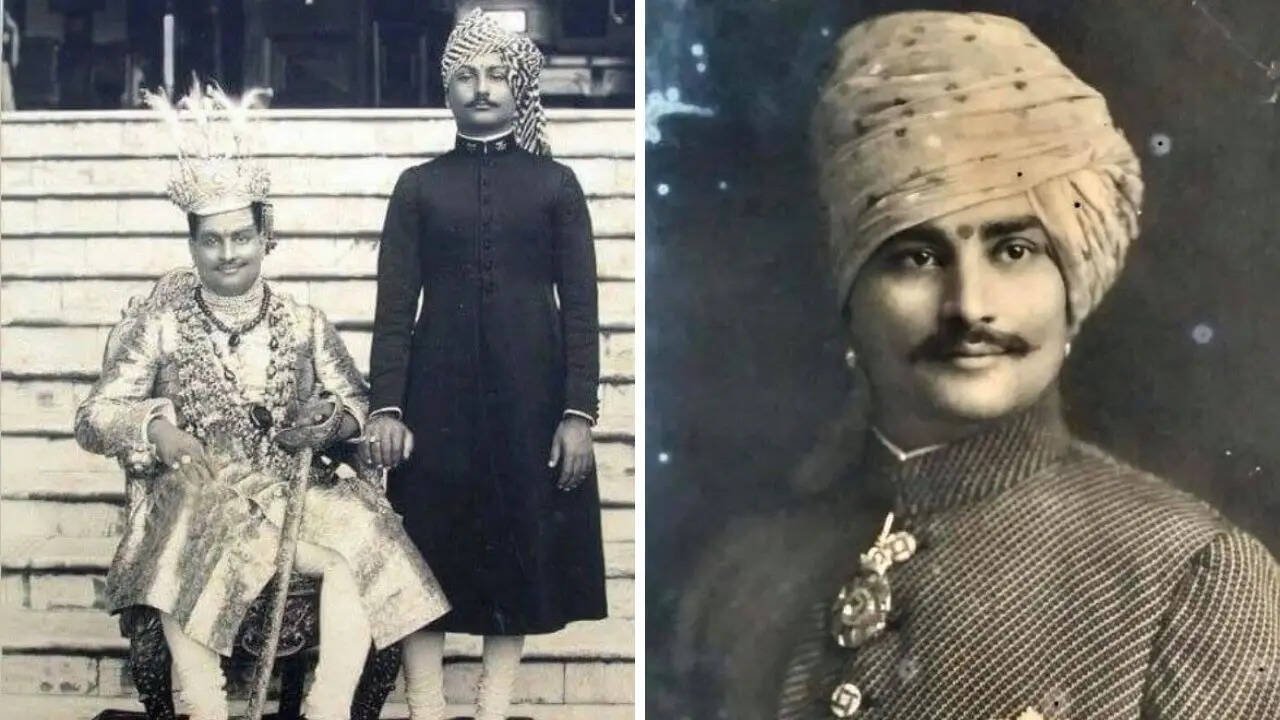
Among the many rulers of Darbhanga, Maharaja Rameshwar Singh stands out as a figure of extraordinary intellect and spiritual depth. He was not just a king; he was a thinker, a scholar, and a practitioner of Indian philosophy. His life reflected a rare blend of administrative efficiency and spiritual wisdom. At a time when colonial pressures were reshaping India’s political landscape, he remained deeply committed to preserving the cultural and intellectual identity of the region.
Rameshwar Singh’s contributions went far beyond governance. He was actively involved in promoting Sanskrit learning, supporting scholars, and encouraging philosophical discourse. His belief in knowledge as the foundation of society influenced many of the decisions taken during his reign. He understood that true power does not come from control but from enlightenment. This perspective shaped the future of Darbhanga Raj, ensuring that its legacy would not just be measured in land or wealth, but in intellectual and cultural contributions.
Maharaja Kameshwar Singh – The Architect of Modern Generosity
If Rameshwar Singh was the philosopher, Maharaja Kameshwar Singh was the visionary moderniser. Known as one of the richest individuals in India during his time, Kameshwar Singh carried forward the legacy of generosity with unmatched scale and impact. His reign marked a turning point where wealth was systematically channelled into nation-building efforts. He understood the changing dynamics of India and recognised the importance of education, infrastructure, and national unity.
Kameshwar Singh’s approach to wealth was revolutionary. Instead of hoarding resources, he distributed them strategically to create long-term impact. His donations were not symbolic; they were transformative. Whether it was funding universities, supporting war efforts, or contributing to public infrastructure, his actions reflected a deep sense of responsibility towards the nation. In many ways, he redefined what it meant to be a king in a modern world—less about ruling, more about serving.
The Culture of Daan – A Tradition, Not an Exception
One of the most defining characteristics of the Darbhanga Maharaj was their unwavering commitment to daan, or charitable giving. This was not occasional generosity driven by circumstance; it was a deeply ingrained tradition that shaped their identity. Giving was not seen as an act of kindness but as a duty. It was a way of returning wealth to society, ensuring that prosperity was shared rather than concentrated.
This culture of giving extended across generations, creating a legacy that few could match. Stories of their donations continue to circulate even today, often sounding almost unbelievable. From funding educational institutions to supporting religious activities and national causes, their contributions touched every aspect of society. What makes this tradition even more remarkable is its consistency. It was not limited to one ruler or one era; it was a continuous thread that defined the entire lineage of Darbhanga Raj.
Contributions to Education – Building the Future of India
Perhaps the most significant impact of Darbhanga Maharaj can be seen in the field of education. At a time when access to quality education was limited, their contributions helped establish and sustain some of the most prestigious institutions in India. They believed that education was the key to empowerment and progress, and they invested heavily in it.
Their donations supported institutions such as Banaras Hindu University, Calcutta University, Allahabad University, and Aligarh Muslim University. They also played a crucial role in the development of Patna University by donating Darbhanga House. The establishment of Sanskrit University and Lalit Narayan Mithila University on land owned by the Darbhanga Raj further highlights their commitment to education.
What stands out is the scale of these contributions. Donating lakhs of rupees during that time was equivalent to giving away fortunes. Yet, they did so without hesitation, driven by a vision of a more educated and empowered society. Their investments continue to benefit generations of students, making education one of their most enduring legacies.
Palaces and Lifestyle – A Blend of Grandeur and Purpose
The grandeur of Darbhanga Maharaj’s lifestyle was undeniable. Their palaces, such as Nargona Palace, Anand Bagh Palace, and Bela Palace, reflected architectural brilliance and royal elegance. Inspired by global designs, these structures symbolised their wealth and status. Private railways ran within palace premises, and their access to aircraft placed them among the most advanced elites of their time.
However, what makes their lifestyle unique is the balance between luxury and responsibility. Unlike many royal families who became disconnected from their people, the Darbhanga Maharaj remained actively involved in societal development. Their palaces were not just symbols of wealth; they were centres of administration, culture, and philanthropy. This balance ensured that their legacy would not be reduced to mere opulence but remembered for its purpose-driven approach.
Contributions During National Crises – True Patriotism in Action
One of the most powerful chapters in the history of Darbhanga Maharaj is their contribution during national crises. During the Indo-China war, they donated approximately 600 kilograms of gold to support the nation. This was not a small gesture; it was an extraordinary act of sacrifice that demonstrated their commitment to the country.
In addition to gold, they also contributed aircraft to the Indian Air Force, further strengthening the nation’s defence capabilities. These actions were not driven by obligation but by a deep sense of patriotism. At a time when India needed support, they stepped forward without hesitation, offering resources that could have easily been preserved for personal wealth.
This level of commitment reflects a rare kind of leadership—one that prioritises the nation above personal interests. It is this spirit of sacrifice that elevates the legacy of Darbhanga Maharaj beyond that of a typical royal family.
Patronage of Arts and Culture – Preserving India’s Soul
Beyond wealth and philanthropy, the Darbhanga Maharaj played a crucial role in preserving and promoting Indian culture. Their courts became centres of artistic and intellectual activity, attracting musicians, scholars, and artists from across the country. The Darbhanga Gharana of classical music flourished under their patronage, becoming one of the most respected traditions in Hindustani music.
They also supported the growth of Madhubani painting, a traditional art form that continues to represent the cultural identity of Mithila. By providing resources and encouragement to artists, they ensured that these traditions were not lost to time. Their support extended beyond financial assistance; it created an environment where creativity could thrive.
This cultural patronage highlights another dimension of their legacy. They understood that a nation’s strength lies not just in its economy or infrastructure, but in its cultural richness. By preserving and promoting art, they contributed to the soul of India.
Spiritual Leadership – Faith as a Guiding Force
Spirituality played a central role in the lives of Darbhanga Maharaj. Their governance and personal lives were deeply influenced by religious values and practices. They built temples, supported religious institutions, and participated actively in spiritual activities. For them, spirituality was not separate from leadership; it was an integral part of it.
This spiritual grounding influenced their approach to wealth and power. It instilled a sense of humility and responsibility, ensuring that their actions were guided by ethical principles. Their contributions to religious institutions were not just acts of devotion but also efforts to preserve cultural and spiritual heritage.
In a world often driven by material pursuits, their emphasis on spirituality offers a different perspective—one where success is measured not just by accumulation but by contribution.
The Decline of Zamindari and the End of an Era
The abolition of the zamindari system after India’s independence marked the beginning of the end for many royal estates, including Darbhanga Raj. Land reforms redistributed property, and the traditional structure of governance was dismantled. For a family that had held immense power for centuries, this transition was significant.
However, what remains remarkable is how the legacy of Darbhanga Maharaj survived beyond this structural change. While their political and economic power may have diminished, their contributions to education, culture, and society continued to have a lasting impact. Their story did not end with the decline of zamindari; it evolved into a legacy of influence that continues to shape modern India.
Lessons from Darbhanga Maharaj – A Model for Modern Leadership
The story of Darbhanga Maharaj offers valuable lessons for today’s world. In an era where success is often measured by personal gain, their legacy reminds us of the importance of giving back. They demonstrated that true leadership is not about control but about contribution.
Their approach to wealth, education, culture, and spirituality provides a holistic model of development. They understood the interconnectedness of these elements and used their resources to strengthen each one. This integrated approach is something modern leaders can learn from.
Their story also highlights the power of vision. They did not limit themselves to immediate gains but focused on long-term impact. This forward-thinking mindset is what allowed their contributions to remain relevant even today.
Conclusion: A Legacy That Time Cannot Erase
The story of Darbhanga Maharaj is not just a chapter in history; it is a powerful narrative of what humanity can achieve when wealth is guided by purpose. Their legacy is not confined to palaces or records; it lives on in universities, cultural traditions, and the countless lives they touched.
In a world that often celebrates accumulation, their story stands as a reminder of the power of generosity. They showed that true greatness lies not in what one owns, but in what one gives. Their legacy continues to inspire, challenging us to rethink our definition of success and leadership.
FAQs
- Who were the Darbhanga Maharaj?
The Darbhanga Maharaj were rulers of the Darbhanga Raj, one of the largest zamindari estates in India, known for their immense wealth and extraordinary contributions to society.
- Why are they famous in history?
They are famous for their unmatched generosity, contributions to education, support during national crises, and patronage of arts and culture.
- What were their major contributions to education?
They funded major universities like BHU, Calcutta University, and Patna University, and supported the establishment of institutions in Bihar.
- Did they contribute during wars?
Yes, they donated around 600 kg of gold and provided aircraft during the Indo-China war.
- What is their cultural legacy?
They supported classical music traditions like the Darbhanga Gharana and promoted art forms such as Madhubani painting.