Introduction
Behind every research paper lies a story of patience, persistence—and increasingly, financial struggle.
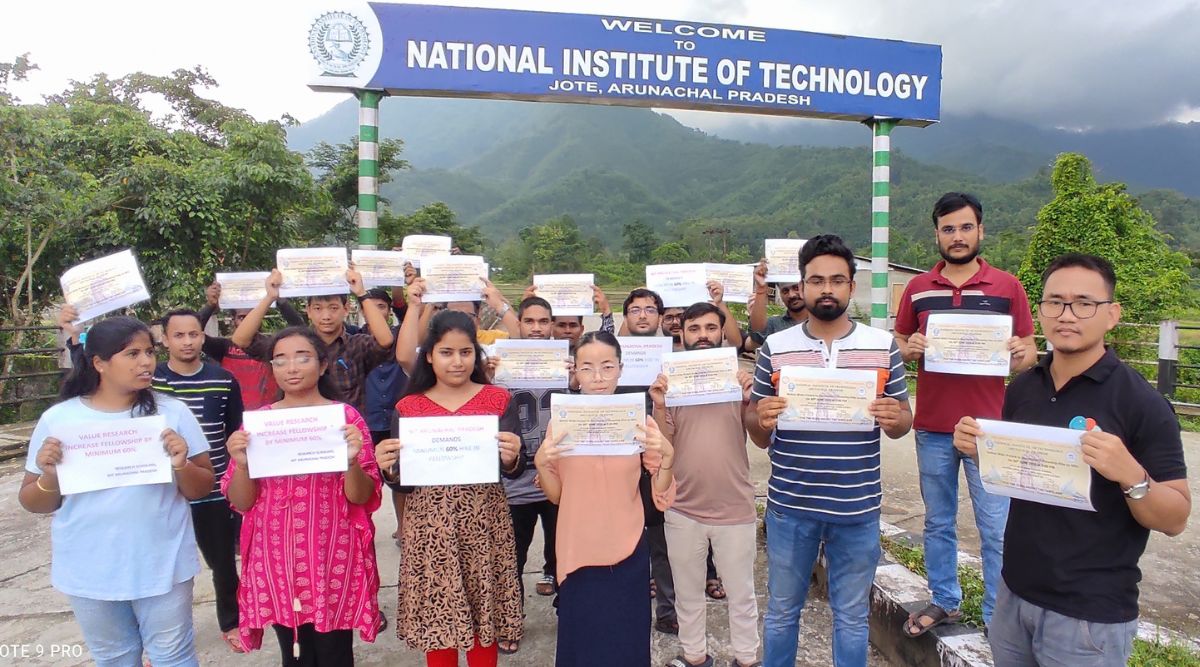
The growing issue of delayed fellowships for PhD scholars in India has quietly turned into a crisis. Many research scholars, who once relied on monthly stipends, now find themselves waiting for months—sometimes longer—without financial support.
As a result, they are not just researching anymore; they are surviving, borrowing, and even funding their own work.
The Silent Crisis in Indian Research
Imagine working full-time in a lab or field, yet not receiving your salary for months.
That is the reality for many PhD scholars today. Reports highlight that delays in fellowship disbursal have left students waiting indefinitely, often without clarity or timelines.
This is not an isolated issue. Across institutions and states, scholars are facing similar struggles—turning what should be a journey of discovery into a daily financial battle.
Why Are Fellowships Getting Delayed?
- Bureaucratic Processes and Administrative Delays
One of the biggest reasons is slow and complex administrative systems.
- Files move across departments
- Approvals take months
- Lack of coordination delays payments
In many cases, even correctly submitted applications remain “under process” for long periods.
- Changing Funding Structures
Shifts in funding systems, new schemes, or changes in nodal agencies often create confusion.
Such transitions can disrupt the regular flow of funds, leaving scholars stuck between policies and procedures.
- Weak Monitoring and Accountability
There is often no real-time tracking system for fellowships.
Scholars are left guessing:
- When will funds come?
- Who is responsible?
- What is causing the delay?
This lack of transparency worsens the situation.
How it is Affecting PhD Scholars
- Financial Stress and Survival Challenges
Fellowships are not luxuries—they are lifelines.
When delayed:
- Rent goes unpaid
- Daily expenses become difficult
- Scholars depend on loans or family support
Many students have reported borrowing money just to survive.
- Research Work Gets Disrupted
Without funds, research slows down.
Scholars often:
- Pay for experiments from their own pockets
- Skip conferences due to travel costs
- Delay fieldwork or data collection
This directly impacts the quality and progress of research.
- Mental and Emotional Pressure
The uncertainty creates constant stress.
Scholars experience:
- Anxiety and frustration
- Loss of motivation
- Feeling undervalued
For many, the dream of research begins to feel like a burden.
- Inequality in Higher Education
Students from financially weaker backgrounds are hit the hardest.
Fellowships are meant to ensure equal opportunity—but delays end up doing the opposite, widening the gap between privileged and underprivileged scholars.
When Scholars Start Funding their Own Research
One of the most worrying trends is that scholars are now:
- Using personal savings
- Taking loans
- Doing part-time jobs
Some even pause their research to earn money.
This defeats the very purpose of fellowships, which exist to allow scholars to focus entirely on research.
Impact on India’s Research Ecosystem
This is not just a student issue—it is a national concern.
- Decline in Research Quality
Financial stress reduces focus and productivity.
- Brain Drain
Talented researchers may choose to move abroad for better support.
- Reduced Innovation
Delays in funding slow down scientific and academic progress.
India’s ambition to become a global research leader depends heavily on how it treats its researchers.
What Needs to Change? (Solutions)
- Timely and Automated Disbursement
Introduce direct benefit transfer systems with fixed timelines.
- Transparent Tracking Systems
Scholars should be able to track their fellowship status online.
- Strong Accountability Mechanisms
Authorities must be responsible for delays.
- Policy Stability
Frequent changes in schemes should be minimised or managed smoothly.
- Scholar-Centric Approach
Policies should prioritise the needs of researchers, not just administrative convenience.
A Reality Check: Research Needs Respect, Not Delays
A country that dreams of innovation cannot afford to ignore its researchers.
PhD scholars are not just students—they are contributors to knowledge, science, and national growth.
Delaying their fellowships sends a discouraging message: that research is important, but researchers are not.
FAQs on Delayed Fellowships for PhD Scholars
- Why are PhD fellowships delayed in India?
Delays are mainly due to bureaucratic processes, policy changes, and lack of coordination between departments.
- How do fellowship delays affect research?
They disrupt experiments, delay fieldwork, and reduce overall research quality.
- Are all PhD scholars affected by this issue?
Not all, but many across universities and states face similar delays.
- What do scholars do when fellowships are delayed?
They often borrow money, use savings, or take up part-time work to survive.
- What is the solution to this problem?
Timely disbursement, transparency, accountability, and better policy implementation are key solutions.
Final Thoughts
The story of delayed fellowships is not just about money—it is about dignity, opportunity, and the future of research in India.
If scholars are forced to fund their own research, the system is clearly broken.
Fixing it is not optional—it is essential.