Introduction
For decades, education has been seen as the most reliable investment parents can make for their children. Families across India willingly cut down on personal comforts so that their children can study in good schools and build a better future. Education has long been associated with social mobility, stability, and opportunity. However, the financial reality of schooling is changing rapidly. In many parts of India, school fees are rising at a pace that is beginning to worry middle-class families.
Parents today increasingly find themselves asking a difficult question: is school education becoming a financial risk that requires long-term planning, much like housing or healthcare? What was once a routine household expense is gradually turning into a major financial commitment that can stretch family budgets for more than a decade. With rising tuition fees, additional charges, and increasing expectations from schools, education expenses are becoming one of the largest components of household spending.
The Rapid Rise of School Fees
In recent years, school fees in India have risen significantly, particularly in urban areas. Many parents report annual fee increases that are far higher than salary increments. What makes the situation more challenging is that these increases often occur every year, gradually pushing education costs beyond what many families originally anticipated.
In metropolitan cities, the annual cost of schooling in private institutions can easily reach several lakhs when all expenses are included. Tuition fees alone form a large part of the bill, but parents must also pay for admission charges, development fees, books, uniforms, transportation, and extracurricular activities. When all these components are combined, the total expense can feel overwhelming, especially for families with more than one child.
This trend has led to growing concern among parents who worry that the cost of education is becoming unpredictable and difficult to manage.
Education Inflation is Outpacing Income Growth
One of the key reasons school fees feel like a financial burden is the gap between rising education costs and household income growth. Education inflation in India has been rising steadily for several years, and in some cases it is increasing faster than general inflation. This means that the cost of schooling is rising much more rapidly than the salaries of most working professionals.
For families that plan their finances based on expected income growth, this creates a difficult situation. When education expenses rise faster than income, parents are forced to reallocate money from other financial goals such as savings, investments, or retirement planning. Over time, this imbalance can create long-term financial stress.
As a result, many financial planners now advise parents to treat school education as a major financial goal that requires careful planning and disciplined saving.
The Hidden Costs of Schooling
Another reason school education feels expensive is that tuition fees represent only a portion of the total cost. Parents often encounter numerous additional charges that significantly increase the financial burden. These may include annual development fees, laboratory charges, activity fees, and transportation costs. Schools may also require parents to purchase uniforms, books, or digital learning tools from specific vendors, which can raise expenses further.
Such hidden costs make it difficult for parents to predict the actual cost of education over time. Even if the tuition fee appears manageable initially, the overall expense may increase substantially once all other charges are added. For many families, the surprise of these additional costs creates financial strain during the academic year.
Why School Fees Are Increasing
There are several factors contributing to the steady rise in school fees. One major reason is the increasing investment in infrastructure and technology. Modern schools often provide smart classrooms, advanced laboratories, sports facilities, and digital learning platforms. While these improvements aim to enhance the learning experience, they also increase operational costs.
Another factor is the rising cost of running educational institutions. Salaries for teachers and staff, electricity bills, maintenance costs, and administrative expenses have all increased over the years. Schools often argue that fee hikes are necessary to maintain quality and continue offering modern facilities.
Additionally, the demand for private education has grown rapidly in India. Many parents prefer private schools because they believe these institutions provide better infrastructure, English-medium instruction, and stronger academic results. As demand increases, private schools often gain greater flexibility in setting their fee structures.
The Financial Stress on Parents
The rising cost of schooling has begun to reshape household financial priorities. For many families, education has become the single largest recurring expense after housing. Parents frequently adjust their lifestyle in order to manage school fees and related expenses.
Some families reduce spending on travel, entertainment, and leisure activities. Others postpone important financial goals such as buying a house or saving for retirement. In certain cases, parents take personal loans or use credit cards to pay school fees when faced with sudden increases.
The pressure becomes even greater for families with two or more children. Managing education expenses for multiple children can consume a significant portion of household income, leaving limited room for savings and long-term financial planning.
The Emotional Dimension of Education Costs
Beyond financial stress, rising school fees also create emotional pressure for parents. Education is closely linked to a child’s future, and most parents want to provide the best opportunities possible. Choosing a more affordable school sometimes feels like compromising on quality, even when this may not necessarily be true.
This emotional aspect often pushes families to stretch their finances further than they initially intended. Parents may feel compelled to prioritise expensive schools because of social expectations or perceived academic advantages. Over time, this pressure can lead to anxiety about financial stability.

The Growing Debate Over Regulation
As school fees continue to rise, debates around regulation and transparency have become more prominent. Parent groups in several cities have raised concerns about frequent fee hikes and the lack of clarity regarding how funds are used. Some parents argue that schools should provide detailed explanations when increasing fees and ensure that charges remain reasonable.
In response, some state governments have attempted to introduce policies aimed at regulating fee structures and protecting parents from sudden increases. These policies often seek to establish guidelines for fee revisions and provide mechanisms for addressing complaints. However, the effectiveness of such regulations varies across different states.
The growing public discussion around school fees highlights the importance of balancing quality education with affordability.
The Need for Financial Planning
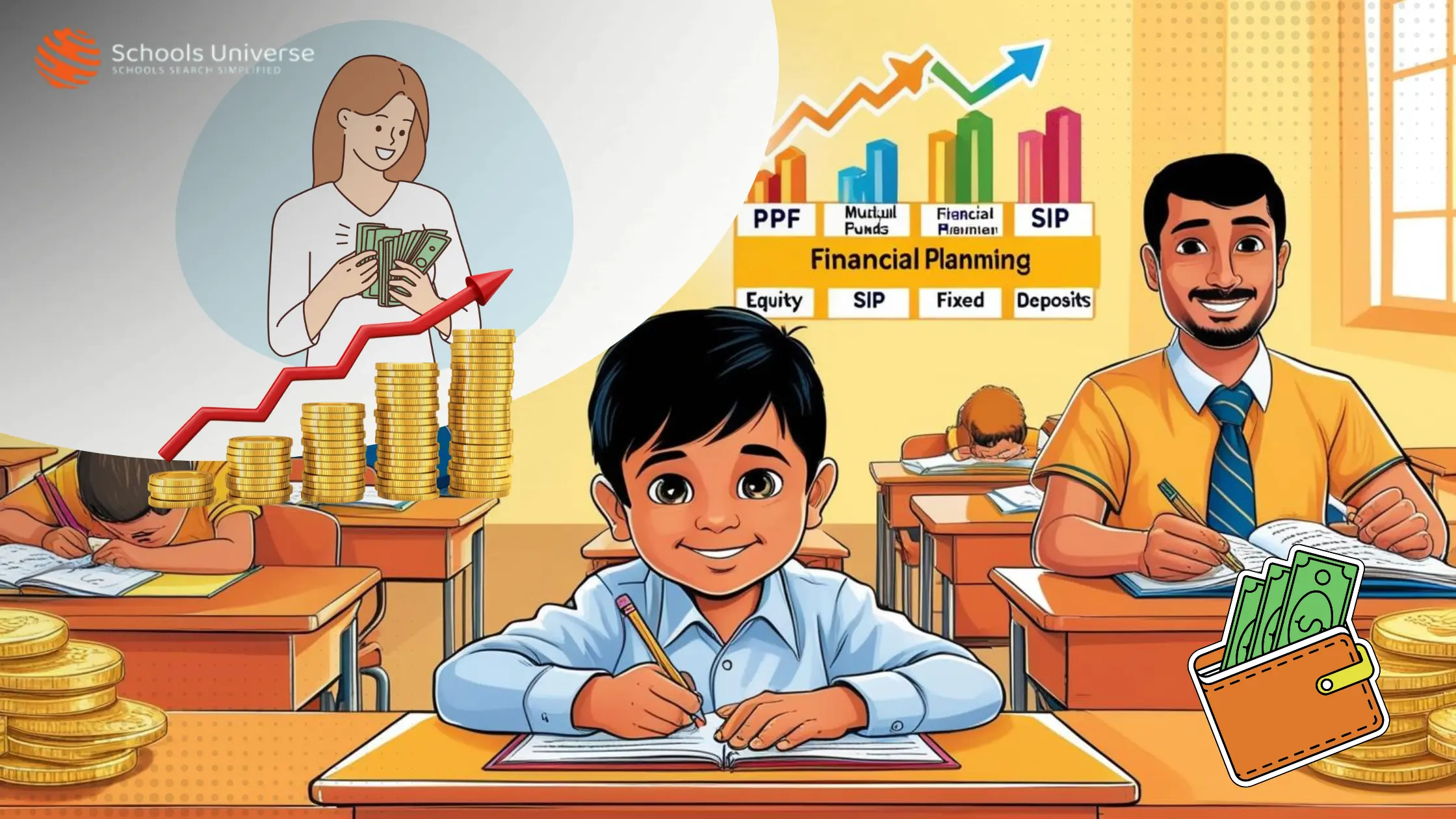
Given the rising cost of schooling, financial planning for education has become increasingly important. Experts recommend that parents begin saving for education as early as possible, ideally from the time a child is born. Early planning allows families to spread the financial burden over several years rather than facing sudden expenses later.
Creating a dedicated education fund can help parents manage costs more effectively. Regular investments in savings plans or education-focused financial products can gradually build the funds required for school expenses. By planning ahead, families can reduce the pressure that often accompanies annual fee payments.
Another important step is carefully evaluating schools before making admission decisions. Parents should consider not only the current fee structure but also the likelihood of future increases and additional charges.
Rethinking What Defines Quality Education
The rising cost of schooling also raises an important question about what truly defines quality education. Expensive infrastructure and modern facilities may create an attractive learning environment, but they do not automatically guarantee better learning outcomes. The quality of teachers, teaching methods, and the overall learning culture within a school often play a far greater role in shaping a child’s education.
Many education experts believe that parents should focus on these factors rather than assuming that higher fees always mean better education. A balanced approach can help families make decisions that are both educationally sound and financially sustainable.
Conclusion
The rising cost of school education in India is gradually transforming what was once a manageable household expense into a significant financial responsibility. Frequent fee hikes, hidden charges, and education inflation are placing increasing pressure on family budgets, particularly in urban areas. As a result, parents are beginning to view school fees not merely as an annual payment but as a long-term financial commitment that requires careful planning.
Addressing this challenge requires both individual and systemic solutions. Families must plan their finances thoughtfully and begin saving early for education expenses. At the same time, policymakers and educational institutions must work toward greater transparency and affordability to ensure that quality education remains accessible to all.
Education should continue to serve as a pathway to opportunity rather than becoming a financial burden that families struggle to carry. Recognising the growing cost of schooling and preparing for it responsibly is the first step toward achieving that balance.