In early 2026, a school textbook unexpectedly became the centre of a national debate. What began as a chapter in a Class 8 Social Science book soon turned into a legal and educational controversy that reached the highest court in the country.
At the heart of the issue was a chapter discussing the role of the judiciary in India. Some sections reportedly referred to problems such as corruption and delays in the judicial system. Critics argued that the chapter portrayed the judiciary in a negative way for young students.
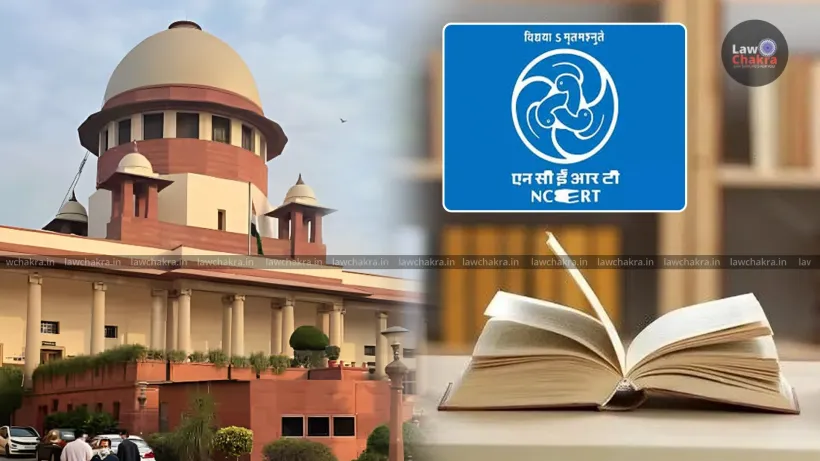
The debate quickly escalated. The National Council of Educational Research and Training (NCERT) withdrew the book and issued an apology. Soon after, the Supreme Court stepped in and delivered a strong order that reshaped the entire discussion around textbooks and educational accountability.
The incident has triggered a larger conversation about how institutions should be represented in school education, who decides curriculum content, and where the line lies between academic discussion and institutional respect.
How the NCERT Judiciary Chapter Controversy Began
The controversy started with a chapter in an NCERT Class 8 Social Science textbook titled “Exploring Society: India and Beyond.” The chapter attempted to explain the role of the judiciary and the functioning of courts in India.
Within that discussion, the text reportedly referred to issues such as:
- Corruption in parts of the judiciary
- Pendency of court cases
- Challenges faced by the justice system
Although these topics are widely discussed in public debates and academic circles, many critics felt that presenting such ideas in a middle-school textbook was inappropriate.
The concern was simple: young students may not yet have the maturity to understand institutional criticism in a balanced way.
Soon, the issue began attracting national attention.
NCERT Withdraws the Textbook and Issues an Apology
As criticism grew, NCERT responded quickly.
The organisation withdrew the textbook containing the controversial chapter and issued a formal apology. The move was meant to calm the situation and reassure educators, parents, and policymakers.
However, the matter had already reached the courts.
Questions were raised about how the chapter was approved, whether proper academic review had taken place, and whether the content had followed established curriculum procedures.
These concerns eventually reached the Supreme Court of India.
Supreme Court’s Strong Response
When the case came before the Supreme Court, the bench took a firm stand.
The Court observed that the content had created unnecessary controversy and expressed concern about how such material could appear in textbooks meant for young students.
In a significant order, the Court directed the Union Government and NCERT to exclude three experts associated with the chapter from future curriculum work.
The experts identified in connection with the chapter included:
- Michel Danino
- Suparna Diwakar
- Alok Prasanna Kumar
The Court also stated that there was “no reason why such persons be associated in any manner with the preparation of curriculum” for future generations.
This decision sent a strong message about accountability in textbook development.

A New Committee for Curriculum Oversight
The Supreme Court did not stop at removing the experts.
It also directed the government to create a new committee of domain experts to review curriculum issues related to legal studies and the judiciary.
The proposed committee is expected to include:
- A former judge
- An education expert
- A senior legal professional
This panel will review educational material to ensure accuracy, balance, and responsibility in the way institutions are presented to students.
The idea is simple: school textbooks should be both educational and responsible.
Why the Judiciary Chapter Became So Controversial
At first glance, discussing challenges in the judicial system might seem like normal academic practice. After all, public institutions are often analysed in universities and policy debates.
However, several factors made this situation different.
-
Audience: Young Students
The textbook was meant for Class 8 students, typically aged 13–14.
Many critics argued that such complex discussions require a deeper understanding of law, governance, and constitutional systems.
Without that context, students might form incomplete or misleading impressions.
-
Institutional Sensitivity
The judiciary is one of the pillars of democracy.
Courts are responsible for protecting constitutional rights, resolving disputes, and ensuring that laws are applied fairly.
Because of this central role, critics felt that the textbook’s tone needed to be particularly careful.
-
Approval Process Questions
Another major concern was the textbook approval process.
Reports indicated that the controversial chapter may not have gone through the complete institutional review procedure before publication.
Normally, NCERT textbooks undergo multiple stages of academic and administrative scrutiny.
When this process appears bypassed or incomplete, questions naturally arise.
The Larger Debate: Academic Freedom vs Institutional Respect
The NCERT controversy has triggered a deeper discussion in India’s education system.
At the core of the debate lies a fundamental question:
How should textbooks discuss real-world problems while maintaining institutional respect?
Two perspectives have emerged.
Perspective 1: Education Must Encourage Critical Thinking
Many educators argue that students should learn about both the strengths and weaknesses of institutions.
Understanding problems like case backlogs or governance challenges can help young citizens think critically about democracy.
Supporters of this view believe that education should not hide difficult truths.
Perspective 2: School Education Requires Balance and Context
Others argue that early education should focus on foundational understanding.
Complex criticisms of institutions may be more appropriate at higher levels of study, such as universities.
Without proper context, such discussions might create confusion rather than understanding.
What this Means for NCERT and School Education?
The Supreme Court’s intervention may have long-term effects on how textbooks are created in India.
Several changes could follow.
Stronger Review Systems
Textbooks may now go through stricter review mechanisms before publication.
Experts from law, education, and policy might be more closely involved.
Greater Institutional Accountability
Authors and contributors to textbooks may face higher levels of scrutiny regarding accuracy and tone.
The controversy shows that textbook content is no longer seen as purely academic.
It can also become a matter of public debate.
Increased Transparency in Curriculum Development
The case has highlighted the importance of transparent curriculum processes.
Educational bodies may adopt clearer procedures for drafting, reviewing, and approving textbooks.
The Role of NCERT in India’s Education System
To understand the impact of this controversy, it is important to recognise NCERT’s role.
NCERT is the central body responsible for designing national school curricula and publishing textbooks used across India.
Many state boards and schools rely on NCERT books as their primary educational material.
This means that any change in NCERT content affects millions of students.
Because of this influence, textbook accuracy and responsibility become critically important.
How Courts Have Influenced Education Before
This is not the first time the judiciary has shaped education policy in India.
Over the years, courts have intervened in matters such as:
- School admissions
- Reservation policies
- Curriculum disputes
- Examination rules
Such interventions often arise when educational decisions intersect with constitutional principles.
In the NCERT textbook row, the Court’s concern was about the representation of a constitutional institution in school education.
Reactions from the Education Community
The controversy has sparked strong reactions from different groups.
Teachers
Many teachers emphasised the importance of carefully designed textbooks.
They believe that students should receive balanced and age-appropriate information.
Legal Experts
Legal scholars have noted that the judiciary is a complex institution.
Explaining its strengths and challenges requires careful language and context.
Parents
Parents generally expect textbooks to promote trust in democratic institutions while also encouraging critical thinking.
Balancing these expectations is never easy.

What Happens Next
Following the Supreme Court’s order, several steps are expected.
- Formation of a new expert committee to review legal studies content.
- Review of existing NCERT textbooks to identify potential issues.
- Revised guidelines for textbook preparation in the future.
These measures aim to prevent similar controversies.
Lessons from the NCERT Judiciary Chapter Row
This episode offers important lessons for the education system.
First, school textbooks carry enormous influence.
For many students, textbooks are their first introduction to law, governance, and democracy.
Second, curriculum development requires careful balance.
Educational content must be honest but also responsible.
Finally, transparency and strong review systems are essential to maintain public trust in educational institutions.
Conclusion
The NCERT judiciary chapter controversy has become one of the most discussed education stories of 2026.
What began as a textbook chapter soon turned into a national debate about curriculum, institutional respect, and academic responsibility.
The Supreme Court’s decision to remove three experts from curriculum work and order a new review committee marks a turning point in how educational content may be supervised in the future.
More importantly, the episode reminds us that education is not just about facts and lessons.
It is about shaping how the next generation understands their country, its institutions, and the principles of democracy.
Getting that balance right is perhaps the most important responsibility of any education system.