War zones are among of the most hazardous places a person can be. Armed conflict causes devastation, uncertainty, and life-threatening conditions for people who may unexpectedly find themselves stuck in dangerous areas. Most people don’t think they’ll ever have to deal with these kinds of situations, but previous wars have shown how important it is to have fundamental survival skills in times of war.
If you know how to respond, get ready, and keep yourself safe during armed combat, your odds of survival are way up. If you find yourself in a conflict zone, this book will tell you the most critical things you need to know, such as how to get ready, stay safe, and learn the most crucial survival skills.
Understanding the Risks of a War Zone
A war zone is a place where there is fighting between soldiers. There are several hazards in these places, including as air attacks, artillery bombardment, armed fighting, infrastructure collapse, and not having enough food, water, and medical supplies.
People living in conflict zones are in danger of a number of things:
- Bombings and missile strikes
- Fighting between military forces using guns
- No electricity or phone lines
- Not enough food and clean water
- Not being able to get to hospitals and medical treatment easily
- Restrictions on mobility and curfews

You need to be aware of these hazards, be ready, and make calm decisions in order to stay alive in a conflict area.
Stay Informed and Aware of the Situation
Staying educated is one of the most critical things you can do to stay alive in a combat zone. People can make safer choices about where to go, where to stay, and how to plan for emergencies when they have information.
Civilians should keep an eye on dependable information sources on a regular basis, such as:
- Local government news
- Systems for broadcasting emergencies
- News outlets from across the world
- Updates from the military or security forces
- Verified groups that help those in need
People can stay safe and react fast if things change if they know what’s going on right now.
But it’s also crucial not to disseminate rumours or trust information from social media that hasn’t been checked out, as that might make people worry and get confused.
Identify Safe Shelters and Protective Areas
During armed combat, it is very important to find secure sanctuary. In conflict zones, explosions, airstrikes, and shooting are regular threats. Staying in a secured building can considerably lower the risk.
A lot of the time, safe shelters have:
- Basements below ground
- Buildings that are stronger
- Bomb bunkers that are official
- Some cities have metro stations.
- Concrete buildings that are not near windows
Civilians should try to find more than one place to stay near their homes or employment.
A decent shelter should give you:
- Keeping you safe from explosives
- Limited time spent near windows and glass
- Getting to emergency exits
- Enough air flow
Knowing where to go during an assault might save you valuable seconds in an emergency.
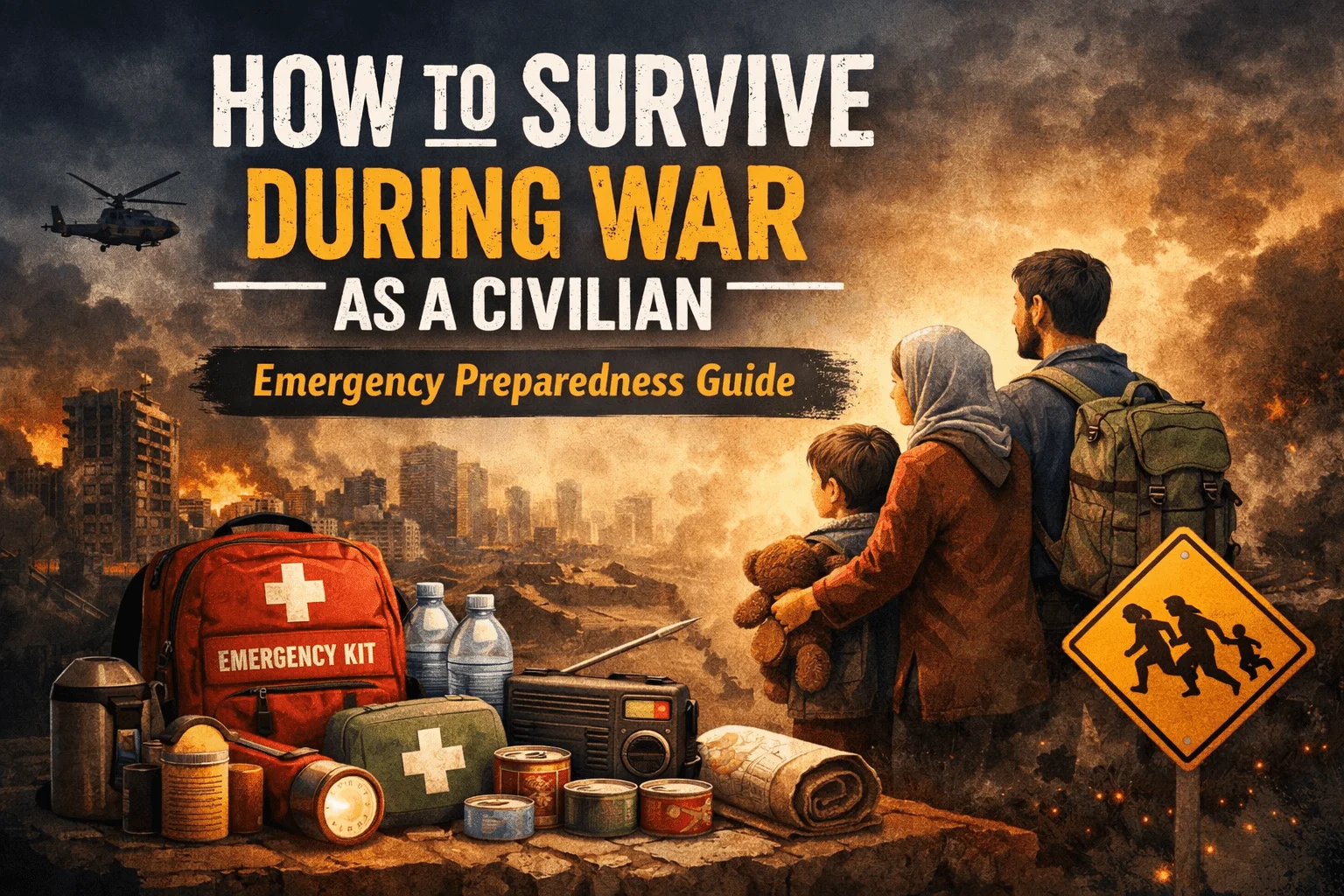
Prepare an Emergency Survival Kit
Every home in a conflict zone should have an emergency survival kit. If conventional services stop working, this kit should have all the materials you need to stay alive for a few days.
Some important things are:
- Water in bottles
- Food that doesn’t go bad
- Extra batteries and flashlights
- Supplies for first aid
- Basic drugs
- Chargers for phones that you may take with you or power banks
- Clothes and blankets that keep you warm
- Safe storage for important papers
Emergency kits should be easy to carry in case you have to leave your home.
Being ready might make a big difference when you have to leave or fight back quickly.
Maintain Access to Clean Water
War often causes water shortages because things like pipelines, treatment facilities, and power systems can get damaged.
For health and survival, clean drinking water is very important.
People who aren’t in the military should attempt to:

- When you can, store water ahead of time.
- If you’re not sure about the quality, boil the water before consuming it.
- Use filters or pills to clean the water.
- Stay away from water sources that are dirty.
It’s really important to stay hydrated, especially when you’re stressed out or spending a lot of time in shelters.
Secure Reliable Food Supplies
Another prevalent difficulty in conflict zones is not having enough food. There may be problems with supply chains, grocery stores may close, and transit routes may become risky.
People should put foods that are important to them first when they store them.
- Not going bad
- Simple to make
- Balanced in terms of nutrition
- Lasting a long time
For example:
- Food in cans
- Grains and rice that are dry
- Bars of energy
- Dried fruits and nuts
- Meals that are ready to eat right away
Families can stay safe inside during difficult times without having to leave the house often if they store their food correctly.
Protect Your Identity and Important Documents
During crises, citizens may have to traverse checkpoints, leave their homes, or ask for help from the government or humanitarian groups.
Because of this, vital papers should always be kept safe and easy to get to.
Important papers are:
- Cards for identification
- Passports
- Records of medical care
- Birth certificates
- Information for emergency contacts
It might be quite handy to have copies in waterproof bags or on a computer in case documents become lost or destroyed.
Limit Movement in Dangerous Areas
Moving around during a war might be quite dangerous. Military operations, landmines, sniper fire, and checkpoints may all be quite dangerous.
Civilians should do the following whenever they can:
- Don’t travel when there is violence going on.
- Obey the rules about curfew
- Use paths that are safe and well-known
- Stay away from military bases and government buildings.
If individuals need to leave, they should follow official evacuation instructions from the government or humanitarian groups.
Staying inside during risky times generally keeps you from being around violence.
Maintain Communication With Family and Authorities
During emergencies, it’s really important to talk to each other. In war zones, cell networks, internet connectivity, and power supplies are regularly cut off.

To keep in touch:
- Make sure your cell phone is always charged.
- Use backup batteries or power banks
- Talk to your family on where to meet.
- Give out emergency phone numbers
Families should also have a simple strategy for how to talk to each other so that everyone knows what to do if they become lost.
Staying in touch can help individuals plan their escape and make sure everyone stays safe.
Learn Basic First Aid Skills
During conflict, medical services may not be able to keep up with demand or may not be accessible at all. Civilians can take care of injuries until professional help arrives if they know some basic first aid.
First aid information that is important includes:
- Taking care of cuts and bleeding
- Basic CPR skills
- Taking care of burns
- Seeing indicators of shock
- Keeping infections from occurring
Having a well-stocked first aid bag and some basic medical training may greatly increase your chances of surviving an emergency.
Protect Mental Health During Conflict
Being in a conflict zone is hard on your mind and emotions. Being afraid all the time, not knowing what’s going to happen, and being around violence may all hurt your mental health.
To keep your emotions stable:
- Stay in touch with your family and neighbourhood.
- Limit how much you see of distressing news photos.
- Instead of being afraid, think on what you can do to be safe.
- Help kids and other family members who are weak.
Being mentally strong is a big part of getting through tough times.
Follow Guidance From Humanitarian Organizations
The Red Cross, UN agencies, and humanitarian relief groups are examples of international institutions that often give important help in areas of war.
These groups could offer:
- Medical treatment in an emergency
- Giving out food
- Safe paths for evacuation
- Help with shelter
Following official advice from well-known humanitarian groups helps make things safer amid disasters.
Prepare for Possible Evacuation
Sometimes, the safest thing to do is to leave. When things get very serious, governments or international organisations may set up evacuation missions.
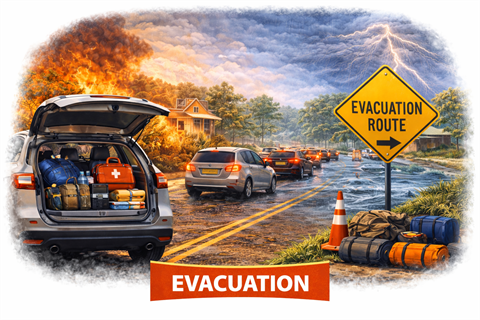
If they need to leave, they should:
- Bring important papers
- Bring supplies for emergencies.
- Use the approved routes for transportation
- Don’t use crowded or unconfirmed transportation choices.
Evacuation goes more smoothly and safely when you’re ready.
Stay Calm and Think Clearly
In every combat zone, the most vital skill for staying alive may be being cool.
When you’re scared, you could make bad choices, take unwarranted risks, and act in harmful ways.
In case of an emergency:
- Put safety first right away
- Follow the steps you intended
- When you can, help folks who are weak.
- Don’t make other people worry.
Being able to think clearly may make a big difference in life-threatening situations.
Conclusion
War zones are among of the most dangerous places for civilians to be. Most people don’t want to be in situations like these, but knowing some fundamental survival skills can help people and families stay alive during armed conflict.
Some of the most important survival rules are remaining informed, finding safe places to stay, getting ready with emergency supplies, keeping in touch, and obeying official advice. These actions won’t get rid of all threats, but they will make things a lot safer and more prepared.
Knowledge and planning are really useful when things are going wrong. Civilians may better defend themselves and their loved ones in risky situations by staying vigilant, calm, and structured.