For a long time, Ethiopia’s story in global education has stayed mostly within its own borders. Students inside the country knew which universities mattered. Teachers knew where serious research was happening. But outside Africa, very few people paid attention.
That picture is beginning to change.
Over the last few years, Ethiopian universities have started appearing — modestly but meaningfully — in international ranking platforms such as the U.S. News & World Report Best Global Universities. These rankings don’t magically make a university “world-class” overnight, but they do signal something important: academic activity is growing, research is being noticed, and global visibility is increasing.
This blog looks at Ethiopia’s higher education system as it actually stands today — its leading universities, its progress in global rankings, and what students should realistically expect.
What Global University Rankings Really Measure

Before diving into names and positions, it’s worth pausing for a moment.
Global rankings are not popularity contests. They rely heavily on:
- Research publications
- Citations by other scholars
- International collaboration
- Academic reputation surveys
- Subject-wise performance
This means rankings often favour universities that publish research consistently and engage with global academic networks. Teaching quality, campus life, and affordability — things students care deeply about — are often under-represented.
So when Ethiopian universities appear in global rankings, it doesn’t mean they suddenly rival Ivy League institutions. It means their research voice is being heard beyond national borders.
The Structure of Higher Education in Ethiopia
Ethiopia has one of the largest public university systems in Africa. Over the last two decades, the government expanded access to higher education rapidly, establishing universities across regions rather than concentrating them in one city.
Today, Ethiopian higher education includes:
- Large public universities
- Regional universities serving local populations
- A smaller number of private institutions
Most universities offer programs in:
- Engineering and technology
- Health and medical sciences
- Social sciences and humanities
- Natural sciences
- Business and economics
While infrastructure and funding remain challenges, the academic reach of these institutions has grown steadily.
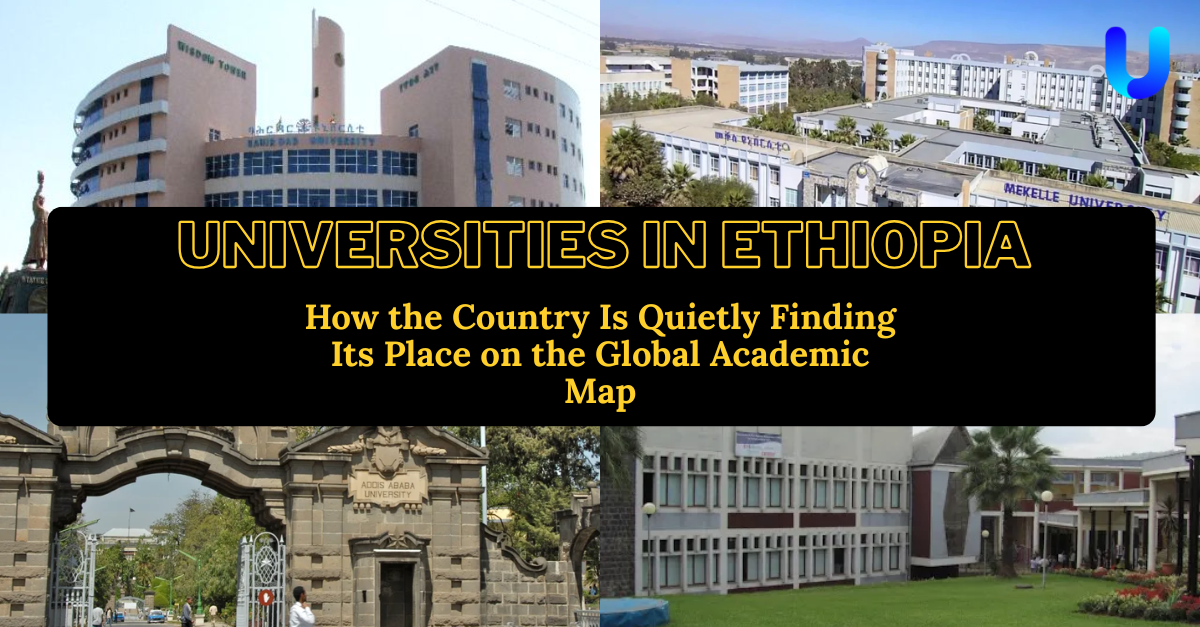
Mekelle University: Ethiopia’s Strongest Global Performer
Among Ethiopian universities, Mekelle University has recently drawn the most international attention.

Located in northern Ethiopia, Mekelle University has emerged as the country’s highest-ranked institution in the U.S. News Best Global Universities list for Ethiopia. This recognition did not come from brand value or age — it came from research output and academic engagement.
The university runs a wide range of programs and has invested heavily in:
- Research publications
- Community-linked academic projects
- International academic collaboration
For a relatively young institution, Mekelle University’s global visibility marks a significant step forward for Ethiopian higher education.
Addis Ababa University: The Academic Backbone of the Nation
If Mekelle University represents momentum, Addis Ababa University (AAU) represents legacy.
Founded in 1950, AAU is Ethiopia’s oldest and most influential university. Generations of scholars, policymakers, doctors, engineers, and educators have passed through its classrooms.
While AAU may not always top every global ranking list, its importance goes far beyond numbers. It remains:
- The country’s largest research hub
- A key contributor to national policy and scholarship
- A centre for postgraduate and doctoral research
In many ways, Ethiopia’s academic identity still rests on Addis Ababa University’s shoulders.
Other Universities Building Academic Credibility
Several other Ethiopian universities are steadily strengthening their academic standing:
University of Gondar
Known particularly for health sciences and medical education, the University of Gondar has played a major role in community-oriented research and training.
Jimma University
One of the older public universities, Jimma University has a strong institutional culture and continues to contribute significantly to education and research.
Bahir Dar University
With diverse academic offerings and growing research initiatives, Bahir Dar University has become a major regional academic centre.
Haramaya University
Historically important and academically active, Haramaya University continues to play a role in research and higher education development.
These universities may not dominate global rankings yet, but within Ethiopia and the wider African context, they hold genuine academic weight.
How Ethiopian Universities Compare Internationally
It’s important to be honest.
Ethiopian universities do not currently compete with top institutions in North America, Europe, or East Asia. Funding gaps, infrastructure limitations, and restricted research budgets remain real challenges.
However, what has changed is visibility.
Appearing in global rankings — even at lower tiers — means:
- Research is being indexed and cited
- Academic work is entering global conversations
- International collaboration is increasing
This is how long-term academic reputation is built — slowly, not suddenly.
Why These Rankings Matter for Students
For students, especially those considering international exposure or postgraduate study, rankings serve as signals, not guarantees.
They can indicate:
- Where active research environments exist
- Which universities are internationally visible
- Where future academic mobility may be easier
A degree from a globally ranked university can sometimes make postgraduate applications or international collaborations smoother — even if the ranking is modest.
Challenges Ethiopia Still Faces
Progress does not erase problems.
Ethiopian universities continue to struggle with:
- Limited research funding
- Infrastructure gaps
- Heavy teaching loads for faculty
- Fewer international exchange opportunities
But these challenges are not unique to Ethiopia. Many universities across Africa and Asia have walked this same path — gradual recognition followed by steady improvement.
Choosing a University in Ethiopia: What Students Should Consider
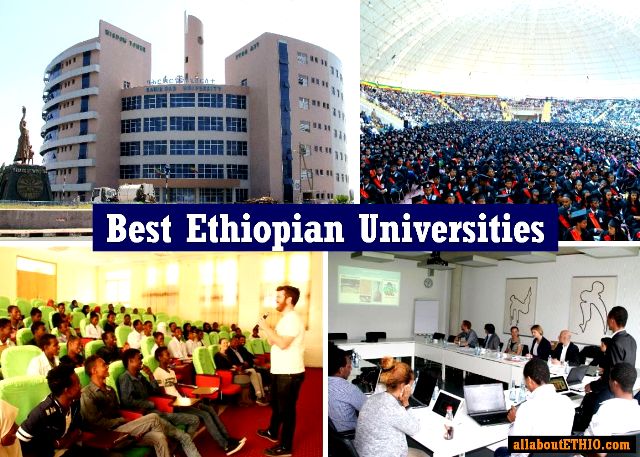
If you are evaluating Ethiopian universities, focus on:
- Field strength rather than overall ranking
- Availability of postgraduate and research programs
- Faculty expertise
- Campus environment and location
- Opportunities for academic exposure beyond classrooms
A university’s value is often clearer from inside its departments than from its position on a list.
The Road Ahead for Ethiopian Higher Education
Ethiopia’s presence in global university rankings is still modest, but it is no longer invisible.
Universities are publishing more research, seeking partnerships, and building academic credibility step by step. For students and scholars watching Africa’s educational future, Ethiopia is a space worth observing — not because it has “arrived,” but because it is clearly on the move.
—Mickiyas
(Blogger, Content Marketer and Digital Marketer)