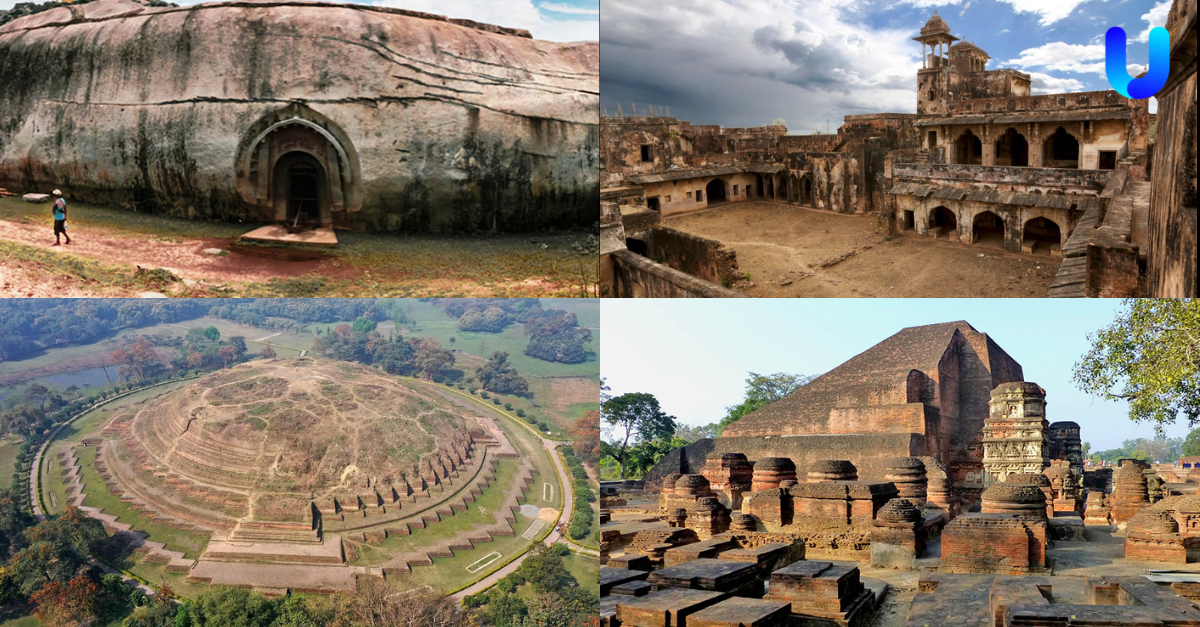
Bihar has never been short of history. What it is running short of now is people who know how to read it, protect it, and pass it on.
This is a state where empires once planned their capitals in wood and stone, where monks debated philosophy centuries before universities became fashionable, and where the idea of governance itself took early shape. Yet today, Bihar’s archaeological wealth is slowly slipping into silence — not because it has vanished, but because there are too few experts left to understand it properly.
The danger is not dramatic. It is quiet. And that is what makes it serious.
A Visit That Looked Hopeful, but Raised Deeper Questions
In January 2026, Chief Minister Nitish Kumar walked through Kumhrar Park and Golghar in Patna — places that carry layers of Mauryan and colonial history. He spoke about conservation, wrote to the Centre, and asked for better maintenance under the Archaeological Survey of India. Officials said the visit aligned with the Centre’s “Gyan Bharatam Mission.”
On the surface, everything seemed reassuring.
But behind the photographs and statements lies a harder truth: who is actually available to do the work of archaeology in Bihar today?
,aspect=fit&q=75)
Because preservation is not just about funding or beautification. It is about knowledge. And knowledge comes from trained people.
Archaeology Is a Team Effort, Not a Decorative Exercise
Real archaeology is slow, careful, and demanding. It involves archaeologists who understand stratigraphy, conservation experts who know how fragile materials behave, scientists who analyse organic remains, and historians who can place discoveries in context.
These professionals do not appear overnight. They are shaped in universities, mentored by senior scholars, and refined through years of research and fieldwork.
And this is precisely where Bihar’s system has begun to collapse.
Universities That Are Quietly Running Out of Teachers
For the past four years, Bihar’s universities have seen no regular recruitment in history-related subjects. The last hiring round happened in 2022, and even then, it was limited. Since that time, professors have retired, departments have thinned, and classrooms have grown quieter.
At Patna University, one of the oldest in the country, the history department survives with a handful of faculty members. In Magadh University, ancient history is handled by just two teachers. Other universities manage with one or two permanent staff, sometimes supported by guest faculty.
In several institutions, even basic information about faculty strength is missing from official websites. Research centres exist mostly on paper. Field studies are rare. Doctoral supervision is limited simply because there are not enough senior scholars left.
This is not a sudden collapse. It is a slow draining away.
What Happens When Teaching Stops
When there are no teachers, students quietly stop coming. When students stop coming, future experts disappear before they are even formed.
Archaeology does not die loudly. It fades.
Sites like Kumhrar require constant academic attention — not just cleaning pathways or installing lights, but interpreting layers, preserving materials, and correcting past errors. Without trained professionals, conservation risks becoming surface-level decoration rather than scientific protection.
The irony is painful: Bihar holds some of India’s most valuable archaeological material, yet produces fewer and fewer specialists each year to study it.
Heritage Cannot Survive on Pride Alone
There is a tendency to take pride in Bihar’s past while ignoring the systems needed to sustain it. Monuments are celebrated, but departments are neglected. History is praised, but historians are not appointed.
This disconnect has consequences.
Heritage feeds tourism, academic credibility, and cultural confidence. Countries that understand this invest heavily in training scholars and conservators. Bihar, despite its unmatched legacy, is slowly losing its academic backbone.
And once that backbone weakens, recovery becomes difficult.
The Cost of Delay Is Invisible, but Permanent
When expertise disappears, it cannot be rebuilt quickly. A generation lost to poor recruitment means decades of catch-up later.
Archaeological mistakes made today — improper restoration, rushed excavations, unrecorded findings — cannot be undone.
History does not offer second drafts.
This is why the shortage of experts is not just an employment issue. It is a cultural emergency.
A Future That Still Can Be Saved
The solution is not complicated, but it requires seriousness.
Regular recruitment. Strong university departments. Research funding tied to local heritage. Collaboration between state institutions and national bodies. Clear pathways for students who want to study archaeology, not as a hobby, but as a profession.
Above all, recognition that heritage preservation begins in classrooms, not at monuments.
When History Has No Voice
Bihar’s ruins have survived centuries of change. What they may not survive is indifference masked as admiration.
Stones endure. Knowledge does not — unless it is taught, questioned, and renewed.
If Bihar truly values its past, it must invest in the people who understand it. Because history, no matter how grand, cannot protect itself.
And once the experts are gone, silence takes their place.
—– By Rachna Priyadarshini