If you’ve been dreaming about studying in the United Kingdom, you’ve probably been watching every headline, waiting and wondering: “Is the UK still friendly for international students?”
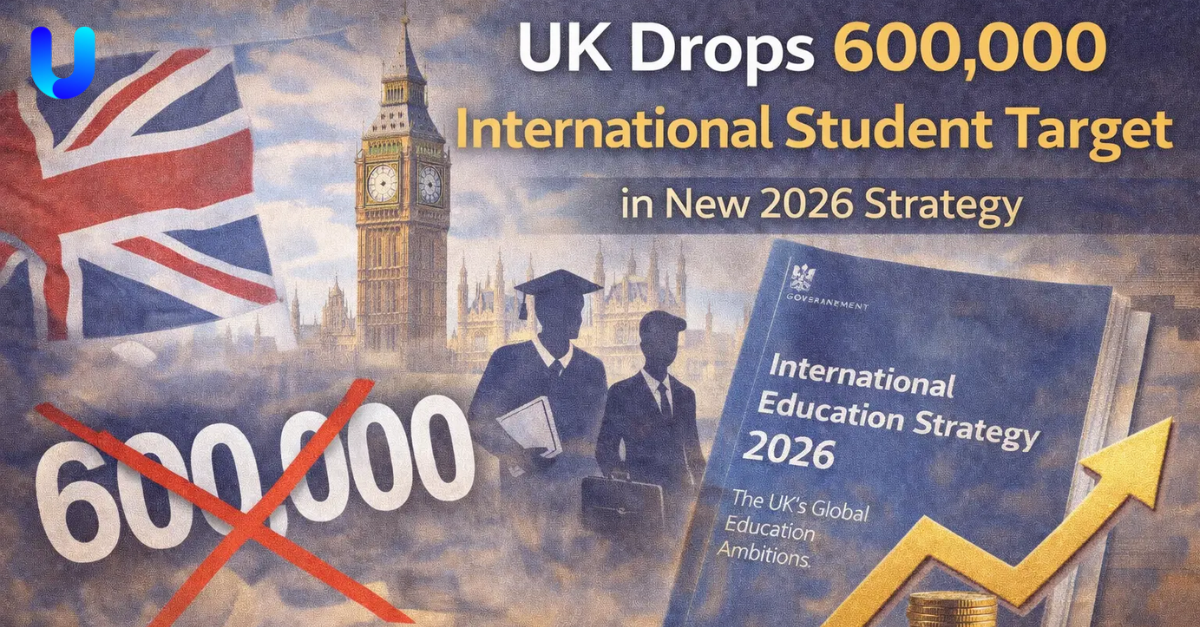
Recently, a big change came that has made many students pause and rethink their plans. The UK government has announced a major shift in its international education strategy — and while it doesn’t ban international students, it has quietly dropped its official target for how many foreign students it wants to host.
Let’s break this down in simple words — what’s changing, why it matters, and what students should know before making big decisions about study abroad.
- What Actually Changed in the UK’s Plan?
For years, the UK used to publicly aim for a certain number of international students to come and study there each year. That number was part of official plans, goals, and even talking points when universities promoted themselves abroad.
But in January 2026, the UK’s Department for Education came out with a new international education strategy that doesn’t set a numerical target for student numbers anymore.
Instead, the focus has shifted toward:
- letting universities expand overseas,
- building global partnerships,
- setting up campuses in other countries,
- and growing what the UK calls “education exports” — essentially selling UK-style education in other parts of the world without students physically coming to Britain.
In numbers, the new big headline is £40 billion a year from education exports by 2030. That’s how much value the UK hopes to build by spreading its education beyond its shores.
- Is the UK Still Welcoming Students or Not?
This is where it starts to feel confusing.
On the one hand, the UK hasn’t stopped international students from coming. It still welcomes foreign learners, and universities truly want to attract them. Many students continue to apply, and some earlier data even showed Indian students leading the rise in UK study visa grants despite stricter rules.
But on the other hand, the UK government is no longer stating clearly how many students it wants to host each year.
That lack of a clear number feels like a shift in mind-set — from “Bring them in” to “Study here if you want, or study UK education elsewhere.” That change creates a layer of uncertainty.
- Why This Shift Matters to You
Here’s the part that affects students most directly.
Traditionally, when a country says “we want X international students,” it gives a kind of confidence to applicants:
- visa policies are stable,
- universities are ready to welcome you,
- support services exist for overseas learners.
But when the government openly stops saying how many it wants, it becomes harder to predict:
- whether visa rules will stay the same,
- whether work rights after study will stay the same,
- whether universities will support international student numbers as strongly as before.
In other words, students feel like they are planning a big life step — but the rules of the game might change while they’re still in the planning stage. That’s unsettling for many.
- Broader Concerns Behind the Headlines
To understand this better, you also need to know the bigger picture of what has been happening in the UK over the past couple of years:
Visa and Migration Policies Have Been Tightening
In recent years, the UK introduced stricter rules around bringing family members, and tightened study visa norms, partly to reduce overall immigration. This has already made some students rethink their plans.
About 74,000 Indian students reportedly left the UK in 2025, and the tough visa environment — especially for dependants — was a major reason.
Post-Study Work Rights Have Come Under Review
The popular “Graduate Route” that lets students stay and work for two years after finishing their degrees was reviewed, causing confusion for students who were counting on it.
Compliance and University Standards Are Stricter
The new strategy talks about “toughened compliance standards” — meaning universities need to meet stricter rules to recruit international students or they could face limits or even lose licences.
Together, these kinds of moves signal that the UK is trying to balance many things at once: domestic political pressure, migration numbers, education reputation, and economic returns.
- Does This Mean Students Should Not Go to the UK?
Not necessarily. Let’s be really clear here:
The UK still:
- hosts some of the world’s top universities,
- awards globally recognised degrees,
- offers pathways like post-study work rights,
- and continues to register international students.
But what has changed is the environment around predictability — how easy it is to plan life, visas, careers, and longer stays based on what government policies might look like three years from now.
In practical terms:
- If you already have an offer and visa, chances are you can still go.
- If you are planning to apply soon, you should stay informed and flexible.
- If your decision depends on long post-study work stays or moving dependants, you may want to factor in possible changes.
Think of it not as “closed” — but as more complex and unpredictable.
- A Changing Approach — More Focus on Global Reach
Part of the government’s reasoning is that the UK wants to spread its education brand wider — not just by having students come to British campuses, but also by:
- opening UK university hubs in other countries,
- creating global partnerships,
- and offering UK-styled education closer to home.
For example, some UK universities are opening or planning campuses in India and other regions, so students can get a UK degree without moving overseas.
From a student’s point of view, that can be a good thing, especially if:
- the costs are lower,
- visa hassles are reduced,
- and quality education becomes more accessible locally.
So while the direct number of students in the UK might not be emphasized, the reach of UK education may expand in new ways.
- What Students Should Keep in Mind
Studying abroad is one of the biggest decisions a young person makes. It involves:
- academic goals,
- financial investment,
- emotional adjustment,
- career planning,
- and future aspirations.
When a destination country changes its strategy, it can feel like the ground beneath your feet has moved.
Here’s some straightforward advice:
- Keep an eye on official policy announcements, not just rumours.
- Ask universities directly about visa support, dependants, and post-study work paths.
- Compare alternatives like Canada, Australia, Ireland, Germany, or even emerging programs in Asia.
- Be flexible with your plans, and prepare for changes rather than assume stability.

The world of international education has always been shifting — and 2026 is just another year where adaptability matters more than certainty.
Final Words
The UK dropping international student targets doesn’t mean the country has shut its doors to foreign learners. It means the strategy has changed — and that change brings both opportunity and uncertainty.
If you’re planning to study abroad, this is not the time to panic. But it is the time to plan with clarity, stay updated, and ask the right questions before you commit.
The UK continues to be a strong destination for global higher education — but the rules of the game are changing, and students everywhere need to understand what that really means.