Introduction: A Forgotten City Begins to Speak Again
There are moments in history when the past does not remain buried—it rises, quietly but powerfully, to rewrite what we thought we knew.
The recent excavation at Balirajgarh in Bihar’s Mithila region is one such moment.
A site long whispered about in folklore and associated with the ancient kingdom of King Janak—the father of Goddess Sita—is now being scientifically explored by the Archaeological Survey of India (ASI). Early findings suggest that this could be a 3,000–3,500-year-old urban settlement, potentially pushing the known timeline of Mithila civilisation far deeper into antiquity.
This is not just an archaeological story.
It is a story of identity, mythology, and civilisation.
Balirajgarh: Where Myth Meets Measured Science
Balirajgarh is located in the Madhubani district of Bihar, right in the heart of the historic Mithila region.
For decades, locals believed this place to be the ancient capital of King Bali or linked to the Videha kingdom—the land of King Janak from the Ramayana. Today, archaeology is stepping in to test these beliefs.
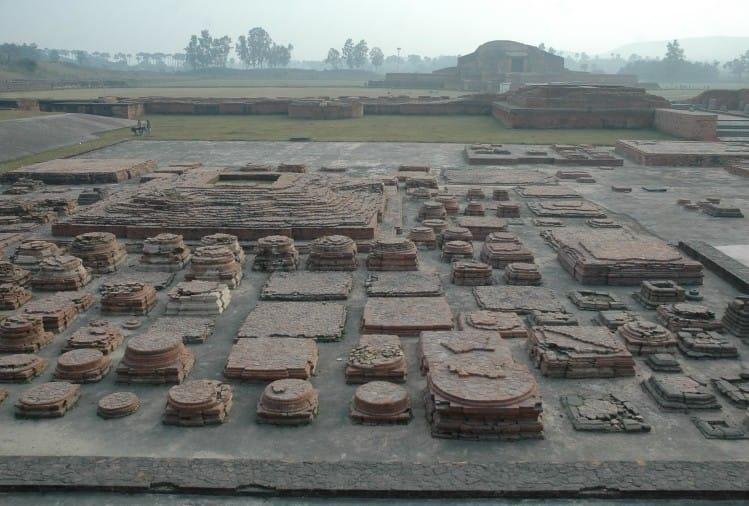
The site spans around 176 acres, with massive brick fortifications and multiple mounds indicating a well-planned settlement.
Earlier excavations hinted at continuous habitation across multiple historical periods—from the Mauryan to the Pala dynasty. But what lay beneath remained largely untouched—until now.
Why this Excavation Matters so Much
- It Could Rewrite the History of Mithila
The ASI’s current mission is clear:
To reach the “virgin soil”—the deepest undisturbed layer—to determine when the first settlement began.
If findings confirm early estimates, Mithila could emerge as one of the oldest continuously inhabited urban centres in India.
- Possible Link to the Ramayana Era
Mithila is not just a place—it is a sacred landscape.
According to ancient texts like the Ramayana, this was the kingdom of King Janak, father of Sita.
If Balirajgarh aligns chronologically with this period, it could become one of the rare archaeological sites that bridge mythology and measurable history.
- Evidence of Advanced Civilisation
Previous excavations uncovered:
- Semi-precious stone beads (carnelian, jasper)
- Terracotta objects
- Punch-marked coins
- Iron artefacts dating back over 2,000 years
These findings suggest:
- Trade networks
- Skilled craftsmanship
- Urban planning
- Metallurgical knowledge
This was not a primitive settlement—it was a thriving civilisation.

The 2026 Excavation: A Fresh Beginning
After years of delay and incomplete reports, 2026 marks a decisive restart.
The ASI has launched a scientific, large-scale excavation using modern techniques:
- Satellite mapping
- Ground-penetrating radar
- Structured trench digging (around 20 trenches planned)
The goal is not just to dig—but to understand patterns of civilisation across time.
Layers of Time: What Lies Beneath Balirajgarh
One of the most fascinating aspects of this site is its multi-layered history.
Archaeologists have already identified at least five cultural phases:
- Mauryan period
- Sunga period
- Kushan period
- Gupta period
- Pala period
But the biggest question remains:
Does the site go even deeper—into pre-Mauryan or even Vedic times?
If yes, this could place Balirajgarh among the earliest urban settlements in the Indian subcontinent.
A 3500-Year-Old City? Understanding the Claim
The idea that Balirajgarh could be 3,500 years old is not random.
Here’s what supports it:
- Northern Black Polished Ware pottery suggests early habitation
- Continuous settlement patterns across centuries
- Artefacts indicating advanced socio-economic life
- Lack of full excavation in earlier phases
In archaeology, absence of evidence is not evidence of absence.
And Balirajgarh still has layers waiting to speak.
The Mystery of King Bali and Videha Kingdom
Local traditions identify Balirajgarh as the capital of King Bali, while scholars connect it to the Videha kingdom.
The Videha kingdom holds a special place in Indian tradition:
- Ruled by King Janak
- Birthplace of Goddess Sita
- Centre of philosophical and cultural development
If archaeological evidence aligns with these narratives, it could:
- Strengthen historical understanding of the Ramayana
- Offer tangible proof of ancient literary traditions

Challenges that Delayed Discovery
Despite its importance, Balirajgarh remained underexplored for decades.
Why?
- High groundwater levels
- Lack of continuous funding
- Incomplete documentation of earlier excavations
- Encroachment and neglect of the site
Even today, parts of the site are used for grazing and local activities—showing how easily history can be overlooked when not protected properly.
Tourism Potential: A Future Heritage Hub
If developed thoughtfully, Balirajgarh could become:
- A Major Archaeological Tourism Destination
Like Nalanda or Vaishali, it could attract historians and travellers worldwide.
- Part of the Ramayana Circuit
Connecting sites related to Lord Ram and Sita could boost spiritual tourism.
- Cultural Revival Centre
Promoting Mithila art, traditions, and heritage.
Mithila already holds deep cultural value, especially as the birthplace of Sita and a centre of ancient traditions.
Balirajgarh could become its archaeological crown.
What Experts Are Hoping to Discover
Archaeologists are not just looking for objects—they are looking for answers.
Key Questions
- Was this truly the capital of ancient Mithila?
- How old is the earliest settlement?
- What was the nature of governance and society?
- Did it have trade links with other regions?
- Can it be connected to the Ramayana timeline?
Each trench dug is a step closer to answering these.
Balirajgarh and India’s Civilisational Narrative
India’s history is often told through texts—Vedas, epics, and scriptures.
But archaeology adds something powerful:
physical evidence.
Sites like Balirajgarh help bridge:
- Literature and reality
- Mythology and history
- Faith and facts
And that bridge is where true understanding lies.
FAQs: Balirajgarh Mithila Excavation
- Where is Balirajgarh located?
It is located in Madhubani district, Bihar, in the Mithila region.
- Why is the excavation important?
It may reveal one of the oldest urban settlements in India and connect to ancient Mithila civilisation.
- Is it linked to the Ramayana?
Possibly. Mithila is the kingdom of King Janak, and Balirajgarh may be part of that ancient landscape.
- How old is the site?
Estimates suggest up to 3,000–3,500 years, though confirmation awaits deeper excavation.
- What has been found so far?
Artefacts like coins, beads, terracotta objects, and iron tools indicating an advanced civilisation.
Final Thoughts: When the Past Becomes the Future
Balirajgarh is more than an excavation site.
It is a reminder that history is not fixed—it evolves with every discovery.
Somewhere beneath the soil of Mithila lies a story that has waited thousands of years to be told.
And today, slowly, carefully, that story is being uncovered.
If the findings match the expectations, this could be one of the most significant archaeological discoveries in modern India—one that reshapes not just regional history, but the broader narrative of civilisation itself.